

When someone with influenza coughs, sneezes, talks, or even breathes, they release virus-containing respiratory particles into the air around them. The CDC says flu spreads "mainly" through droplets, with other transmission routes possible.
If some flu spread can happen through inhalation of smaller particles suspended in shared indoor air, then ventilation and air cleaning become just as important as hand hygiene. This is especially true during winter months when windows stay closed and heating systems recirculate the same air.
Why Flu Is Described as Droplet-Spread but Can Still Be Inhaled
In April 2024, the WHO and partner agencies released updated terminology because real-world transmission doesn't fit into simple categories. Particles of all sizes can carry viruses, and the distance they travel depends on airflow, humidity, and ventilation—not just their initial size. Respiratory particles exist on a size spectrum, not as a strict "droplet versus aerosol" split.
Key terms to know:
-
Droplets = larger respiratory particles that tend to fall to the ground quickly, usually within a few feet of the source
-
Aerosols = smaller particles that can stay suspended in air longer and travel farther, potentially being inhaled by people across a room
-
Confined air space = a poorly ventilated indoor area where exhaled air accumulates rather than being diluted with fresh outdoor air
What "airborne (inhalation) transmission" means: Infection can occur when infectious particles are expelled into the air and then inhaled by another person. Sometimes that happens at very short range. Other times it can happen farther away if air mixes poorly in a closed room and those smaller particles remain suspended.
The CDC says that droplets can land in the mouths or noses of people nearby and "possibly be inhaled into the lungs". This is why distancing alone isn't always sufficient indoors. If you're in the same room for an extended period, the air you're sharing matters.
Air-Focused Steps That Reduce Risk
Crack windows for short "air flush" periods; even 5 to 10 minutes makes a measurable difference. Run bathroom and kitchen exhaust fans during and after family gatherings; these systems actively pull indoor air out and create negative pressure that draws in fresh air through other gaps. Keep interior doors open when it's safe to do so, which encourages air mixing and dilution throughout your home rather than letting stale air pool in one room.
Air cleaning systems, whether portable units or HVAC upgrades, can reduce airborne particle concentration in a room. Position your air cleaner where people actually share air, not tucked away in a corner where airflow is minimal. Keep it running continuously during illness weeks.
Air Purifier Criteria That Lead to Real Protection
Look for a clean-air delivery rate (CADR) that matches your room size. This metric tells you how much filtered air the unit delivers per minute. Manufacturers usually list recommended room sizes you can use as a starting guide.
Check noise levels before you buy. A powerful unit that's too loud to run at night or during homework time will sit unused. Read reviews specifically mentioning noise at different fan speeds.
Consider where you'll place it long-term. Units need clearance on all sides for proper airflow. Measure your intended spot before purchasing to avoid buying something too large for the space.
Energy efficiency matters if you plan to run the unit continuously. Look for Energy Star ratings or check the estimated annual operating cost.
HEPA Filters vs TPA® Technology
Most air purifiers rely on HEPA filters, a technology developed in the 1940s. HEPA filters are effective to a point, but have significant limitations when it comes to viral infections.
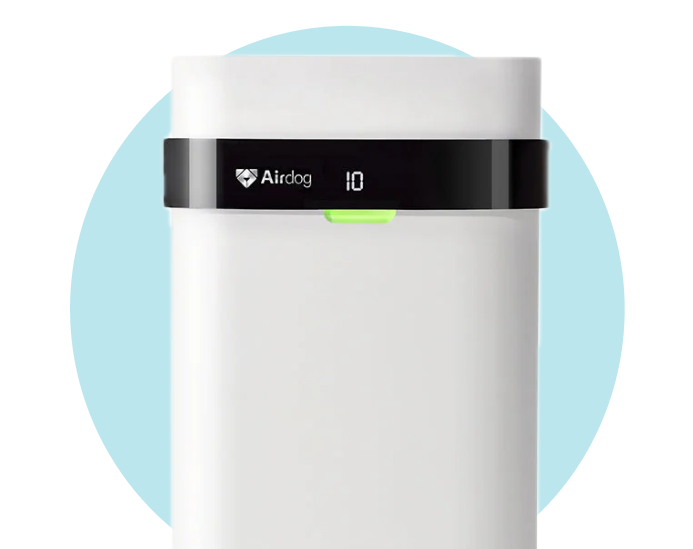
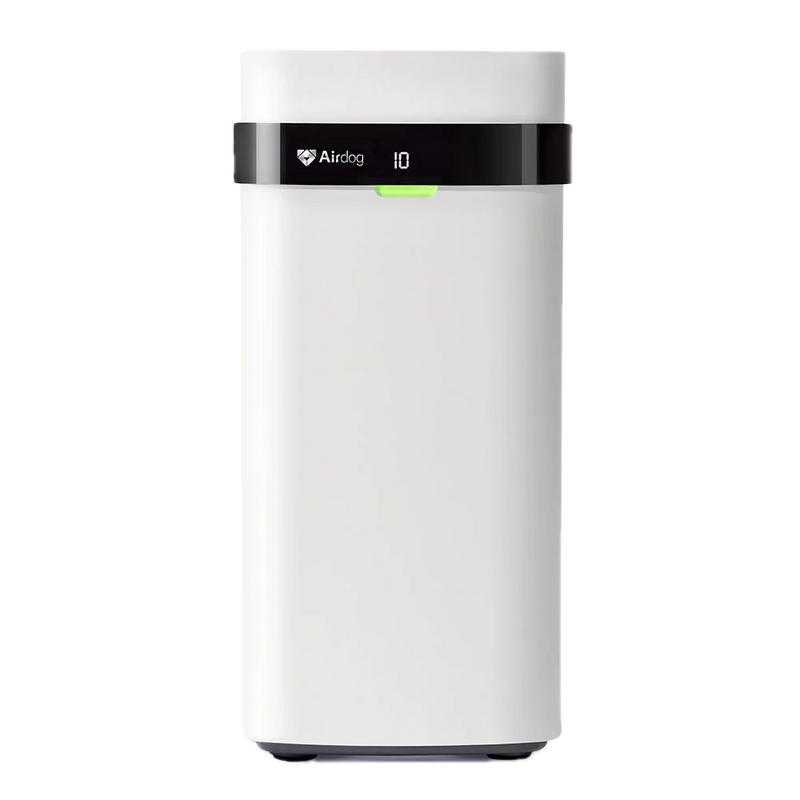
First, HEPA filters can only capture particles as small as 0.3 microns. But viruses are often much smaller than that. Airdog’s TPA® Technology offers an advanced approach to air purification by capturing particles down to 0.0146 microns, which is over 20 times smaller than what traditional HEPA air purifiers can handle.
Additionally, while HEPA filters only trap these particles, Airdog air purifiers actually destroy them. Airdog technology uses a high-voltage electrostatic field to completely eliminate viruses that could otherwise infect your family members.
Learn more about Airdog’s filtration technology here, and protect your family with the best possible air purifier.