

You've heard the term "airborne precautions" in healthcare settings, but what does it actually mean for your home when your child spikes a fever or your elderly parent visits during cold season?
This guide translates the CDC's evidence-based “airborne precautions” into doable strategies for families, covering everything from which room to choose as the "sick room" to how long you should wait before letting siblings back in.
You'll learn the three levers that actually matter (source control, airflow, and time), how to estimate your home's air changes per hour, and when masking makes the biggest difference. Whether you're managing asthma triggers, mold sensitivities, or just trying to keep one sick kid from taking down the whole household, these principles work.
What "Airborne Precautions" Means
Airborne Precautions are extra infection-control steps used in healthcare settings—in addition to Standard Precautions—to stop germs that float in the air as tiny particles. The CDC describes these as "droplet nuclei" smaller than 5 micrometers that can stay suspended in the air and travel on air currents throughout a room or even into adjacent spaces.
Your home isn't a hospital, and you're not running an isolation ward. But the principles behind airborne precautions translate to everyday family life: control the source (reduce what gets released into the air), protect the people at risk (keep distance and use barriers when needed), and manage the air itself (ventilation and cleaning). These same strategies help with common household concerns such as asthma flare-ups, seasonal allergies, mold-related irritation, and reducing everyone's exposure when one person is sick.
Why airborne spread is different from droplet spread: droplets are heavier and fall to surfaces within a few feet, but airborne particles linger after someone leaves a room. That's why timing and air changes matter so much. The CDC uses a measurement called ACH (air changes per hour) to calculate how quickly airborne contaminants clear from a space—a concept we'll make practical in Section 4.
One important boundary: Airborne Precautions in hospitals are typically reserved for specific illnesses like measles, tuberculosis, and chickenpox. You're not dealing with TB at home (and if you suspect you are, that's a call to your doctor, not a DIY project). But improving your home's air hygiene is an important strategy that helps with everyday respiratory triggers—and gives you a head start when illness does arrive.
The 3 Levers of Airborne Precautions You Can Actually Use at Home
Hospital infection-control teams have entire playbooks for airborne precautions. You only need to master three levers—source control, airflow, and time—to dramatically reduce airborne exposure at home.
Source Control: Stop It Before It Spreads
Source control means keeping germs from entering the air in the first place. This is your highest-value move because particles you never release don't need to be cleaned up later.
Start simple: keep the sick person in one room as much as possible. Set them up with tissues, a lined trash can they can reach without getting up, and a water bottle. Encourage them to cover coughs and sneezes with a tissue or their elbow—not their hands.
If your sick child or family member needs to leave their room for any reason, put a well-fitting mask on them when they can tolerate it. This mirrors exactly what the CDC recommends in healthcare settings: minimize patient transport and use source control (masking the patient) when movement is necessary.
You’re not aiming for zero exposure, but you are cutting the viral load in shared spaces by 80–90%.
Airflow: Push Clean Air In, Dirty Air Out
Air doesn't just sit still. Air moves, and you can control where it goes. The goal is directional flow: fresh air comes to the people who are healthy, and contaminated air exits the building.
Open windows on opposite sides of your home to create cross-ventilation. Even 10–15 minutes makes a measurable difference. The CDC's environmental air guidance emphasizes that controlling air movement reduces infectious spread; this is the home version of that principle.
Run your bathroom and kitchen exhaust fans if they vent outdoors (not just recirculate). These fans actively pull air out of your home, creating a gentle negative pressure that helps keep contaminated air from drifting into other rooms.
Timing tip: crack a window in the sick room and run an exhaust fan in a nearby bathroom. You've just created a mini directional airflow system without spending a dime.
Time: Let the Air Reset Between Uses
Airborne particles don't vanish the moment someone stops coughing. They linger, suspended in still air, until ventilation or time clears them out.
The CDC publishes removal-time tables based on air changes per hour (ACH). At 12 ACH, a room reaches 99.9% contaminant removal in about 35 minutes. At 6 ACH, that same clearance takes 69 minutes. Most homes sit somewhere between 0.5 and 2 ACH without mechanical help—meaning natural settling can take hours.
If your sick child just used a small bedroom or bathroom, keep the door closed and crack a window (weather permitting) for 30–60 minutes before a sibling enters. This waiting period is especially important if the room feels stuffy or you heard heavy coughing.
You can speed this up dramatically with an air cleaner running in the room, but even passive waiting beats rushing back in immediately.
Your Simple Household Plan
Hospitals use complex protocols. You need something you can actually remember at 2 a.m. when your toddler spikes a fever.
"One room, one bathroom if possible, one set of rules."
-
Door stays mostly closed (not locked—you need to check on them)
-
Ventilation routine twice a day (morning and evening window-opening or fan use)
-
Short checklist on the door: "Knock first • Mask if entering • Wash hands on exit"
The difference between a household where one person gets sick versus everyone getting sick often comes down to these three levers used consistently for just a few days.
Room Setup That Borrows From Hospital Isolation
Hospitals use something called an Airborne Infection Isolation Room (AIIR) when caring for patients with airborne illnesses. An AIIR features negative pressure (air flows into the room, not out), a closed door, and 6–12 air changes per hour to prevent contaminated air from drifting into hallways.
You can't replicate negative pressure at home, and you don't need to. The goal is simpler: keep air from the sick room from mixing freely with the rest of your home.
Pick Your Sick Room Like You're Planning a Campaign
The room you choose needs a door that closes, a window that opens, and ideally an attached bathroom.
The door gives you a physical barrier that slows air exchange between rooms. The window provides your exhaust route to push contaminated air out instead of letting it recirculate. An attached bathroom means fewer trips through shared hallways and one less surface everyone touches.
Avoid central, high-traffic rooms. A bedroom off the main hallway beats the guest room that opens directly into your kitchen. You want to minimize the volume of shared air and the number of times people pass the door.
Create Directional Airflow With One Simple Fan
Place a box fan or window fan in the sick room's window, blowing outward. This setup pulls room air toward the window and exhausts it outside, the home version of the AIIR exhaust principle.
Check two things first: outdoor air quality (don't pull in wildfire smoke) and your neighbors' window placement (don't blow your air directly into their open windows).
Run the fan intermittently if continuous noise bothers your sick family member. Even 15–20 minutes every few hours makes a measurable difference in clearing airborne particles.
If you can't use a window fan, crack the window a few inches and run a bathroom exhaust fan nearby to create gentle negative pressure in that zone.
Door Discipline: Bundle Your Tasks
The CDC's Isolation Precautions guideline stresses keeping AIIR doors closed except for entry and exit. At home, this translates to: keep the sick-room door closed as much as practical.
Bundle your caregiving tasks to reduce the number of times you open that door. Bring breakfast, morning meds, a fresh water bottle, and clean pajamas in one trip, not four separate trips that each release a puff of room air into your hallway.
When you do enter, slip in quickly and close the door behind you. When you leave, close it before you walk away. This habit alone cuts airborne spread dramatically.
A Note on the Door Beats a Lecture
Tape a simple reminder on the outside of the sick-room door. "Knock first • Mask if entering • Wash hands on exit."
This is a family-friendly version of the CDC's airborne precautions signage used in hospitals. It works because it catches people before they barge in.
Keep the language simple and actionable. You want a glanceable checklist. If your kids can't read yet, use symbols: a hand for "knock," a mask drawing, and a soap pump.
The sign also helps when relatives visit or when you're too exhausted to repeat instructions. Point at the door, and everyone knows the rules.
Cleaning the Air: Ventilation Targets, ACH, and Smart Air-Cleaner Placement
ACH Is the Number That Tells You How Fast a Room "Resets"
ACH stands for "air changes per hour"—how many times a room's entire volume of air gets replaced or cleaned in 60 minutes.
Higher ACH means faster removal of airborne particles.
The CDC's Appendix B table shows exactly why this matters when someone is sick. At 12 ACH, you reach 99.9% removal of airborne contaminants in about 35 minutes. Drop to 6 ACH, and that same 99.9% clearance takes 69 minutes—nearly double.
When you're deciding whether a sibling can sleep in the sick room tonight, that difference is the gap between "wait an hour" and "wait two hours."
Most homes sit around 0.5 to 2 ACH naturally through leaky windows and doors. That's fine for everyday life, but terrible for airborne precautions. You need mechanical help from either outdoor air via open windows or an air cleaner running at high speed. This is where air purifiers become so essential for even homes that have a robust, built-in air ventilation system. HVACs move air around—air purifiers clean the air as it moves.
How to Estimate Your Room's ACH
Step 1: Measure your room in feet. Length × width × ceiling height. A 10 ft × 12 ft bedroom with 8 ft ceilings = 960 cubic feet.
Step 2: Find your air cleaner's CADR (Clean Air Delivery Rate) or CFM (cubic feet per minute) on the box or manual. Let's say it's 200 CFM.
Step 3: Divide CFM by room volume, then multiply by 60 to get ACH.
200 CFM ÷ 960 cubic feet = 0.208
0.208 × 60 = 12.5 ACH
That 200-CFM unit in a small bedroom delivers hospital-grade air changes. Move it to a 20 ft × 15 ft living room (2,400 cubic feet), and you drop to 5 ACH—still helpful, but slower clearance.
Use this math to prioritize placement: run your most powerful unit in the sick room during peak illness, then move it to shared spaces where the family gathers once symptoms ease.
Placement Beats Brand Every Time
Where you put the air cleaner matters more than which logo is on the front.
Keep the unit where air can circulate freely. Shoved behind a curtain or wedged between furniture, it's cleaning a 2-foot radius instead of the whole room.
Match your door strategy to your air-cleaning strategy:
- If you're isolating the sick room, place the cleaner inside with the door closed—clean the contaminated air at the source.
- If isolation isn't possible, place the cleaner in the shared living area where everyone spends time—clean the air you're breathing.
Don't switch strategies halfway through the day. Pick one and stick with it.
Run the unit continuously during illness days, not just when you remember. Set it to auto mode or high speed and leave it alone.
Factor in Outdoor Air Quality Before You Crack a Window
When outdoor air is clean, open windows are your friend. Cross-ventilation dilutes indoor contaminants fast and costs nothing.
But if wildfire smoke or high pollution blankets your area, opening windows trades one respiratory irritant for another. In those cases, keep windows closed and rely on an air purifier.
Check your local air-quality index before you ventilate. On clear days, even 10 minutes of fresh airflow can drop particle counts significantly. On smoky days, seal up and let your air cleaner do the work.
The "Time + Air Cleaning" Rule for Bedtime Decisions
Your 8-year-old has been coughing in the bedroom all afternoon. Can your healthy 5-year-old sleep there tonight?
Apply the time-plus-air-cleaning rule: after the sick child leaves the room, let the air cleaner run (or the window stay cracked) for the clearance time your ACH dictates.
This same principle applies to any high-use space. The sick person camped on the couch all morning? Before the rest of the family piles in for movie night, give the room time to clear with ventilation or air cleaning running at full tilt.
Washable filters make this sustainable. Instead of worrying about replacement-filter costs stacking up during a long illness, rinse your filter, let it dry, and keep the unit running without interruption.
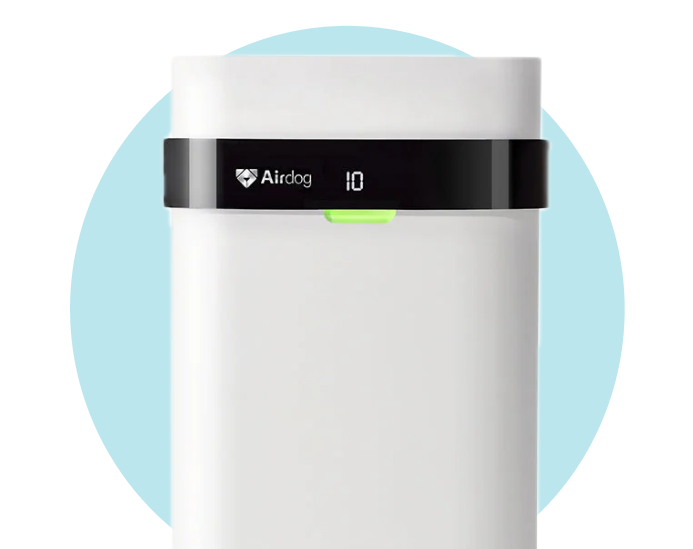
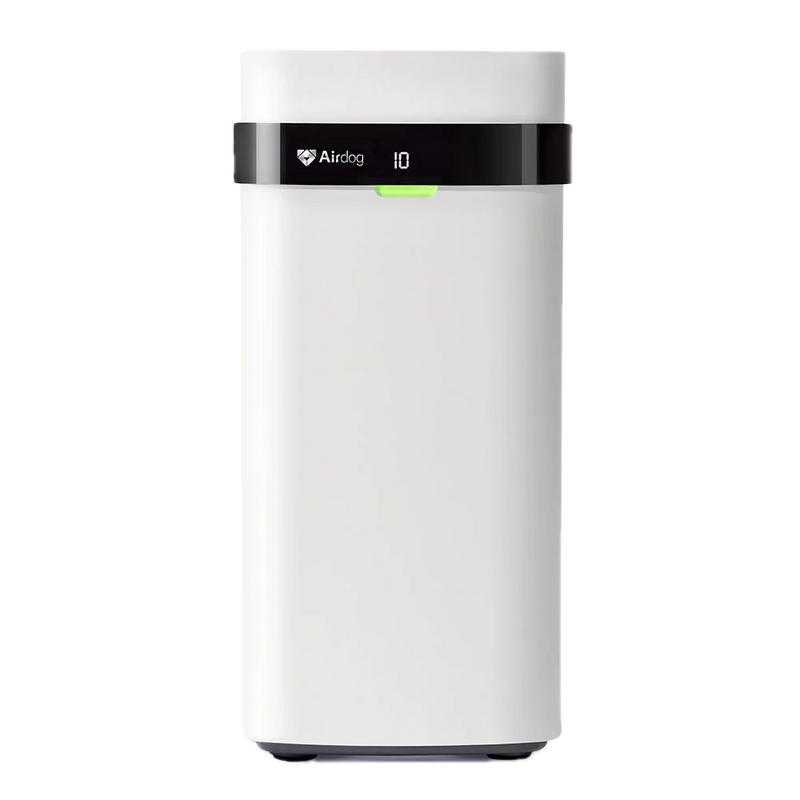
Airdog: The Best Air Purifier to Stop the Spread
Although any air cleaner is better than none, Airdog purifiers stand above the rest when it comes to minimizing viral infections and keeping air truly clean.
Most air purifiers use HEPA filters to capture air particles. However, these filters are limited in their ability to capture the tiniest, and most dangerous, particles. Additionally, HEPA filters only trap what they collect.
Airdog’s TPA® Technology offers an advanced approach to air purification by actively destroying airborne pathogens and capturing particles down to 0.0146 microns. This is over 20 times smaller than what traditional HEPA air purifiers can handle. Using a high-voltage electrostatic field, TPA doesn’t just stop viruses–it eliminates them altogether.
Learn more about Airdog’s filtration technology here.
Your Actionable Checklist: Setup, Daily Routine, and Knowing When to Stop
The First 24 Hours—Get the Room Ready Before Symptoms Peak
The moment you suspect airborne spread is a risk, set up the sick room. Waiting until symptoms worsen means you're already behind on containment.
Choose a room with a door that closes and a window that opens. Add a box of tissues, a lined trash can within arm's reach, and a water bottle or pitcher. Stock a thermometer, any medications they'll need, and a dedicated laundry hamper.
Post a simple note on the door. The CDC's airborne precautions signage for healthcare settings lists reminders like "Clean hands before entering and when leaving" and "Put on a fit-tested N95." At home, adapt this to your family's reality: "Knock first—Mask if entering—Wash hands on exit."
A door note serves two purposes. It reminds everyone (including you at 2 a.m.) to follow the plan, and it signals to visitors that this room is off-limits.
Start your ventilation and air-cleaning schedule immediately. Open the window for 10–15 minutes if outdoor air quality is decent. Turn on your air cleaner and leave it running continuously in the sick room or the main living area where the family spends time.
The earlier you begin managing airflow, the less viral buildup accumulates in the first place.
Daily Routine That Won't Burn You Out
Plan 2–3 intentional "air refresh" windows each day if outdoor air is clean. Open windows on opposite sides of the home for cross-ventilation, even if it's just for 10 minutes. Fresh air dilutes airborne particles faster than any indoor strategy alone.
Run your air cleaner continuously in high-traffic rooms. Bedrooms, the living room, and the sick room itself are priorities. Consistent air cleaning matters more than occasional bursts at high speed.
The CDC's Isolation Precautions guideline emphasizes keeping doors closed and controlling room entry to prevent airborne spread in healthcare settings. At home, keep the sick room door closed except for planned entries.
Bundle caregiving tasks to reduce the number of times you open that door. Deliver breakfast, check temperature, swap out water, and grab dirty laundry in one masked visit instead of four separate trips.
Batching tasks protects you and keeps the rest of the household safer by limiting how often contaminated air mixes with clean air in the hallway.
Track Symptoms and High-Risk Windows
Write down the day symptoms started. Note when fever spiked, when coughing is worst (often nighttime), and if your child uses a nebulizer or has heavy breathing episodes.
This simple tracking helps you intensify precautions during the highest-risk windows instead of maintaining maximum effort all day and night.
If your child coughs heavily between 10 p.m. and 2 a.m., that's when you prioritize ventilation and avoid other family members sleeping in adjacent rooms. If nebulizer treatments happen at 8 a.m. and 8 p.m., boost air cleaning right after those sessions.
You don't need to mask and ventilate at maximum capacity 24/7. Targeting your effort to peak symptom times makes airborne precautions sustainable.
Knowing When You Can Stop
There's no universal timeline for home airborne precautions because every illness and every person is different. Instead, watch for practical cues that risk is declining.
Fever improves and stays down without medication. Cough frequency drops noticeably. Your child has enough energy to complain about being bored instead of sleeping all day.
When symptoms plateau or improve, you can start dialing back the intensity. Ventilate and clean the sick room thoroughly after peak symptoms pass, then allow other family members to use the space again.
For context on how healthcare settings approach duration, the CDC recommends airborne precautions for measles patients for 4 days after rash onset—longer if the person is immunocompromised. This illustrates why duration depends on both the illness and the individual's immune response.
When the sick person is clearly improving and the air in their room no longer feels stale or heavy, it's reasonable to ease restrictions.
When to Call the Doctor
If anyone in your household is high-risk—an infant, someone immunocompromised, or a family member with severe asthma—contact a clinician early. Don't wait to see if home precautions are enough.
If symptoms worsen instead of improving—difficulty breathing, persistent high fever, confusion, or lethargy—seek medical care immediately.
The goal of home airborne precautions is protecting your family while someone recovers, not substituting for medical advice when the situation escalates.