

Most parents never think twice about whether their sick child could pass the flu to the family pet—until someone mentions it at the pediatrician's office or in a parenting group. The question isn't far-fetched: animals can catch certain illnesses from humans. Human-to-animal flu transmission is real but generally uncommon, and the risk depends heavily on which animals you have and how much close contact they share with someone who's ill.
Can animals get the flu from humans?
Influenza refers to an infection caused by influenza viruses, most often influenza A, that spread primarily through respiratory droplets when an infected person coughs, sneezes, or talks. When germs move from humans to animals, scientists call it reverse zoonosis. Yes, some animals can catch human flu, but spillover is uncommon and depends heavily on the species involved.
If a child or caregiver has confirmed flu, treat close-range pet exposure the same way you'd protect an elderly parent: reduce snuggling, avoid face-to-face contact, and keep shared spaces cleaner. Most risk comes from prolonged, direct contact—sleeping together, sharing pillows, being licked near the mouth—rather than a pet "catching it from the air" across the house during a brief pass-by.
One common source of confusion deserves attention early: many pet illnesses labeled "flu" aren't influenza at all. The CDC notes that "cat flu" typically refers to feline calicivirus or feline herpesvirus, not influenza. Correct naming helps you choose the right precautions and ensures your vet addresses the actual illness rather than guessing.
Which animals are most likely to catch human influenza?
Influenza viruses are species-adapted, meaning they spread most efficiently in their usual host. A human flu virus thrives in human respiratory tissue; a bird flu virus prefers avian cells. But influenza A, the type responsible for most seasonal flu and pandemic strains, can sometimes jump species barriers. Some species are more likely to contract human flu than others.
Pigs
Pigs are the gold standard when discussing human-to-animal flu transmission. The CDC explicitly notes that influenza A viruses can spread from people to pigs and from pigs to people.
If anyone in your household visits a petting zoo, county fair, or farm during flu season, don't go when sick, wash hands immediately after animal contact, and avoid eating or drinking in barn areas.
Pigs serve as what scientists call a "mixing vessel"—they can be infected by human and avian influenza viruses simultaneously, which creates opportunities for viral reassortment and new combinations. For families with backyard livestock or regular fair attendance, this makes pigs a higher-priority concern.
Cats
The CDC states clearly that cats can be infected with influenza viruses from people, including seasonal influenza. While uncommon, scientific studies suggest this may not be as rare as once thought.
Transmission tends to occur through close contact with an ill owner rather than casual proximity. Think about the cat who sleeps on your pillow every night, kneads your chest while you're sick in bed, or licks your face during morning cuddles. That level of sustained, intimate exposure creates the conditions for spillover.
If your child has confirmed flu and the family cat insists on sleeping in their room, temporary separation makes sense.
Dogs
"Canine flu" typically refers to dog-adapted influenza A strains—viruses that spread among dogs but are different from seasonal influenza viruses circulating in people. Most respiratory illness in dogs comes from these canine-specific strains or other pathogens in the "kennel cough" complex, not from catching your family's flu.
That said, documented spillover has occurred—most notably during the 2009 H1N1 pandemic era. Research from that period found evidence consistent with human-to-dog transmission, likely through aerosol or close contact between infected owners and pets during the epidemic peak.
If your dog develops a cough or respiratory symptoms during your household flu outbreak, don't assume it's the same virus. Call your vet, describe the timeline, and let them determine whether it's canine respiratory disease or something else. Never give human flu medications to dogs. Many common OTC drugs are dangerous for pets.
Your household risk ladder
Not all pet interactions carry the same risk. Use this contact-intensity ladder to calibrate your response without overreacting:
Lowest risk: separate rooms and no shared bedding
- The sick person stays in their bedroom with the door closed
- Pets sleep in different rooms or common areas
- No shared blankets, pillows, or clothing items
- This level makes sense for severe illness or high-risk animals (like cats with known respiratory sensitivity)
Medium risk: same room but no snuggling or face contact
- Pets can be nearby but maintain distance—think opposite ends of the couch
- No face-to-face petting, kissing, or allowing pets to lick near the mouth or nose
- Sick person handles their own tissues and avoids petting immediately after coughing or sneezing
- Appropriate for mild illness or lower-risk species like most dogs
Highest risk: sleeping together, sharing pillows, being licked while sick
- Pet sleeps on the sick person's pillow or under their blankets
- Face-to-face cuddling happens multiple times daily
- Pet licks the person's face, mouth, or hands frequently
- This setup maximizes exposure and should be temporarily avoided during active flu symptoms
Why indirect exposure through soft surfaces still matters
Respiratory secretions don't just disappear after you cough into a blanket or sneeze near a pillow. Shared soft surfaces—blankets, pet beds, couch cushions, pillowcases—can become contaminated with flu virus particles that remain infectious for hours.
When your cat curls up on the blanket you've been using all day, or your dog nuzzles into the pillow you've been coughing on, indirect exposure occurs.
-
Launder high-contact fabrics more frequently during illness—every 1–2 days instead of weekly
-
Use hot water when washing items the sick person has used extensively
-
Temporarily avoid sharing blankets or pillows with pets; give them their own clean bedding in a different area
-
Focus on the items that see the most face and mouth contact—pillowcases, throw blankets, pet beds near the sick person's space
This approach balances hygiene with sustainability.
Setting realistic boundaries: your pet isn't likely to spread flu back to your family
Here's the reassuring boundary most families need to hear: you don't need to worry about pets becoming a major source of ongoing human flu spread within your household.
The primary concern runs in the other direction—preventing your sick family member from exposing animals to a virus that could cause respiratory distress, especially in susceptible species like cats.
Flu vs. "flu-like" in pets—how to avoid misreading symptoms and when to call the vet
When your pet shows respiratory symptoms during flu season, certain red flags demand professional attention rather than home observation.
Call your veterinarian if you notice:
-
Trouble breathing or rapid breathing—watch for open-mouth breathing in cats, labored chest movement, or breathing that looks effortful
-
Persistent lethargy that lasts beyond 24 hours—your normally active pet stays curled up, won't play, or seems unusually withdrawn
-
Refusal to eat or drink—especially critical in cats, who can develop serious liver complications within 48–72 hours of not eating
-
Dehydration signs—dry gums, skin that doesn't snap back when gently pinched, sunken eyes, or reduced urination
-
Symptoms that worsen after 24–48 hours—mild sniffles that progress to coughing, wheezing, or nasal discharge that becomes thick and colored
Species-specific patterns you should recognize
Dogs with cough and runny nose often have canine respiratory disease complexes—combinations of viruses and bacteria that circulate in dog populations. These aren't the same as seasonal human flu. Kennel cough, canine influenza (dog-adapted strains), and other pathogens create similar symptoms but require different treatment approaches.
Cats deteriorate quickly when they stop eating. Unlike dogs, who can skip meals for a day or two without major consequences, cats face metabolic risks within 48 hours of anorexia. If your cat's respiratory symptoms include refusing food, contact your vet the same day.
Pigs and livestock showing cough or fever require immediate biosecurity steps. Call your veterinarian or agricultural extension office promptly. Farm animals with respiratory illness can spread disease rapidly through herds, and human-to-pig influenza transmission carries broader public health implications.
A simple documentation system for busy caregivers
When you're managing sick children and a symptomatic pet simultaneously, a few basic notes make veterinary triage faster and more accurate.
Track these four data points:
-
Onset date—when did you first notice symptoms? (helps distinguish acute illness from chronic issues)
-
Appetite changes—eating normally, eating less, or refusing food entirely?
-
Breathing effort—normal, slightly labored, or obviously struggling?
-
Temperature (if you have a pet-safe rectal thermometer and know how to use it)—normal range is 100.5–102.5°F for dogs and cats
Write these observations on your phone's notes app or a piece of paper taped to the fridge. When you call the vet, you'll have concrete information instead of vague impressions like "he seems off."
This system helps veterinarians decide whether your pet needs an immediate appointment, can wait 24 hours with home monitoring, or requires emergency care.
Indoor air and "low-effort" respiratory hygiene that helps both people and pets
Why indoor air matters when someone has the flu
Flu spreads mainly via respiratory particles—tiny droplets and aerosols that hang in shared air. Reducing particle concentration and close-contact exposure is the most family-friendly lever you can pull alongside vaccines and handwashing.
Adding better air hygiene creates another layer of protection.
Your simple "air routine" for sick days
Ventilate briefly 2–3 times per day when outdoor air quality allows. Open windows for five to ten minutes, even in winter. Fresh air exchange dilutes indoor particle buildup faster than any air purifier alone.
Check your local air quality index before opening windows. Wildfire smoke or high-pollution days warrant keeping windows closed and relying on mechanical ventilation instead.
Keep doors closed to the sick-room when possible. This contains higher-concentration air to one space rather than mixing it throughout your home. Run a bathroom exhaust fan near the sick-room if you have one—it pulls contaminated air out rather than recirculating it.
Avoid activities that re-suspend dust right next to kids or pets. Vigorous blanket shaking, aggressive vacuuming, or beating couch cushions stirs settled particles back into breathing zones. Save deep cleaning for when everyone is well, or do it in unoccupied rooms. If you must shake out bedding during illness, take it outside.
The power of an air purifier to protect people and pets
You won’t always be able to ventilate your home and, even if you do, there is still a high concentration of airborne particles in areas where affected individuals spend the most time.
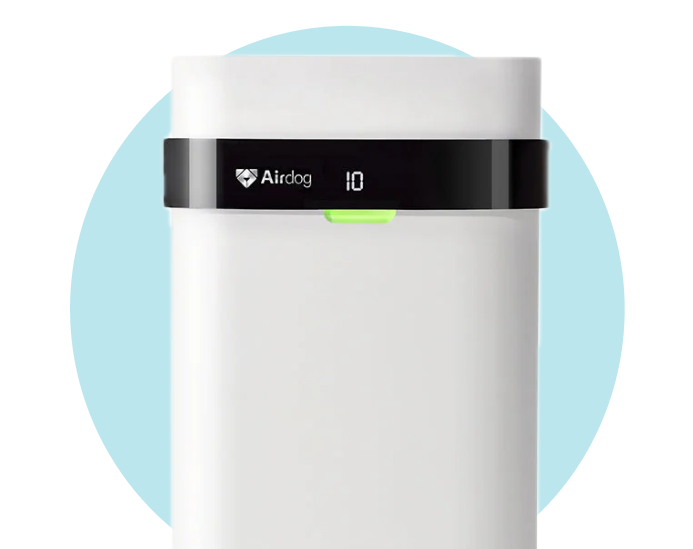
Using an air purifier is a reliable and effortless way to combat the spread of viruses in your home, and Airdog’s purifiers are the best in business.
Most air purifiers use HEPA filters to capture air particles. However, these filters are limited in their ability to capture the tiniest, and most dangerous, particles. Additionally, HEPA filters only trap what they collect.
Airdog’s TPA® Technology offers an advanced approach to air purification by actively destroying airborne pathogens and capturing particles down to 0.0146 microns. This is over 20 times smaller than what traditional HEPA air purifiers can handle. Using a high-voltage electrostatic field, TPA doesn’t just stop viruses–it eliminates them altogether.
Learn more about Airdog’s filtration technology here.
Small, consistent improvements compound over days and weeks to create a safer indoor environment for everyone who lives there—including pets who share your air and can, in some cases, catch influenza viruses from humans.