

Can Dogs Get the Flu? What Every Pet Parent Should Know in 2026
Here's the practical truth: yes, dogs can get the flu—but it's usually canine influenza, not the seasonal virus you catch from your coworker. The symptoms often mimic "kennel cough" or a dog cold, making it tough to diagnose without testing.
This guide will walk you through what dog flu actually looks like in 2026, where your pup is most likely to catch it, and the household habits that reduce spread—especially important if you're managing allergies, asthma, or just want cleaner air for your family. You'll leave with a clear plan: what to watch for, when to call the vet, and how to protect your household (human and canine) when respiratory bugs start circulating.
Can dogs get the flu? (Yes, but it's usually canine influenza, not "your" flu)
When people ask "can dogs get the flu," they're usually talking about canine influenza virus (CIV)—a contagious respiratory illness caused by influenza A viruses that have adapted specifically to dogs. In the U.S., the strain you'll hear about most often is H3N2, which the CDC identifies as the primary cause of dog flu circulating today. (The older H3N8 strain hasn't been reported since 2016, so it's no longer a practical concern for most families.)
The tricky part: symptoms often look identical to other respiratory bugs. Your dog might cough, have a runny nose, or seem tired—signs that overlap with canine infectious respiratory disease complex (CIRD), the umbrella term for "kennel cough" illnesses caused by bacteria like Bordetella or viruses like parainfluenza. You can't reliably tell the difference by symptoms alone, which is why outbreak awareness and veterinary testing matter.
Here's what makes this especially relevant for families: dog flu spreads fast in places where dogs share indoor air and surfaces—daycare, grooming salons, boarding kennels, training classes. And here's the kicker: some dogs carry and spread the virus without showing obvious symptoms. Veterinary sources note that roughly 20% of infected dogs remain asymptomatic yet still shed virus, meaning a seemingly healthy pup at the dog park could bring illness home to your household.
For families focused on clean air and respiratory health, the household response should layer three practical steps:
-
Reduce close-contact exposures when respiratory illness is circulating locally.
-
Clean high-touch pet items like bowls, leashes, and toys that can carry secretions.
-
Improve ventilation and air cleaning during illness clusters—helpful for reducing airborne irritants that affect both pets and people managing asthma or allergies.
A few quick definitions to keep things clear as we move forward:
-
CIV = canine influenza virus (the dog flu we're discussing);
-
CIRD = canine infectious respiratory disease complex (the broader "kennel cough" category);
-
fomites = contaminated objects—think water bowls, leash handles, your hands, your clothing—that can move germs from one dog to another.
Understanding these terms will help you make faster, smarter decisions when your dog starts coughing or when you're deciding whether to skip daycare this week.
What dog flu is in 2026: the strains, what's circulating, and what's not
The two strains—and why only one matters right now
When veterinarians talk about canine influenza in North America, two strains come up: H3N2 and H3N8. But here's what you need to know today: H3N2 is the strain currently causing dog flu in the United States, according to the CDC. H3N8, which circulated earlier, hasn't been reported since 2016—so it's effectively off the table for most families planning around current risk.
H3N2 emerged more recently and spread quickly because most dogs had zero preexisting immunity. That lack of prior exposure is still true today, which is why outbreaks can move fast through daycare facilities, boarding kennels, and grooming salons where dogs congregate indoors.
If you're hearing about "dog flu" from your vet, your daycare, or local pet parents, they're almost certainly referring to H3N2. Knowing the specific strain won't change your day-to-day response, but it does clarify what you're dealing with—and why testing matters when symptoms appear.
Dog flu doesn't follow a season—it follows your schedule
Unlike human flu, which peaks predictably in winter, canine influenza can show up any time of year. The AVMA notes infection can occur year-round, meaning you can't assume "it's July, so my dog is safe."
Think about when your dog's social calendar gets busiest: holiday boarding over Thanksgiving or winter break, regular daycare drop-offs during the work week, grooming appointments before family visits. Those are the moments when exposure risk climbs—not because of weather, but because of proximity to other dogs in shared indoor spaces.
Summer playdates at the dog park, weekend training classes, even a quick trip to the pet store during a local outbreak—all of these create opportunities for transmission. The virus doesn't care about the calendar; it cares about contact.
Every dog is susceptible—yes, even yours
Here's a misconception that trips up a lot of families: "My dog is young and healthy, so she won't catch it." The AVMA is clear: dogs of any breed, age, sex, or health status are at risk. Puppies, seniors, purebreds, mixed breeds—canine influenza doesn't discriminate.
Most dogs in North America have little to no preexisting immunity to CIV, which means almost every dog exposed to the virus will become infected. Your perfectly healthy Labrador who's never been sick a day in her life? She's just as vulnerable as the senior pug down the street.
This matters especially if your household relies on daycare, dog parks, or regular grooming. Frequent social settings mean frequent exposure opportunities, and "my dog has a strong immune system" won't protect against a virus she's never encountered before.
Build a decision framework, not a panic button
Because exposure happens primarily in social settings—places where dogs share air, water bowls, toys, and close contact—the most practical prevention step isn't avoiding all dog-to-dog interaction forever. It's building a decision framework you can use when respiratory illness starts circulating locally.
Ask yourself:
-
Has my daycare reported coughing dogs in the past two weeks?
-
Is my groomer seeing an uptick in respiratory symptoms?
-
Can I postpone this boarding reservation or choose a less crowded time?
-
Should I talk to my vet about the canine influenza vaccine given how often my dog socializes?
These questions turn vague worry into actionable choices. You're not guessing; you're gathering information and adjusting your dog's schedule based on real risk, not fear.
What dog flu is—and what it's not
Here's where confusion creeps in: dog flu is not the same as general "kennel cough" caused by Bordetella bronchiseptica or canine parainfluenza virus. But the symptoms—coughing, nasal discharge, lethargy—often look identical.
That overlap means you can't diagnose canine influenza by symptoms alone. A persistent cough after daycare could be CIV, Bordetella, parainfluenza, or another respiratory pathogen entirely. Testing and outbreak awareness matter more than guessing, which is why calling your vet and asking about local respiratory illness trends is always smarter than waiting to see if it resolves on its own.
If your daycare or boarding facility reports multiple dogs coughing within a short window, that's your cue to take symptoms seriously and isolate your dog while you seek veterinary guidance.
Symptoms and timeline: what you can monitor at home
The signs that matter—and how to read them
The CDC describes canine influenza symptoms as cough (often persistent), nasal discharge, fever, lethargy, reduced appetite, and eye discharge. These overlap almost perfectly with other respiratory illnesses, which is why you can't diagnose dog flu by symptoms alone.
But you can use symptoms to decide whether to monitor at home or call your vet immediately.
Mild but monitor looks like this: a soft cough that appears after daycare, clear or slightly cloudy nasal discharge, your dog eating a bit less than usual but still interested in treats, and lower energy without obvious distress. Your dog might sleep more, skip a game of fetch, or seem "off" without being visibly sick.
Concerning escalates quickly: labored breathing at rest, blue or pale gums, repeated vomiting, high fever, complete refusal of food and water, or a cough that worsens over 24–48 hours instead of plateauing. These signal potential secondary bacterial infections that can progress to pneumonia—the complication the CDC warns about as the reason some cases turn severe.
The timeline every family should know
Incubation is roughly 1–5 days, meaning your dog can look completely normal right after exposure at daycare, the groomer, or a weekend playdate. Symptoms may not appear until days later—long after you've forgotten about that quick trip to the dog park.
Most dogs recover in about 2–3 weeks according to the CDC. That's a meaningful chunk of time if you're juggling work schedules, childcare pickups, or planning who will handle dog care while your pup is contagious.
Knowing this timeline helps you plan isolation and limit dog-to-dog contact in a realistic way. If your dog starts coughing on Monday, you're looking at keeping her home from daycare for at least two weeks and possibly longer depending on your vet's guidance.
Why "it seems minor" still deserves attention
Here's the tricky part: many cases of canine influenza start mild and stay mild. Your dog coughs for a few days, rests more than usual, then bounces back.
But some dogs develop secondary bacterial infections that turn a manageable respiratory illness into pneumonia. The CDC notes this progression as the reason severity can range from no signs to life-threatening illness.
A worsening cough, labored breathing, or significant fatigue after the first few days is your signal to call the vet promptly rather than waiting it out. Pneumonia doesn't announce itself with a single dramatic symptom; it creeps in as breathing becomes harder, energy drops further, and the cough shifts from occasional to constant.
Your home monitoring checklist
Write these observations down daily—it makes reporting to your vet faster and more accurate, especially if symptoms change quickly:
-
Eating and drinking: Is your dog finishing meals? Interested in treats? Drinking normal amounts of water?
-
Energy level: Can she walk to the backyard without seeming winded? Is she sleeping more than usual or unable to settle?
-
Breathing effort at rest: Watch her chest while she's lying down. Does breathing look smooth or labored? Count breaths per minute if you're concerned.
-
Cough frequency: Does it happen more at night? After activity? Is it dry and hacking or wet and productive?
-
Hydration check: Lift your dog's lip and press gently on her gums. They should be moist and pink, and color should return quickly when you release pressure.
Tracking these details transforms vague worry ("she seems worse") into concrete data your vet can use to decide whether an exam is urgent or can wait.
How dog flu spreads
Two ways canine influenza moves between dogs
Dog flu spreads through two main routes, and understanding both helps you make smarter decisions about where your dog spends time.
First: respiratory droplets and aerosols. When an infected dog coughs or sneezes, tiny particles carrying virus spray into the air. Dogs in close proximity—playing face-to-face, sharing a kennel run, sniffing each other during greeting—breathe in those particles and become infected.
Second: fomites—contaminated objects and people. The AVMA highlights contaminated objects and surfaces as a key transmission route in social settings. Virus-laden nasal secretions land on water bowls, toys, leash handles, and collars. Your hands pick up secretions when you pet an infected dog, then transfer them to your own dog's face when you offer a treat.
Think of fomites as the invisible bridge between dogs who never directly touch. Your dog doesn't need to play with a sick dog to get infected; she just needs to drink from the same communal bowl an hour later.
Why outbreaks cluster in facilities
Canine influenza concentrates in places where many dogs share indoor air and high-touch surfaces: boarding kennels, daycare facilities, grooming salons, shelters, and training classes.
These environments amplify exposure because new dogs constantly enter and leave. Monday's playgroup might include a dog who was exposed over the weekend but won't show symptoms until Wednesday—after she's already spent hours in close contact with a dozen other dogs.
This clustering pattern should inform your real-life decisions. Ask yourself: "Do we really need daycare this week?" If your schedule allows flexibility and you've heard about respiratory illness circulating locally, keeping your dog home for a few days reduces risk significantly.
"Can we schedule grooming when the facility is less busy?" A Tuesday morning appointment when your dog is one of two clients creates far less exposure than Saturday afternoon when ten dogs cycle through the same drying station, using the same grooming table, handled by staff who've touched multiple animals.
Questions to ask daycare and boarding facilities
Don't assume facilities have strong respiratory illness protocols. Ask directly—these questions give you the information you need to evaluate risk:
-
"Have you had any dogs with coughing or respiratory symptoms in the past two weeks?" A straightforward yes/no tells you whether active illness is circulating.
-
"What's your isolation policy if a dog starts coughing during the day?" You want to hear that symptomatic dogs are immediately separated from the group and owners are called to pick up.
-
"What cleaning and disinfection routines do you use between dogs?" Look for specifics: bowls washed between uses, surfaces disinfected with veterinary-approved products, separate cleaning tools for different areas.
-
"Do you require or encourage canine influenza vaccination?" Facilities that prioritize vaccination as part of their admission requirements tend to take respiratory illness seriously across the board.
Good facilities expect informed clients to ask these practical questions and will be ready to explain their procedures.
Why shared items carry more risk than quick outdoor encounters
Viruses don't live forever on surfaces, but they survive long enough to matter. Canine influenza can persist on bowls, toys, and other non-porous surfaces for hours—plenty of time for multiple dogs to share contaminated items during a typical daycare day.
Shared water bowls and communal toys are higher-risk than a quick pass-by greeting at the park. Your dog sniffing another dog's rear end for three seconds outdoors carries far less transmission potential than drinking from a bowl that ten other dogs used that morning.
Pack your own supplies for boarding and day trips. Bring a labeled water bowl, a few familiar toys, and your dog's own food dish. It's a small step that eliminates one transmission route entirely.
Treating your multi-dog household like a mini-outbreak
If one dog gets sick, assume your other dogs are already exposed. You can still reduce viral load and limit how sick they get.
Separate water and food bowls immediately. Wash each dog's dishes individually in hot soapy water after every meal. Don't let them drink from the same bowl even if they've been doing it for years.
Minimize face-to-face play and close contact. No wrestling, no sharing beds, no grooming each other. Keep interactions calm and distanced until the sick dog is no longer coughing.
Clean shared touchpoints daily: crate latches, doorknobs you touch after handling the sick dog, leash handles, and car seat covers if you're transporting dogs to the vet. These surfaces become contaminated when you touch them with hands that just petted a shedding dog.
Multi-dog homes face higher stakes because you're managing an outbreak, not a single case. Treat it that way from day one.
Can dogs catch flu from humans (and can humans catch dog flu)?
The viruses are different—and that matters for your family
Here's the reassuring truth: canine influenza viruses are not the same as human seasonal flu viruses. The CDC specifically notes that canine H3N2 is distinct from human seasonal H3N2, despite sharing a similar name.
This distinction reduces unnecessary fear. When you have the flu, your primary concern should be your own recovery and protecting other people in your household—not worrying that you're going to make your dog seriously ill.
Dog flu spreads dog-to-dog through canine-adapted influenza viruses. Human flu spreads person-to-person through human-adapted strains. The two rarely cross over in everyday household settings.
Should your dog sleep with you when you're sick?
The short answer is that reducing close face-to-face contact makes sense as a general infection-control habit, not because human-to-dog transmission is common or well-documented.
Here's what practical caution looks like:
-
Wash your hands before and after handling your dog while you're acutely ill
-
Avoid sharing pillows and blankets during the days when you're feverish and coughing heavily
-
Skip the face-licking greetings until your symptoms improve
-
Keep your dog off your pillow if you're coughing into it all night
Apply the same common-sense hygiene you'd use around elderly relatives or young children by limiting direct exposure to respiratory secretions when viral loads are highest.
The rare exceptions worth knowing about
Honesty matters here: some human-origin influenza viruses have infected dogs in limited circumstances.
The best-documented example is pandemic H1N1/2009. Research published in peer-reviewed studies found that this human-origin virus can infect dogs, though infected dogs showed generally mild signs and dog-to-dog transmission was inefficient under controlled study conditions.
This tells us cross-species transmission is biologically possible—but it's not the routine scenario most families face. Your seasonal flu is unlikely to jump to your dog, and even in the rare cases where novel viruses have infected dogs, those dogs didn't efficiently spread illness to other dogs.
Context matters. These infections occurred during a global pandemic involving a novel virus that behaved differently from typical seasonal flu. It's not the pattern you should expect during an ordinary winter cold-and-flu season.
Your dog won't give canine flu to your kids
This is the reassurance parents and caregivers need most: the CDC reports no documented human infections with canine influenza viruses anywhere in the world and considers the threat to people low.
If your dog develops canine influenza, your children can safely stay in the same house. Your elderly parents visiting for the holidays face no elevated risk from a coughing dog.
You don't need to isolate your dog from people. You need to isolate your dog from other dogs to prevent spread within the canine population.
This distinction matters for families managing multiple health concerns. You can focus your energy on keeping your sick dog comfortable and away from the dog park, not on whether Grandma needs to avoid the living room.
Prevention that fits real family life
Not all dog activities carry the same risk. Solo neighborhood walks and backyard play fall into the low-risk category—your dog isn't sharing air or surfaces with unfamiliar dogs.
Indoor daycare, boarding facilities, and dog parks during known outbreaks sit at the opposite end. These environments concentrate dogs in shared spaces where respiratory droplets and contaminated surfaces amplify transmission.
When you hear about respiratory illness circulating locally, shift toward outdoor and less-crowded options. Choose an early-morning park visit when fewer dogs are present. Schedule grooming appointments during off-peak hours. Skip the indoor play session and opt for a long walk instead.
Make informed choices based on current conditions in your area.
Vaccination as a targeted tool
Canine influenza vaccines exist and can reduce severity of illness, but they're typically recommended for dogs with frequent high-exposure situations: those attending daycare multiple times per week, staying in boarding kennels, participating in dog shows, or living in shelters.
The AVMA notes that vaccination decisions should be based on lifestyle and exposure risk, not applied universally to every dog. A dog who rarely leaves the backyard has different needs than one who spends three days a week at an indoor facility with rotating groups.
Talk to your veterinarian about your dog's actual routine. Be specific: how many days per week does your dog interact with other dogs indoors? Are you planning a boarding stay over the holidays? Does your groomer see dozens of dogs daily in a small space?
Your vet can help you weigh whether vaccination makes sense given your dog's real-world exposure—and whether facilities you use require or encourage it as part of their illness-prevention protocols.
Choose facilities with strong hygiene standards
Not all daycares, boarding kennels, and groomers manage respiratory illness the same way. Before you book, ask direct questions about their policies.
Do they isolate dogs who start coughing? What's their protocol for notifying clients about respiratory illness in the facility? How often do they disinfect shared surfaces, and what products do they use?
Pack your own water bowl and toys for daycare or boarding trips. Communal water bowls at dog parks and events are convenient, but they're also high-touch items that move secretions between dogs.
Facilities that separate sick dogs quickly, require owners to report symptoms, and follow rigorous cleaning schedules reduce your dog's exposure risk. If a business can't clearly explain their illness-management plan, consider that a red flag.
Home air and respiratory-health habits that support wellness
Increase ventilation when weather allows. Open windows to bring in fresh outdoor air and dilute any airborne irritants or pathogens circulating indoors.
Avoid indoor smoke and aerosol irritants—candles, air fresheners, harsh cleaning sprays—especially in rooms where your dog spends significant time. Respiratory tissues already challenged by illness or allergies don't need additional chemical exposure.
Effective air cleaning reduces overall airborne irritants, which is particularly helpful for households managing asthma, allergies, or other respiratory sensitivities. Cleaner air creates a healthier baseline for everyone in your home, human and canine alike.
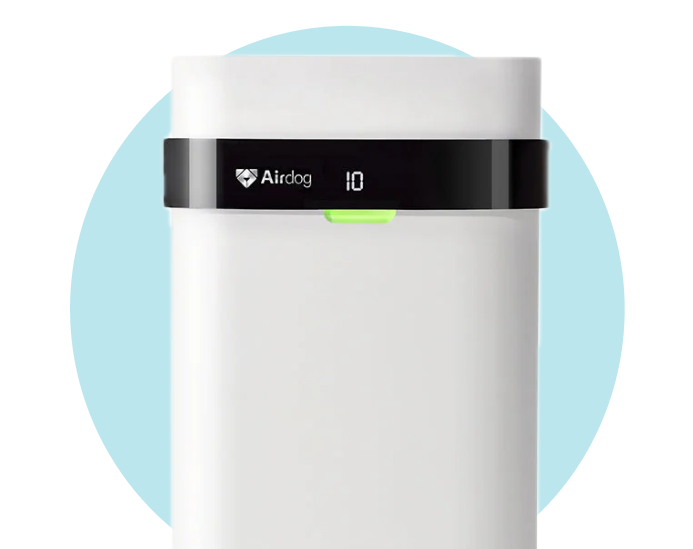
Air purifiers are a great way to keep air clean and healthy.
Airdog’s TPA® Technology: The Best Choice for Clean Air
Airdog’s TPA® Technology offers an advanced approach to air purification by actively destroying airborne pathogens and capturing particles down to 0.0146 microns, which is over 20 times smaller than what traditional HEPA air purifiers can handle. Using a high-voltage electrostatic field, TPA doesn’t just stop viruses that affect humans and animals–it eliminates them altogether.
Learn more about Airdog’s filtration technology here.
That said, air cleaning complements other prevention steps; it doesn't replace isolating a contagious dog or skipping high-risk activities during outbreaks. Think of it as one layer in a multi-part strategy.