

When COVID-19 changed how we think about the air we breathe, many families realized something unsettling: the invisible particles floating inside our homes can affect our health. Before the pandemic, air quality felt like an outdoor problem—something you worried about during wildfire season or in smoggy cities. Now we understand that indoor air can harbor allergens, viruses, and fine particles that affect our children's respiratory health, trigger asthma attacks, and even impact cardiovascular wellness.
The challenge for health-conscious parents is real: you want to protect your family without locking yourself into expensive filter subscriptions or gimmicky technologies that promise more than they deliver.
This article cuts through the confusion around air purifiers and COVID-19 protection. You'll learn how air purifiers work, what science says about air purifier COVID protection, and how to choose a purifier that fits your home and budget. You’ll also learn about washable filters that eliminate ongoing costs and waste while maintaining performance.
Can a single device really make a measurable difference in your home's air quality and your family's health?
Understanding Air Purifiers
The pandemic changed everything about how we view indoor spaces. Suddenly, the air circulating through our living rooms, bedrooms, and home offices became a health concern we could no longer ignore. Schools closed, offices went remote, and families spent unprecedented time indoors—all while a respiratory virus spread through airborne particles.
Air purifiers emerged as a practical defense layer during this crisis, and the science backs up their effectiveness. Studies show that HEPA air purifiers can reduce exposure to virus-laden aerosols by up to 65% in indoor settings, with even greater protection when combined with other measures. For families already managing asthma, allergies, or respiratory sensitivities, this technology offers measurable relief from the particles that trigger symptoms and emergency room visits.
The good news: you don't need to choose between protecting your family and protecting your budget. While many brands lock you into costly filter replacement programs, sustainable alternatives exist. Washable filter technology eliminates the subscription model entirely, letting you maintain clean air without recurring expenses.
Your family spends roughly 90% of their time indoors; the quality of that indoor air directly impacts their wellbeing, cognitive function, and long-term health outcomes.
How Air Purifiers Actually Clean Your Air
Air purifiers aren't magic boxes—they're mechanical devices that pull room air through filters, trap particles, and release cleaner air back into your space. The process repeats continuously, gradually reducing the concentration of airborne pollutants with each cycle through the device.
Think of it like a circulation system for your room. The purifier draws in air containing dust, pollen, pet dander, smoke particles, and yes, even virus-laden aerosols. High-efficiency filters capture these particles while allowing clean air to flow back out.
What HEPA Filtration Actually Means
HEPA stands for High-Efficiency Particulate Air, and these filters meet a specific performance standard. They must capture at least 99.97% of particles at 0.3 microns in size—the most challenging particle diameter for mechanical filtration to trap.
Particles at 0.3 microns fall between filtration mechanisms, making them the hardest to capture. When a filter performs well at this size, it typically performs even better at larger and smaller particles. This includes most respiratory aerosols, fine particulate matter (PM₂.₅), and the droplet nuclei that can carry viruses like SARS-CoV-2.
For parents concerned about air purifier COVID protection, this matters because the virus itself measures much smaller than 0.3 microns, but it travels on respiratory particles and aerosols that fall well within HEPA's capture range.
HEPA Limitations to Know
While HEPA is effective, it has practical drawbacks:
-
Filters clog over time, reducing airflow and real-world performance
-
Replacement filters can be expensive and must be swapped regularly
-
Dense media can increase fan noise and energy use
-
Disposable filters create ongoing waste
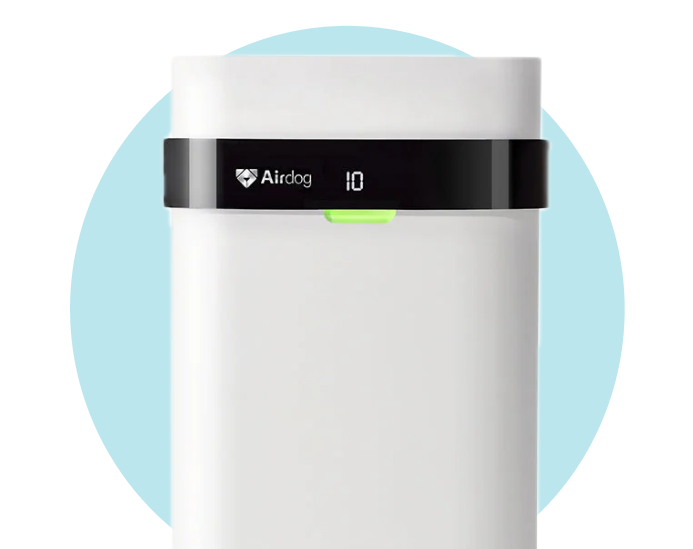
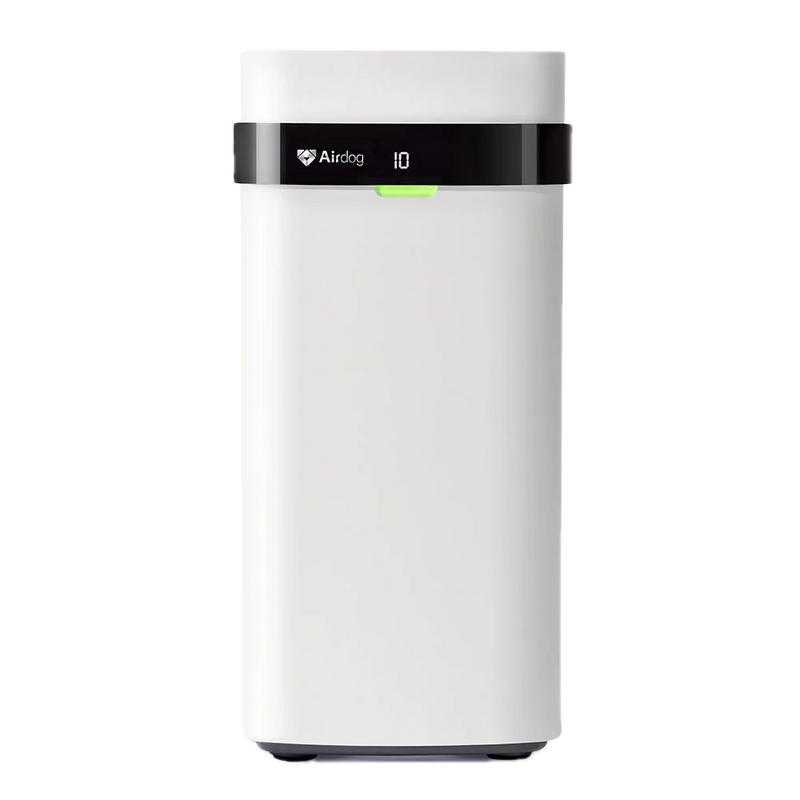
Some newer systems use washable filtration technologies, such as Airdog’s TPA (Two-pole Active Filtration Technology), which captures and kills ultrafine particles as small as 0.0146 microns without disposable filters. Airdog reduces recurring costs and waste while maintaining strong particle removal.
CADR: The Number That Matters Most
Clean Air Delivery Rate (CADR) measures how much filtered air a purifier delivers per minute. A higher CADR means the device cleans your room's air faster and more completely.
CADR gets tested separately for three particle types:
-
Smoke (fine particles, most relevant for air purifier COVID concerns and PM₂.₅)
-
Dust (medium-sized particles)
-
Pollen (larger allergen particles)
Smoke CADR typically matters most for health applications because it reflects performance against fine particulate matter. When you're comparing purifiers, match the CADR to your room size to ensure meaningful air changes.
You can convert CADR into air changes per hour (ACH) using this formula: ACH = (CADR × 60) ÷ room volume in cubic feet.
Health authorities increasingly recommend achieving 5 or more air changes per hour of clean air in shared indoor spaces, combining ventilation with filtration to reach that target.
Ventilation vs Filtration: What Families Get Wrong
Here's what many families misunderstand: air purifiers filter particles but don't bring in fresh outdoor air. They recirculate and clean the air already in your room.
Ventilation—opening windows, using exhaust fans, or running HVAC systems that draw outdoor air—serves a different purpose. It dilutes indoor air with outdoor air, removing carbon dioxide that builds up when people occupy a space and introducing oxygen-rich air from outside.
Both strategies matter for healthy indoor environments. A purifier running in a sealed room will reduce particles beautifully but won't address CO₂ accumulation or remove gaseous pollutants that filters can't capture. Opening a window brings fresh air but also introduces outdoor pollution, pollen, or wildfire smoke depending on conditions.
The most effective approach is layering these strategies together. Run your air purifier to handle particles while maintaining some level of ventilation appropriate to outdoor air quality. During wildfire smoke events, rely more heavily on filtration with windows closed. On clean-air days, open windows to supplement mechanical filtration with natural ventilation.
Health Benefits of Air Purifiers: What the Research Actually Shows
The promise of cleaner air sounds appealing, but does it translate into measurable health improvements for your family? The research gives us concrete answers—and they're more encouraging than many parents realize.
Respiratory Relief for Asthma and Allergy Sufferers
Reducing allergens and fine particulate particles leads to fewer symptoms and improved quality of life for children and adults with respiratory conditions. Air purifiers capture allergens like pollen, dust mites, and pet dander before they reach sensitive airways.
Research shows HEPA air cleaners reduce unscheduled medical visits for children exposed to environmental triggers like wildfire smoke or seasonal allergens. This does not cure asthma, but it reduces environmental triggers that exacerbate symptoms.
Cardiovascular Protection Through Particle Reduction
Fine particulate matter doesn't just affect your lungs. These microscopic particles can enter your bloodstream and contribute to cardiovascular stress, elevated blood pressure, and increased risk of heart-related events. Clinical trials show that reducing PM2.5 exposure with air filtration leads to measurable reductions in blood pressure within weeks.
The EPA recognizes that portable HEPA air cleaners benefit both allergy and asthma symptoms as well as cardiovascular health by reducing fine particle exposure.
Air Purifiers and COVID-19: The Science Behind Viral Aerosol Reduction
COVID-19 taught us that respiratory viruses spread through inhalable aerosols—tiny particles that linger in indoor air far longer than anyone expected. This reality pushed ventilation and filtration from the background into the spotlight as essential layers of protection.
How Filtration Reduces Viral Exposure
CDC research found that two properly sized HEPA air cleaners reduced exposure to simulated exhaled aerosols by up to 65% without any other interventions. When combined with universal masking, exposure reduction reached approximately 90%. The layered approach—clean air plus personal protection—delivered far better results than either strategy alone.
Placement mattered significantly in these tests. Positioning air purifiers near the aerosol source (where an infected person might be breathing, talking, or coughing) captured viral particles more effectively than placing units across the room.
This finding has practical implications for families. If someone in your household gets sick, running an air purifier covid in their bedroom—and in shared spaces like the living room—creates zones of cleaner air that reduce transmission risk to other family members.
The "Equivalent Clean Air" Framework for Homes and Schools
CDC and NIOSH recommend five or more air changes per hour (ACH) of clean air in shared spaces. This includes ventilation and filtration combined.
Use CADR to calculate equivalent ACH and right-size your approach for rooms where your family spends the most time.
Choosing the Right Air Purifier for COVID Protection
Match CADR to Your Room Size
The single most important specification on any air purifier is Clean Air Delivery Rate (CADR)—the volume of filtered air the device delivers per minute.
Higher CADR means faster particle removal and larger effective coverage. A purifier with 150 CADR might work beautifully in a bedroom but struggle in an open-plan living area.
The math tells you exactly what you need: multiply your room's length × width × ceiling height to get cubic feet, then find a CADR that delivers at least 4-5 air changes per hour in that space.
Smoke CADR is the most relevant for fine particles and viral aerosols.
Prioritize High Quality Filtration and Washable Media
HEPA filters work well but require regular replacement. Washable filtration systems, including Airdog’s TPA technology, avoid recurring filter costs and reduce waste while maintaining strong ultrafine particle capture
Avoid Ozone-Generating Technologies
Some air cleaners use ionization, plasma, or other reactive technologies that can produce ozone as a byproduct. Ozone is a lung irritant that can cause chest pain, coughing, and shortness of breath—exactly the respiratory symptoms you're trying to avoid.
At concentrations that meet public health standards, ozone is generally ineffective at controlling indoor air pollution and can create irritating reaction products. If you have children with asthma or elderly family members with respiratory conditions, ozone exposure compounds their vulnerability rather than protecting them.
Stick with mechanical filtration—HEPA or Airdog’s TPA technology—that physically captures particles without generating reactive gases. The technology is proven, safe, and doesn't introduce new indoor air quality concerns while trying to solve existing ones.
Maximizing Air Purifier Effectiveness
Strategic Placement Makes or Breaks Performance
Where you put your air purifier matters as much as which model you buy.
CDC testing with simulated respiratory aerosols showed that placement near the aerosol source significantly improved exposure reduction. The closer the purifier to where particles enter the air, the less time those particles spend circulating through the room.
For air purifier covid protection, position units in rooms where family members spend the most time—bedrooms during sleep hours, living areas during the day, home offices during work-from-home stretches.
Bedrooms deserve special attention because you spend 7-9 hours breathing the same air while asleep. A purifier running overnight in a child's bedroom can meaningfully reduce their exposure to allergens and particles that trigger nighttime asthma symptoms.
Avoid tucking purifiers into corners or behind furniture. Air needs to flow freely into the intake and out of the outlet. Leave at least 12-18 inches of clearance on all sides for optimal circulation.
If you're dealing with a specific pollution source—a kitchen that generates cooking particles, a home office near a busy road, or a room where pets spend most of their time—put the purifier in that space rather than trying to clean air after it's already spread throughout your home.
Filter Maintenance Determines Long-Term Value
Washable filters require regular cleaning to maintain their particle-capture efficiency.
Most washable filter systems need rinsing every 2-4 weeks, depending on your indoor air quality and how many hours per day you run the unit. The process takes 10-15 minutes—remove the filter, rinse under water until the runoff is clear, let it air dry completely, and reinstall.
Skipping maintenance doesn't just reduce performance; it can actually make your air quality worse. A clogged filter restricts airflow, drops your effective CADR, and can cause the fan motor to work harder and wear out faster.
Set a recurring reminder on your phone for filter cleaning. The first Saturday of every month works for most households. Make it part of your routine like changing HVAC filters or testing smoke detectors.
For families with severe allergies or asthma, consider cleaning filters weekly during high-pollen seasons or wildfire smoke events when particle loads are higher.
Watch for signs that filters need attention sooner than scheduled: reduced airflow from the outlet, unusual noise from the fan, or visible dust accumulation on the filter surface.
Layer Purification with Ventilation and Humidity Control
Air purifiers remove particles from indoor air, but they don't bring in fresh outdoor air or remove the CO₂ your family exhales.
That's why ventilation still matters. Open windows when outdoor air quality is good—checking your local AQI before opening up. Even 10-15 minutes of cross-ventilation can flush out accumulated indoor pollutants and bring oxygen levels back up.
Humidity control complements air purification by keeping conditions unfavorable for mold growth and dust mite reproduction. Maintain indoor humidity between 30-50%—low enough to discourage biological pollutants, high enough to prevent respiratory irritation from overly dry air.
A hygrometer costs $10-15 and tells you exactly where your humidity sits. If you're consistently above 50%, a dehumidifier prevents mold. Below 30%, a humidifier protects respiratory membranes that serve as your first line of defense against airborne pathogens.
Final Thoughts: Do Air Purifiers Help With COVID?
Air purifiers do not eliminate infection risk, but they reduce airborne viral particles and improve overall indoor air quality. When combined with ventilation, vaccination, and staying home when sick, they create a meaningful layer of protection.
For families spending most of their time indoors, clean air is a high-impact health intervention, Beyond COVID, better air quality reduces allergy symptoms, asthma triggers, and cardiovascular strain.
Whether you choose HEPA-based systems or newer washable technologies like Airdog’s TPA technology, the goal is the same: consistent, reliable clean air in the spaces where your family lives and sleeps.
Small changes such as adding a purifier, improving ventilation, and monitoring humidify, can transform your home into a healthier environment year-round.