





Air Purifiers for Garages
Garages generate some of the most chemically complex indoor air of any space in or around the home. Vehicle exhaust, fuel vapors, paint fumes, solvents, and particulate dust from woodworking and fabrication all accumulate in a space that is rarely ventilated adequately. Airdog garage air purifiers are durable, high-capacity, and effective at keeping garage air clean and healthy.
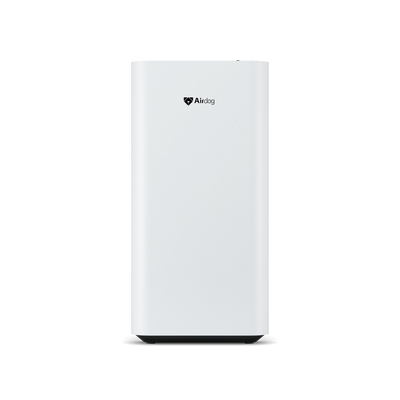
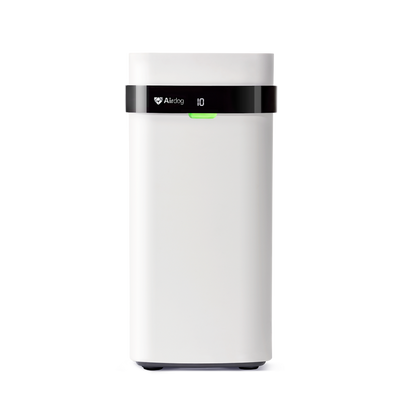
Airdog air purifier perfect for garages


Cleaner Air Has Never Been This Easy

1 Year Warranty
365-nights backed by safety + comfort

Pay as you go
Buy-now, pay-later financing @ 0% APR

Fast, Free Shipping
2-5 day shipping in the continental US

30-Day Home Trial
The best air you've ever had, guaranteed

24-hour Customer Service
Real, US-based customer support

How Do Air Purifiers Help in Garages?
The Garage Air Problem
Most garages were designed for storage and vehicle access, and are therefore not well ventilated. A standard attached garage has limited air exchange with the outdoors, and any air that does move tends to migrate into the home rather than outward. This means that exhaust fumes from a running engine, vapors from stored gasoline or solvents, and particulates from grinding, sanding, or cutting operations all accumulate in a space where people increasingly spend meaningful time working. Airdog's TPA® technology creates a continuous capture field for the particulate component of these pollutants, reducing the particle load in garage air during and after work sessions.
Designed for High-Particulate Environments
Woodworking, metalworking, and automotive work all generate particulate loads that overwhelm standard filter-based purifiers within hours. Sawdust, metal filings, grinding sparks residue, and paint overspray clog conventional HEPA filters rapidly, degrading performance and requiring frequent, expensive replacements. Airdog's washable collection plates handle high-particulate environments differently: as particles accumulate, performance is maintained rather than degraded, and a simple water rinse restores the plates to full efficiency.
Air Purifiers
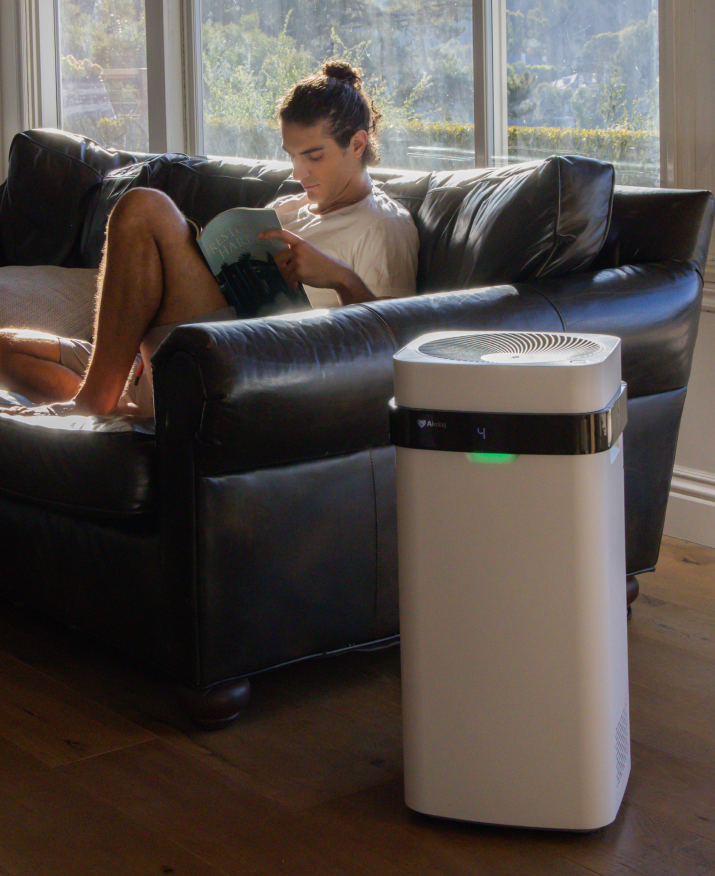
Airdog engineers the most reliable, most effective air purifiers in the world with a unit designed for every space.
Find the right purifiers your offices, basement, attic, interior family spaces, bedrooms and more.
Learn More About Garage Air Quality Read More
The garage is the most chemically diverse indoor environment and one of the least considered when it comes to air quality. For anyone who spends time working in their garage, Airdog provides a meaningful layer of respiratory protection.
Vehicle Exhaust and Carbon Monoxide
Even briefly running a vehicle in an attached garage introduces carbon monoxide and fine combustion particulates into the space and, through gaps and door seals, into the home. While Airdog purifiers are not CO detectors and should always be paired with a proper carbon monoxide alarm, the TPA® system captures the fine particulate component of exhaust.
Woodworking and Fine Dust
Fine wood dust created by sanding is classified as a respiratory hazard with cumulative health effects. An Airdog unit positioned near the primary work area captures airborne sawdust particles during and after woodworking, reducing inhalation significantly. For serious woodworkers, Airdog complements (but does not replace) a dedicated dust collection system attached to power tools.
Paint, Solvent, and Chemical Vapors
Spray painting, lacquering, staining, and solvent use all release VOCs and fine aerosol particles into garage air. Airdog's TPA® technology captures the particulate component of these aerosols. For solvent vapors themselves, adequate ventilation remains the primary control, but Airdog reduces the particle load that compounds vapor exposure.
Protecting the Home from Garage Air
In attached garages, air pressure differentials frequently pull garage air into the living space through the connecting door, wall gaps, and HVAC returns. By maintaining lower particulate concentrations in the garage with Airdog purification, you reduce the quantity and quality of pollutants migrating into your home.
Seasonal Storage and Mold
Garages used for long-term storage of seasonal items often accumulate mold spores on stored items and in the ambient air. Airdog's continuous TPA® purification captures airborne spores before they can colonize new items in storage, protecting your belongings and the air quality of the space simultaneously.


Order your Airdog Now
Frequently Asked Questions
Can the Airdog handle sawdust and heavy particulates?
Yes. The washable collection plate design is well-suited to high-particulate environments like woodworking. In heavy-use workshop conditions, check and clean the plates every 2–3 weeks rather than the standard 4–6 week interval.
Is it safe to use an Airdog near flammable chemicals?
Airdog units should not be used in spaces where flammable vapors are present at dangerous concentrations. For spray painting or solvent operations, ensure adequate ventilation is established first. The Airdog is appropriate for use in the residual air after ventilation has reduced active vapor concentrations to safe levels.
Will it help with the smell of gasoline or oil?
Airdog TPA® technology captures the particulate component of fuel vapors, which contributes to the persistent smell of gasoline and oil in garages. For the vapor component of these odors, ventilation remains essential, but Airdog significantly reduces the particle load that carries and prolongs those odors after the initial source has been addressed.
Do I need to weatherproof it for an unheated garage?
Airdog units are designed for indoor residential use and perform best within normal temperature ranges. For unheated garages in cold climates, we recommend storing the unit indoors or in a temperature-controlled area when not in use, and allowing it to reach room temperature before operating after cold storage.
What size air purifier do I need for my garage?
When determining the size of air purifier you'll need the first step is to determine what types of pollutants you are dealing with. If you regularly do woodworking, sanding, working with heavy chemicals or epoxy in your garage you may need a commercial size air purifier. For garages used for storage and parking you can calculate the total volume of the garage space and match it to the air purifier's cubic feet per minute rating as a starting point. Because garage doors open, the outside air can introduce dust, exhaust, pollen and other contaminants quickly. Because of the extra pollutants regularly entering the space, garages should be rated for larger square footage than the volume of the garage itself. The purifier's CADR (Clean Air Delivery Rate) and CFM (Cubic feet per minute) help you determine which size air purifier you need without relying on claims made on the box of an air purifier. A high CFM rating helps the purifier filter large volumes of air quickly for demanding garage conditions.
Should I put an air purifier in my garage?
An air purifier can be a valuable resource for your garage air because garages often have polluted environments filled with dust, fine particles, and chemical vapors. Those who do woodworking may see airborne dust float through the garage after cutting or sanding. A dust collector can provide important dust management at the source and an air compressor can blow debris off tools and surfaces, but neither of those replace the need for air filtration. A garage air purifier can improve air circulation while capturing fine particles and reducing allergens that can affect indoor air quality. An air purifier should work alongside proper measures including dust control and proper ventilation especially when working with paint, solvents, gasoline, woodworking dust or other chemicals. For odors in your garage choose a purifier with an activated carbon filter to absorb gasoline, paint, and other VOCs causing odor.
Where should I place an air purifier in my garage
You should place your air purifier in an open central location where air can circulate throughout your garage. Avoid placing your air purifier in the corner, behind stuff, or too close to the walls, windows or other objects that could block the area covered. Some models can sit on concrete ground or on a sturdy elevated surface as long as the vents are unobstructed. Ceiling-mounted air purifiers can be a good option for garages and workshops to save on floor space while keeping your room well circulated. When you install the unit, ensure you have convenient access to a plug and enough space to change out filters or wash filters regularly as well as easy access to any accessories or controls.
What are the signs that you need an air purifier?
Signs that you may need an air purifier include persistent dust, odors, allergy symptoms, irritated eyes, nose, throat, or lungs when spending time in your home or other indoor spaces. If your body consistently reacts to the air around you, improving indoor air quality with an air purifier may be a good idea. Air purifiers can help reduce airborne particles such as dust, pollen, pet dander, and smoke. Air purifiers work best when paired with proper ventilation and addressing the source of the pollutant.
What is the best air filtration system for a garage?
The best filter system depends on what you need to remove from the air in your garage. The first stem is choosing a system designed for heavy dust, particles, odors, and chemical vapors that are common in garages. Garages often require higher airflow than other spaces and air filtration systems should cycle through the air multiple times in an hour to account for leaks in the garage. HEPA filtering combined with heavy-duty activated carbon are often considered effective for catching odors and gases. A multi-stage pre-filter can preventing clogging and reduce the drop in airflow that happen after heavy use. Some air purifiers like Airdog use washable filters to keep replacement costs low. For more demanding air conditions in your workshop space consider an air scrubber or DC unit to provide additional filteration. Permanently installed systems can be useful when consistent cleaning is needed. Airdog is a great alternative to HEPA filters for garages because the washable collection plates reduce the need for frequent filter replacement. Airdog's TPA® technology targets and destroys harmful particles on the collection plates reducing the risk of reintroducing those harmful particles
What practices help an air purifier run better?
An air purifier works best when contaminants are reduced giving the air purifier a break from heavy particles. Using a shop vac regularly to remove dust and debris from floors, workbenches, and equipment before it becomes airborne helps an air purifier work better. Using an exhaust fan, especially in hot and humid environments where moisture can leak into the garage ventilation also helps reduce contaminants. Try to keep doors and windows closed whenever possible when an air purifier is running. Avoid blocking the intake or exhaust and replace or wash filters often. Good ventilation, regular cleaning, and reducing pollutants allow air purifiers to focus on what's left behind instead of working hard to clear a whole room.
Don’t Just Take Our Word For It
Check out why people love AirdogLet me be the first to tell you that this gadget is amazing! ... I can rest assured knowing that the garbage in the air is ending up on that filter and not lingering around for me to breathe all night. I can report that I've had no sinus infections since owning the Airdog which have plagued my existence. Its impact on my quality of life has been immeasurable."
"We started with the purchase of a X8 Air Purifier for our living area and were amazed with results. We noticed that our allergies became almost non-existent and the normal kitchen odors that used to permeate the house after cooking a meal no longer lingered."
"For the first time in a while, the kids don't wake in the morning all coughs and sneezes. We are no longer taking any allergy medication. ... Thanks to the X8, we are finally dealing with the cause and not just our symptoms."
"This is the best air filter I've had. I'm in love with it. ... Due to cat dandruff, I have a hard time breathing. It is hard for me to sleep at night but since getting the X5, I am sleeping all night now and breathing through my nose again."
"My family is breathing so much better inside now—no more coughing, we sleep better at night, and even the pets seem to be more comfortable now."
"My LIFE depends on this Airdog X3. I am 75 years old and was told I have numerous allergies and would be needing a sleep apnea machine. ... I am allergy- and pill-free, no need for a sleep apnea machine, all my tests are perfect. Most of all, I BREATHE the MOST BEAUTIFUL FRESH AIR possible."
