

Why Welding Fumes Matter: Understanding the Risks to Air Quality and Health
Who this article is for:
-
Professional and Hobbyist welders who want to protect themselves and their loved ones from dangerous welding fumes
-
Welders looking for air purifiers for garages to help reduce the risk of inhaling welding fumes
-
People who work with metal trying to understand signs of welding fumes adversely affecting them
Key takeaways:
-
Welders have a higher risk of developing lung cancer and must take precautions
-
Smaller weld set ups carry a higher risk of health issues caused by welding fumes in comparison to larger industrial set ups due to improper ventilation
-
Different metals carry different risks as some toxins are more dangerous than others
-
Dry throat, persistent coughing, and chest tightness rank among the most common immediate symptoms after fume exposure
-
Precautions should be made when entering your home to avoid letting welding fumes into your home and increasing health risks of family members
-
Air purifiers can serve as a final line of defense after proper set up and after care have been performed
That faint metallic smell drifting from your garage after a weekend welding session is not just the scent of productive work, these fumes can be dangerous to your lungs. Most home welders treat visible smoke as their safety gauge, but the real danger exists in particles you can't see at all. Research shows that welders have a 20-30% higher likelihood of developing lung cancer compared to the general population. This article breaks down exactly what makes welding fumes dangerous, which materials create the worst exposure, how to recognize early health effects before they become serious problems, and most importantly, how to build a safer setup that protects both you and everyone sharing your indoor air. Whether you're repairing a car frame, building metal art, or just fixing equipment on weekends, understanding these risks transforms how you approach every project.
Why Welding Fumes Deserve Serious Attention Even in Home Garages and Small Workshops
Welding fumes form when intense heat vaporizes metal, creating a complex mix of ultrafine metal particles and gases. These particles don't just irritate your nose and throat, more than 90% of them measure less than 1 micrometer in diameter, roughly 75 times smaller than a human hair. That microscopic size allows them to bypass your body's natural defenses and penetrate deep into lung tissue where they can cause lasting damage.
Weekend projects in attached garages, auto repair in basement workshops, and metal art fabrication in enclosed spaces all create concentrated indoor exposure. Worker exposure changes dramatically based on the welding process used, the metals involved, air movement patterns, and work practices. Small improvised setups often carry higher risk than industrial environments because they lack proper ventilation and air monitoring.
Smell and visible smoke make poor safety gauges. The most harmful fraction of welding fumes can be nearly invisible, easy to inhale even when the haze looks light. Particles under 1 micrometer spread quickly through indoor air and settle slowly. Contamination persists long after you've finished work and turned off the fan.
Family members in attached living spaces, children playing in connected rooms, and pets wandering through the garage all breathe the same contaminated air. A welding session that seems isolated to your workspace actually affects everyone sharing your home's air supply. Understanding the specific risks your projects create and build protection that works for both the person holding the torch and everyone nearby helps keep everyone safe with proper precautions.
Know Which Materials and Situations Create the Worst Welding Fume Problems
Not all welding jobs create equal risk. The metal you're working with determines exactly what toxins end up in your lungs, and some materials demand far more caution than others.
Stainless steel sits at the top of the hazard list. When you weld stainless, the heat converts chromium in the metal into hexavalent chromium, often written as Cr(VI). This highly toxic form of chromium causes lung damage and carries confirmed cancer risk. Don’t skip that exhaust hood for quick mild steel repairs.
Galvanized metal creates a different but equally serious problem. Zinc-coated steel produces fumes strongly associated with metal fume fever, a flu-like illness that shows up hours after exposure. Chills, fever, body aches, fatigue shouldn’t be dismissed as normal after-effects of a hard day's work. Your body could be reacting to zinc oxide poisoning.
Identify coatings before striking an arc, not after you start feeling sick. Metal that looks bare often carries invisible zinc plating, paint residue, or oil contamination. Each of these substances creates unpredictable fume chemistry when burned.
Painted, plated, or contaminated scrap produces a more complex toxin mix than clean base metal. Removing these coatings and residues before welding reduces what gets vaporized into your breathing zone. Clean metal also makes ventilation more effective because your exhaust system handles fewer contaminants from the start.
Workspace geometry matters as much as metal choice. Shielding gases like argon, helium, and carbon dioxide don't just protect your weld, they displace breathable oxygen in enclosed areas. Carbon monoxide can also form during the welding process itself.
This makes seemingly innocent locations extremely dangerous: the inside of a vehicle you're repairing, a storage tank, a tightly closed garage, even a small shed with poor airflow. These confined and semi-confined spaces turn routine welding into asphyxiation risk.
Your choice of welding process changes the entire fume profile. Different electrodes, filler metals, and arc processes generate different particle compositions and concentrations. A stick welding rod creates different exposure than MIG wire, which differs again from TIG filler.
Check the safety data sheet for both your base metal and all consumables before starting a new project type. That five-minute review tells you whether you're about to generate chromium, manganese, or other high-risk metals that require upgraded protection.
Recognize Early Health Effects Before a Single Bad Session Becomes a Bigger Problem
Your body sends clear distress signals when welding fumes overwhelm your respiratory system.
Dry throat, persistent coughing, and chest tightness rank among the most common immediate symptoms after fume exposure. Eye and nose irritation, dizziness, and nausea follow close behind. These symptoms mean stop work, leave the area, and get fresh air do not try to push through to complete the joint.
The gases and ultrafine particles in welding fumes cause these effects, and they tend to be short-lived when you remove yourself from exposure. If you continue welding through the symptoms and you're forcing your respiratory system to process more contamination while your respiratory system is already compromised.
Metal fume fever deserves special attention because it mimics common illness so closely that welders often misdiagnose their own condition. This short-term, flu-like reaction typically shows up several hours after welding, particularly after working with galvanized materials.
Symptoms include chills, feverish feelings, muscle aches, and deep fatigue. HSE estimates that breathing metal fume at work leads to 40-50 welders being hospitalized each year in the UK alone. Many more cases go unreported because welders mistake the illness for a virus or normal exhaustion after a productive shop day.
Metal fume fever is not a badge of honor or an unavoidable part of the craft. It's acute zinc oxide poisoning, and it signals that your ventilation and work practices failed to protect you. The effects often feel worse at the start of the work week, then seem to improve as your body adapts. This often tricks people into accepting repeated exposure as normal.
The long-view health consequences extend far beyond occasional discomfort or a day of flu-like symptoms. Prolonged exposure to welding fumes has been linked to bronchitis, airway irritation, lung function changes, and increased incidence of lung cancer. Pulmonary infections become more severe, last longer, and occur more frequently among welders compared to the general population.
This matters for weekend fabricators and hobbyists just as much as full-time professionals. Reducing frequent low-level exposure carries the same importance as avoiding obvious overexposure. The cumulative effect of monthly garage projects over years builds the same lung burden as daily industrial work over shorter periods.
Manganese exposure provides a particularly compelling reason to take repeated fume exposure seriously, even when individual sessions seem minor. Prolonged exposure to high airborne manganese concentrations can contribute to Parkinsonian symptoms, a condition called manganism. This neurological effect causes tremors, difficulty with movement, and cognitive changes similar to Parkinson's disease.
Manganese appears in most welding consumables, especially in MIG wire and stick electrodes. The metal vaporizes during welding and creates fumes small enough to cross from your lungs into your bloodstream, eventually reaching your brain. Unlike temporary respiratory irritation, neurological damage from manganese accumulates silently until symptoms become apparent, often after the damage has already occurred.
If anyone in or near your workspace develops recurring irritation after your welding sessions, treat your air control plan as inadequate. Your spouse's persistent cough, your child's eye irritation, or your own regular throat discomfort could be signs that welding fumes are spreading beyond your intended work zone and affecting people who aren't even holding the torch.
Build a Safer Welding Setup by Controlling Fumes at the Source
OSHA's most actionable principle sounds almost too simple: keep the welding plume out of your breathing zone. This means positioning your body and head so rising fumes don't pass directly across your face.
Most welders react to smoke after striking the arc. Adjust your work angle before you start. Tilt the workpiece, reposition your stance, or rotate the part so gravity and natural convection carry the plume away from where you'll be breathing for the next several minutes.
This costs nothing and requires no equipment, just deliberate setup instead of reactive repositioning once you're already inhaling contaminated air.
Local exhaust ventilation transforms fume control from wishful thinking into measurable protection. Source capture pulls contaminated air away near the weld before it spreads through your workspace. OSHA regulations on ventilation emphasize this approach because it works better than general room dilution alone.
For hobbyists working in compact garages or basement workshops, source capture matters even more. A flexible extraction arm positioned within 12 inches of the weld pool captures fumes while they're still concentrated and hot.
Room fans can't fix what source capture prevents. General ventilation moves air through the entire space, but by then the ultrafine particles have already dispersed.
Pointing a box fan at your work to "blow the smoke away" pushes the plume across your face or deeper into the garage where it drifts into adjacent living spaces.
Airflow should move fumes away from your breathing zone and out through controlled exhaust, not stir them through rooms where family members will encounter them later. A fan without a defined exhaust path just redistributes contamination instead of removing it. The fumes still settle on surfaces, remain suspended in the air, and create exposure for everyone in connected spaces.
Think of proper ventilation as creating a one-way path: from the weld, past the capture point, through ductwork, and outside. Anything less leaves particles circulating through your home's shared air.
Preparation reduces the contaminant load before you strike the first arc. Clean metal produces cleaner fumes. Remove paint, galvanizing, oils, and residues when appropriate, each coating you burn creates additional toxic compounds that your ventilation system must handle.
Safety data sheets for both base materials and consumables tell you whether a project involves hexavalent chromium from stainless steel, manganese from most filler metals, or zinc from galvanized coatings. This information determines whether standard ventilation suffices or whether you need enhanced controls.
A degreased, uncoated mild steel joint produces fundamentally different fumes than welding over rust-preventive compound on galvanized tube. Your ventilation strategy should match the actual hazard, not treat every job the same.
Multiple factors affect welding fume exposure: welding process, base metal composition, filler metal type, location characteristics, work practices, air movement patterns, and ventilation controls. Checking the SDS before starting work transforms these variables from unknowns into manageable decisions.
Respirators fit into the protection hierarchy as backup, not foundation. When ventilation cannot fully control exposure, during confined space work, high-production runs, or jobs involving particularly toxic materials, respiratory protection adds a necessary safety layer.
But respirators are supplemental protection, not permission to skip proper airflow and source capture. This hierarchy appears throughout workplace safety guidance because it reflects practical reality: engineering controls that remove the hazard work more reliably than personal protective equipment that depends on perfect fit, proper selection, and consistent use.
Start with positioning to keep fumes out of your breathing zone. Add source capture to remove contamination at the weld. Create controlled exhaust that moves fumes outside rather than through your home. Only then consider respiratory protection for situations where the first three measures can't fully control exposure.
Keep Welding Fumes from Spreading into the Rest of the Home or Small Shop
Your garage door isn't just an entry point for your car, it's the barrier between your welding workspace and your family's living environment. Treat your welding area as a separate air zone from the moment you start setup.
Close the door to attached living spaces before you strike an arc. Avoid cracking interior doors "just for a minute" to grab a tool or check on something inside. Each opening creates a pathway for ultrafine metal particles to migrate into rooms where children play, pets sleep, and family members breathe air they assume is clean.
Basement workshops present an even trickier challenge. Fumes rise through stairwells, drift under doors, and enter HVAC return vents that distribute contamination throughout your entire home. Create a one-way exhaust path that moves contaminated air outside rather than up into shared living spaces.
The arc stops, but the air quality problem continues for hours. Ultrafine welding fume particles, those smaller than 1 micrometer that penetrate deep into lung tissue—stay suspended far longer than visible smoke suggests.
These particles drift slowly through still air, settle on workbenches and tool surfaces, and coat anything left exposed in your workspace. Keep your ventilation system running for at least 15-20 minutes after you finish welding. This extended runtime captures suspended particles before they settle or migrate into adjacent rooms.
Most DIY welders shut down fans and exhaust immediately after completing a bead. That's exactly when residual fumes need active removal most, while they're still concentrated enough to capture efficiently but dispersed enough to escape into your home's shared air.
Cleanup methods matter more than most weekend welders realize. Dry sweeping your garage floor after a welding session kicks settled metal particles back into the breathing zone where they remain suspended for hours.
Wet wiping hard surfaces traps particles instead of re-suspending them. Use a damp cloth or mop on workbenches, floors, and tool surfaces where fumes have settled. For larger areas, a vacuum designed for fine particle control with HEPA filtration captures what wet wiping misses without launching contaminants back into the air.
Research shows welding fume particles can remain suspended and settle slowly, creating ongoing exposure long after the work stops.
A quality room air purifier serves as your final defense layer after source control and ventilation have done their primary job. Think of air purifying as supplemental protection for residual particles, not permission to skip proper exhaust.
Position an air purifier in your workshop or the room adjacent to your welding space to capture particles that escape your primary ventilation system. Run it during welding sessions and for several hours afterward to reduce leftover airborne contamination.
Air purifiers improve post-work air quality in spaces already protected by source capture and exhaust ventilation. They cannot replace proper fume extraction at the weld point. No filter can compensate for welding in a closed garage without controlled exhaust, the particle load simply overwhelms what residential air cleaning can handle.
Your work clothes carry more contamination into your home than you realize. Metal dust settles into fabric fibers, collects in pockets, and clings to sleeves and pant legs. Change out of dusty work clothes before walking into living areas, especially when children or pets are nearby.
Keep a dedicated set of shop clothes that stay in the garage or workshop. If changing isn't practical, at least isolate contaminated clothing away from laundry areas where family members handle clean clothes. Don't toss welding shirts into the same hamper your kids use for school clothes.
You're not just keeping fumes out of your lungs, you're keeping metal particles off your couch, out of your bedroom, and away from spaces where vulnerable family members spend their time.
Prevention Checklist for Occasional Welders and Small-Space Users
Vague safety advice doesn't protect anyone. You need a repeatable routine that turns good intentions into consistent action before every welding session.
Start with a pre-weld checklist that takes less than five minutes but addresses the factors that matter most. Identify what metal you're welding and whether it carries any coating, galvanized steel looks deceptively similar to bare metal until zinc fumes send you to urgent care with metal fume fever. Painted, plated, or oily surfaces create unpredictable fume mixtures that your ventilation system wasn't designed to handle.
Read the safety data sheet for your welding consumables. Those filler rods and wire spools come with documentation that tells you exactly what metals you're vaporizing into your breathing zone. Check whether your job involves chromium, manganese, or other higher-risk metals before you strike an arc, not after symptoms appear.
Confirm that your airflow setup actually moves fumes away from your face. Stand where you'll be welding and visualize the plume path, if rising fumes pass directly across your nose and mouth, reposition your body or adjust your exhaust before starting work.
Then ask the most important question on your checklist: does this job belong indoors at all? Some welding tasks simply don't fit safely in enclosed spaces, regardless of how good your ventilation seems.
One-size-fits-all safety rules fail because welding hazards scale dramatically based on what you're doing. Worker exposure changes based on welding process, metals used, air movement, and work practices—factors that vary wildly between a quick repair and a multi-hour fabrication project.
A short weld on clean mild steel in a well-ventilated garage is not the same risk profile as repeated stainless steel repairs in a closed space. The first scenario might need basic exhaust and positioning, the second demands source capture ventilation, extended runtime, and possibly respiratory protection because you're generating hexavalent chromium with each pass.
Task-based risk thinking means matching your controls to the actual hazard in front of you. Welding galvanized fence posts outside with natural airflow requires different precautions than welding the same material in your basement workshop where fumes concentrate and drift upstairs.
Scale your protection up when the job involves higher-risk materials, longer duration, or confined spaces. Don't treat every welding session as equally dangerous, but don't assume any session is safe enough to skip basic controls.
Some welding situations demand professional assessment rather than DIY solutions. When welding becomes as frequent as multiple sessions per week rather than occasional weekend projects, you're accumulating exposure that home ventilation may not adequately control.
Get professional help when your work involves stainless steel or galvanized materials on a recurring basis. These materials generate the exact fumes linked to serious long-term health effects: hexavalent chromium from stainless and zinc oxide from galvanized coatings.
If respiratory symptoms keep returning after welding sessions, your current controls aren't working regardless of how thorough they seem. Recurring dry throat, chest tightness, or metal fume fever symptoms signal inadequate protection that needs expert evaluation.
Workspaces connected to occupied rooms present special concern because contamination spreads beyond your personal exposure. Industrial hygiene air sampling provides the only reliable way to confirm whether your ventilation actually captures fumes or just moves them around. This testing measures airborne metal concentrations at the breathing zone and throughout your workspace, comparing results against occupational exposure limits.
The safest approach follows a clear hierarchy rather than random precautions thrown together. Start by reducing fume generation where possible, remove coatings before welding, choose cleaner base metals when you have options, and select welding processes that minimize fume production for the task at hand.
Capture what you generate at the source. Local exhaust ventilation that pulls contaminated air away near the weld point prevents fumes from ever reaching your breathing zone or spreading through your workspace. This source capture step does more to protect you than any other single measure.
Ventilate the space thoroughly during and after welding. General airflow that exchanges contaminated air with fresh outdoor air reduces overall concentration and prevents buildup in enclosed areas. Keep that ventilation running well past the time your arc stops.
Air purifiers serve as your final layer of protection for particles that escape source capture and general ventilation.
Welding fumes are manageable when treated as an air quality problem from the first spark, not a smoke problem to deal with after the room is already hazy.
Frequently Asked Questions:
How long does it take to get welder’s lungs?
Welder’s lung, also know as pneumosiderosis, typically takes 10-15 years to develop without proper protection against welding fumes.
Are welding fumes toxic to humans?
Yes, welding fumes can be toxic to humans. It’s important to set up welds safely, have a properly ventilated welding space, and take precautions when moving from a welding space into a living space to reduce the risk of welding fumes adversely affecting both the welder and those they live with.
How can an air purifier help protect against welder fumes?
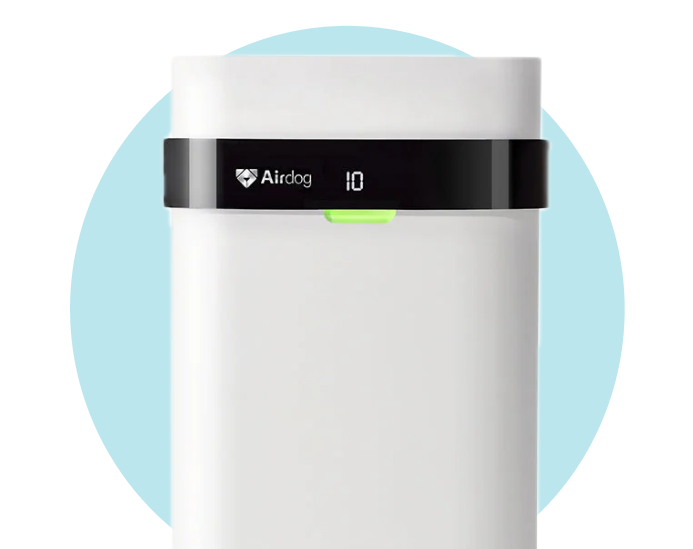
Air purifiers help protect people against welder fumes by capturing harmful toxins, chemicals, airborne particles and other pollutants. Airdog’s TPA® technology captures and destroys these particles on washable filter plates.