

Poor air quality symptoms affect millions of families, yet most people dismiss them as seasonal allergies or a persistent cold. The reality hits harder when you realize we spend roughly 90% of our time indoors, breathing the same air day after day. Knowing the symptoms of poor air quality can help you make practical decisions to improve your air quality and thereby your health.
Poor Air Quality Symptom Clusters
Poor air quality symptoms tend to arrive in recognizable patterns, not as isolated complaints. Learning these clusters helps you distinguish between "we're all coming down with something" and "our house needs attention."
The irritation cluster:
-
Burning or itchy eyes
-
A scratchy throat that won't quit,
-
A runny nose
-
Frequent sneezing
OSHA lists irritation of the eyes, nose, throat and lungs as key indicators of poor indoor air. These symptoms may indicate poor air quality if they improve outdoors or at work but return within hours of being home. This cluster often points to airborne particles (dust, pet dander, mold spores) or chemical irritants floating through your rooms.
The respiratory cluster:
-
Persistent cough
-
Wheezing
-
Shortness of breath
-
Chest tightness
These symptoms often spike during specific activities: cooking dinner on the stove, vacuuming the living room, or on days when wildfire smoke blankets your region. For anyone managing asthma or COPD, poor air quality can turn a manageable condition into a daily struggle. The EPA and American Lung Association both emphasize that indoor air concerns can worsen existing respiratory diseases.
The brain and body cluster:
-
Headaches
-
Fatigue
-
Dizziness
-
Trouble concentrating
You might find yourself needing an afternoon nap even after sleeping well, or struggling to focus on simple tasks when you're sitting in your home office.
Allergy and asthma flare clues provide another diagnostic hint: if your inhaler or antihistamines help only temporarily, or if symptoms spike after sleeping (bedroom dust and mold are common culprits) or after your kids play on carpets and upholstered furniture, the trigger is likely airborne particles or dampness rather than a viral infection.
Remember that colds typically progress through stages and resolve within days. Poor air quality symptoms cycle—they worsen in a specific room or during certain activities, improve when you leave, and return when you come back.
The American Lung Association calls this the "leave/return" test, and it's one of the most reliable screening tools you have without buying any equipment.
Pay attention to timing and location. If symptoms follow this pattern rather than the typical cold trajectory, your next step is identifying what in your home environment is triggering the response.
"Is my house making me sick?" Self-Test
You don't need expensive monitors or professional assessments to start gathering useful information. A few simple observations over 48 hours can reveal patterns that point directly to air quality issues.
Start with the leave/return pattern test: for two full days, note whether symptoms ease when family members leave the house—heading to school, work, or errands—and return within hours of coming home. This single observation, recommended by the American Lung Association, is one of the most actionable screening tools available. If symptoms consistently follow this pattern, you've identified a strong connection between your home environment and health complaints.
Create a quick symptom-and-location log that takes about five minutes: jot down the time, the room, and what was happening when symptoms appeared. Entries might look like this:
-
"Coughing started while cooking dinner on the gas stove."
-
"Eyes burning after vacuuming the bedroom."
-
"Headache began 30 minutes into working in the basement office."
This mapping exercise helps you connect triggers like humidity spikes (which encourage mold growth) or particle-generating activities (like dusting or vacuuming) to specific symptoms.
Use your senses carefully, but understand their limits. A musty smell often suggests dampness or mold growth somewhere in the space. A strong chemical or fragrance odor can point to VOCs (volatile organic compounds—gases released from cleaners, paints, new furniture, or air fresheners).
Note that some of the most dangerous indoor air hazards have no smell at all. Radon and carbon monoxide are both odorless, and the American Lung Association notes that radon causes no immediate symptoms despite being a long-term lung cancer risk.
Walk through your home with these quick prompts adapted from the Lung Association's checklist:
-
Are pets sleeping in bedrooms?
-
Is food or garbage left uncovered?
-
Have you used pesticides recently indoors?
-
Are heating, air conditioning, and ventilation systems working properly and maintained regularly?
-
Are they the right size for your space?
-
Are any vents or grills blocked by furniture or curtains?
-
Does airflow feel weak in certain rooms?
Know the red flags that require immediate action. If multiple people develop headaches, dizziness, or nausea at the same time, or if symptoms feel sudden and severe, leave the space immediately and check combustion appliances and carbon monoxide alarms.
Carbon monoxide exposure can present with these exact symptoms—headache, dizziness, fatigue—and it's a genuine emergency.
Hidden Home Triggers That Cause Poor Air Quality Symptoms
Most indoor air quality problems trace back to a handful of common triggers. Understanding these pathways helps you target your efforts where they'll make the biggest difference.
The dampness and mold pathway follows a predictable chain: moisture accumulates (in bathrooms, basements, around leaks) → mold grows → spores and fragments become airborne → allergy and asthma-like symptoms appear.
Look for condensation on windows, peeling or bubbling paint, recurring black spots in bathroom corners, and damp-smelling closets or storage areas. NIEHS highlights mold as a major indoor factor and notes that reducing mold exposure in early life may benefit asthma outcomes long-term.
Ventilation gaps trap pollutants that would otherwise dissipate outdoors. Modern homes are built tight for energy efficiency, but that same tightness can concentrate indoor pollutants when ventilation falls short. NIEHS cites inadequate ventilation as a key driver of rising indoor pollutant concentrations.
Check that bathroom fans actually vent outdoors rather than just recirculating air; run them for at least 20 minutes after showers. Confirm that supply and return vents aren't blocked by furniture, curtains, or storage boxes. The American Lung Association mentions blocked vents and HVAC maintenance as common issues worth addressing.
Combustion and cooking smoke increase fine particles that irritate lungs and trigger chest tightness and coughing. Frying, charring, and any indoor burning produce these particles.
Ask yourself: does coughing start while you're cooking? Is your range hood vented outdoors, or does it just filter and recirculate air back into the kitchen? If it's recirculating, you're not removing pollutants—you're just moving them around. Consider different cooking habits: lower heat settings, keeping lids on pots, and using the best ventilation you have available.
Chemicals and VOCs from "clean" routines create a different kind of problem. Household cleaners, air fresheners, new furniture, and fresh paint can off-gas VOCs—carbon-based chemicals that evaporate into the air.
Symptoms to watch for include headaches and throat or eye irritation that appear during or after cleaning, or when you bring new items into the house. NIEHS lists chemicals in paints, furnishings, and cleaners as significant Indoor Air Quality factors. Swapping to fragrance-free products and ventilating strategically after use (when outdoor air quality is good) can reduce exposure.
Outdoor air sneaking indoors complicates the picture, especially during wildfire season, high-pollen days, or winter inversions. Opening windows on a day when outdoor Air Quality Index is poor imports those pollutants directly into your living space. Overloaded HVAC filters can't capture what's coming in, so particles circulate freely. Use the outdoor AQI as your guide for deciding when to air out the house and when to keep everything sealed up tight.
Each of these triggers creates a distinct signature in your home. The dampness pathway shows up as musty smells and visible moisture. Ventilation gaps reveal themselves through stuffy air and symptoms that never quite clear. Combustion and cooking smoke appear during specific activities. Chemical off-gassing happens after cleaning or bringing in new items. Outdoor pollution follows weather patterns and AQI reports. Once you identify which triggers are active in your home, you can choose targeted fixes that address the root cause.
Fixes That Reduce Symptoms Fast
Step 1: Control particles where they're created.
During cooking, use the best ventilation you have: turn on the range hood before you start, keep pot lids on when possible, and run the fan for at least 15 minutes after you finish. In bathrooms, run the exhaust fan during showers and for 20–30 minutes afterward to remove moisture before it encourages mold growth. Never smoke or burn anything indoors. These changes reduce respiratory irritation triggers without buying anything.
Step 2: Upgrade your cleaning routine to reduce re-suspension—dust that gets kicked back into the air.
Damp-dust high-touch surfaces like TV stands, shelves, and windowsills rather than dry-dusting, which just moves particles around. Vacuum slowly in two directions (forward and back, then side to side) to give the machine time to actually capture particles. Prioritize bedrooms, where you spend 7–9 hours breathing the same air each night. If allergy symptoms flare after vacuuming, that's your cue to improve your vacuum's filtration or adjust your technique.
Step 3: Practice strategic ventilation.
Timing matters more than you think. Ventilate when outdoor air is cleaner (check your local AQI), and keep windows closed during poor AQI days to avoid importing pollutants. Strategic timing prevents you from trading one air quality problem for another. On good-air days, open windows on opposite sides of the house to create cross-ventilation that flushes out stale indoor air efficiently.
Step 4: Use a high-efficiency air cleaner appropriately.
Place an air cleaner where symptoms happen most, often bedrooms or main living areas. Keep doors closed while it runs for faster improvement in that specific space. Run it consistently rather than only "when it smells," because many harmful particles are odorless. NIEHS research shows that HEPA cleaners combined with home education can reduce children's exposure to pollutants effectively.
HEPA (High-Efficiency Particulate Air) filters capture a high percentage of fine particles—but not all of them.
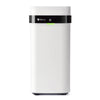
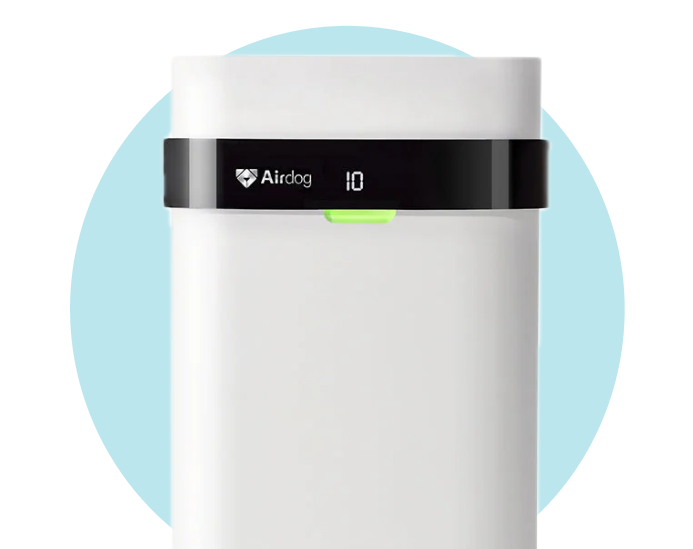
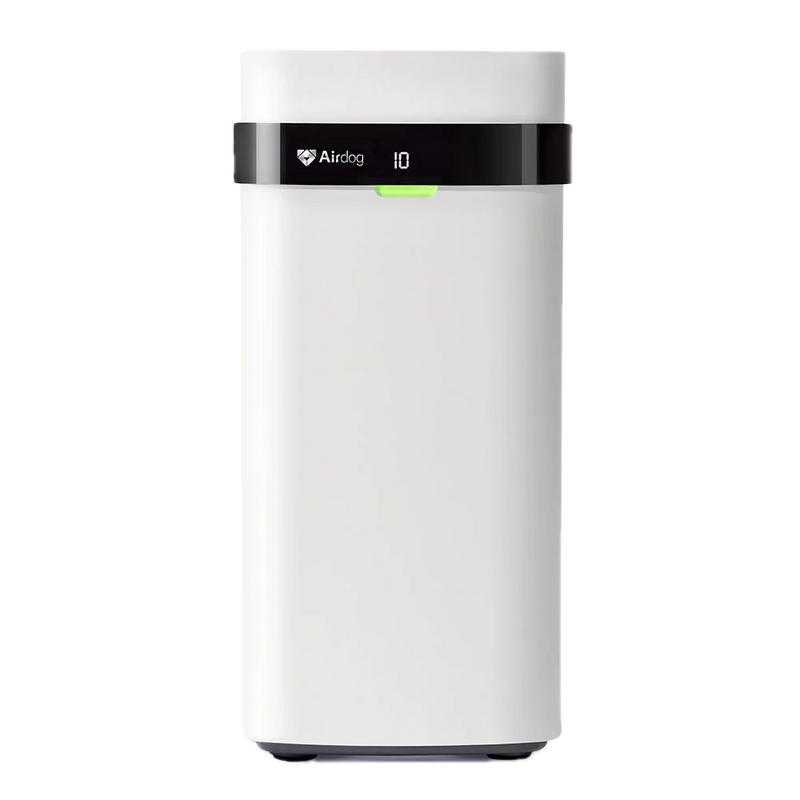
The best standard for air purifiers is Airdog’s Two-Pole Activation technology which removes up to 20 times the number of harmful particles that HEPA filters can.
TPA (Two-Pole Active) technology generates a high-voltage, electrostatic field that traps and kills up to 99.99% of bacteria and viruses while capturing even the tiniest particulates—down to 0.0146 microns.
That means that Airdog air purifiers remove not just dust and soot, but also viruses such as influenza and COVID-19.
Unlike standard HEPA filters, TPA filters are also washable and reusable, eliminating the need for costly filter replacements. The technology actively destroys harmful particles rather than just collecting them, using an ionic field to neutralize contaminants at the molecular level.
Learn more about the science of air quality and Airdog’s TPA technology here.
Step 5: Manage moisture to prevent mold growth.
Fix leaks the moment you discover them. Run bathroom fans long enough to actually dry the air. Don't store wet towels or clothes in closed spaces. Use dehumidifiers in basements or other chronically damp areas. Removing the moisture source is the lasting fix. Cleaning visible mold without drying the area just leads to recurrence within weeks.
Ongoing Monitoring Habits That Help
Use outdoor AQI as a daily decision tool. AQI measures outdoor air pollution on a color-coded scale; when it's poor (orange, red, or purple), keep windows closed and reduce vigorous outdoor play, especially for kids with asthma. Outdoor air affects indoor air every time you ventilate or open a door, so checking AQI before you air out the house prevents importing pollution. Most weather apps now include AQI; make it part of your morning routine like checking the temperature.
Consider an indoor air monitor for pattern detection. These devices track particulate levels (PM2.5 and PM10) and humidity, helping you spot triggers like cooking spikes or a basement that stays damp for hours after laundry. This information guides where to focus your efforts: maybe you need a better bathroom fan, or maybe you should run the air cleaner during meal prep.
Test for radon because it's the only way to know. Radon is odorless, colorless, and causes no immediate symptoms, yet it's a significant long-term lung cancer risk. The American Lung Association emphasizes that testing is essential since you can't detect radon through observation. Order an inexpensive test kit online or hire a certified local tester. If levels are elevated, mitigation systems are straightforward and effective.
Ensure carbon monoxide alarms are installed and working. CO can't be identified by smell or sight; working alarms are your only early warning system. Install them on every level of your home and near sleeping areas. Test them monthly and replace batteries annually. If an alarm sounds, or if multiple people develop sudden headaches, dizziness, or nausea simultaneously, evacuate immediately and call emergency services.
Don't over-index on smell alone. A home can smell fine and still have significant particle pollution or radon. Conversely, a smell may be annoying (like cooking odors or pet smells) but not the primary health driver. Combine your observations with symptom logs and targeted testing for the clearest picture of what's actually happening in your air.