

Clearing the Air: How to Choose the Best Air Purifier for Cooking Smoke in Your Home
Who this article is for:
-
People who like to cook searching for an air purifier for their kitchen
-
Renters or homeowners trying to find solutions for cooking smoke smells in their kitchens
-
Those who want to know what to look for when searching for an air purifier for cooking smells in their home
Key takeaways:
-
Air Purifiers can help with kitchen odors
-
CADR matters when searching for an air purifier for your kitchen
-
Placement of an air purifier helps air purifiers perform better in kitchens
-
An air purifier is more effective when combined with proper ventilation and running the hood fan in the kitchen
-
Open concept rooms with living rooms and kitchens may need multiple air purifiers or air purifiers that cover more space
-
The cost of replacement filters or using washable filters like Airdog’s washable filters should be taken into account when shopping for an air purifier
-
The amount of cooking you do in your kitchen determines what type or size air purifier you may need
That delicious meal you made yesterday doesn’t smell so delicious when it lingers on today. If you cook often, especially in an apartment or open-concept home, you already know that kitchen air is different from the air in your bedroom or office. Standard air purifiers that handle dust and pollen often fail when faced with the heavy, sticky mix of particles and odors that cooking creates.
This article walks through what actually matters when choosing the best air purifier for cooking smoke. You'll learn which filter types tackle particles versus odors, how to size a unit for your space, and which models perform best for different cooking habits and layouts. You'll also discover practical placement tips, maintenance realities, and common buying mistakes that leave families disappointed despite spending hundreds on a purifier. By the end, you'll have a clear framework for matching your cooking style, kitchen size, and budget to a purifier that actually clears the air instead of just moving it around.
Why cooking smoke is a different indoor-air problem than ordinary dust
Cooking smoke is not just a smell problem. It is a mix of fine particles, grease aerosols, and VOCs (volatile organic compounds) that create airborne chemicals responsible for odor and irritation. That combination makes kitchen air heavier, dirtier, and harder on filters than air in most other rooms. IQAir's newsroom and Bon Appétit both make the same practical point: a dedicated kitchen air purifier will collect far more oil residue, food particles, and airborne debris than one placed elsewhere in the home. A purifier that works well for bedroom dust can still struggle in a kitchen because the pollutants are fundamentally different.
A portable air purifier can reduce smoke particles and lingering food odors, but it does not replace a vented range hood. The EPA's Guide to Air Cleaners in the Home explains that portable purifiers are designed for a single room or area, so they work best as part of a larger ventilation plan, not as a full substitute. If you have no hood or a recirculating model that just blows air back into the room, a purifier becomes more critical, but it still cannot do the job alone.
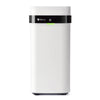
Filtration matters when choosing the best air purifier for cooking smoke. HEPA filtration captures smoke particles through a dense filter medium. Activated carbon adsorbs odors and gases onto a porous surface. A purifier with weak carbon may clear the visible haze while leaving the fish, curry, or frying smell behind for hours. Both technologies work together, but many units skimp on carbon to cut costs. Airdog’s air purifiers feature TPA® technology. Airdog’s washable plates destroy particles at the source unlike HEPA filters that collect particles on disposable filters that risk recontaminating the air when replaced. Airdog’s washable plates save you money on replacement filters.
What actually matters in a purifier for cooking smoke
Smoke CADR is important when choosing the best air purifier for cooking smoke. CADR (clean air delivery rate) measures how much filtered air a unit outputs, which tells you how quickly a purifier can tackle smoke in real space. HouseFresh's smoke testing shows faster units clear particle-heavy air much sooner, which is critical after pan-frying or a smoky sear.
For kitchens connected to living rooms, an underpowered CADR can leave your open-concept space hazy and smelly hours later. Size for the whole zone where smoke travels, not just the cooking area.
Not all carbon filters deliver equal odor control. The amount of activated carbon inside the filter makes a major difference in how long a purifier can handle persistent cooking smells.
More carbon generally means better staying power against fish, bacon, or heavily spiced food, not just a quick initial improvement. A purifier with minimal carbon might clear visible smoke particles while the smell lingers for hours because the HEPA filter captures particles but does nothing for gases and odors.
Airdog filters feature both a washable filter that captures and destroys gasses and odors and a carbon layer to catch lingering odors.
Many brands advertise large square-foot numbers that sound impressive but hide important details. The better comparison is how much space the unit can clean in 30 minutes or how many air changes it can deliver.
If you have an open layout where your kitchen flows into a dining area and living room, size for the whole connected zone, not just the footprint of the stove area.
Some auto modes respond well to particle spikes, but odor-heavy cooking can still require a manual boost setting.
You want a purifier that reacts when you start searing or frying, but you also want the ability to override auto mode and crank the fan to high when you know a smoky meal is coming. A color-coded air quality ring or numerical display helps you see when the air is actually clean versus when the unit is just running on a timer.
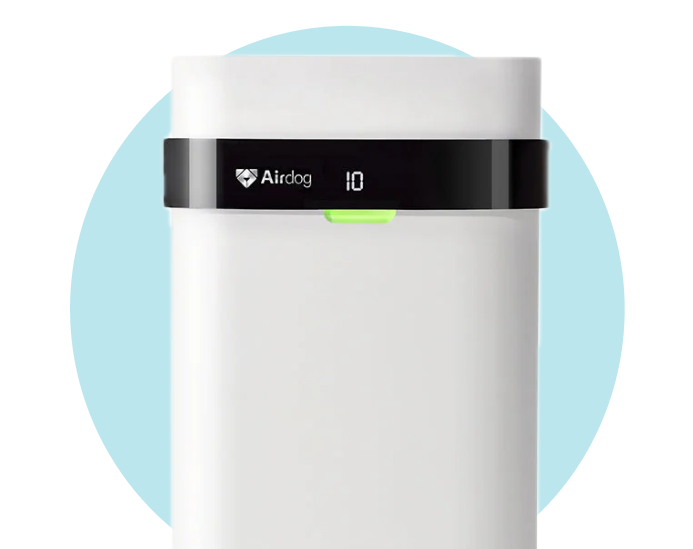
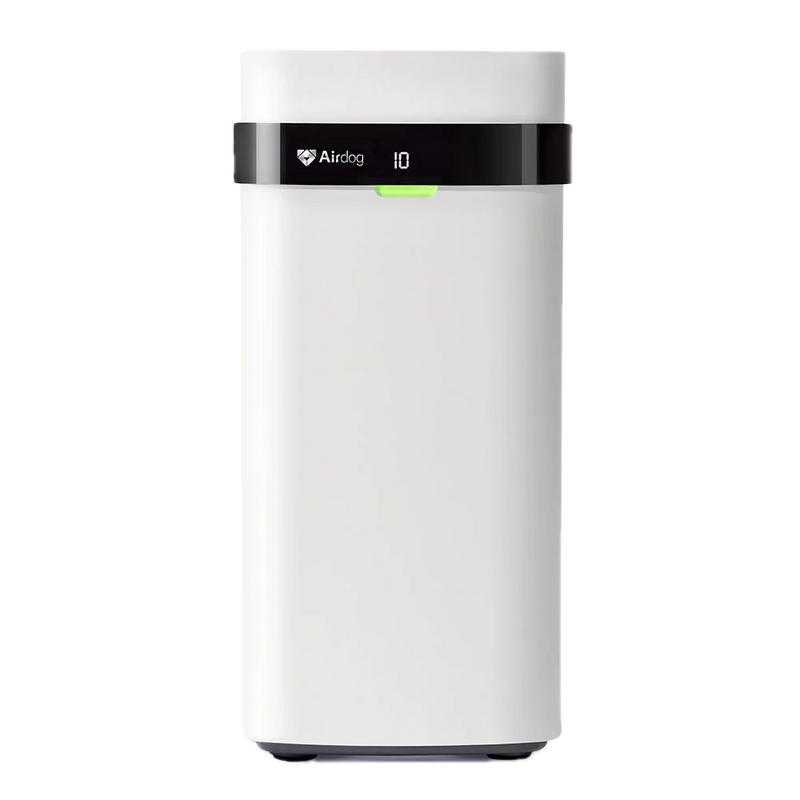
Airdog’s air purifiers have a built in color coded air quality index feature that measures air quality in real time. When set to auto mode the unit will adjust fan speeds and work harder to clear higher air pollution.
How to get better results from any purifier while cooking
Placement determines performance. You need the purifier in the same room or immediately adjacent to the kitchen. But do not place it directly beside the burner. Heat and grease will overwhelm the intake and clog filters faster than normal cooking would.
Aim for a spot slightly off to the side of the cooking zone with clear airflow around both the intake and outlet. This positioning helps capture drifting smoke without saturating the unit in oil residue too quickly.
Think about where smoke naturally travels when you cook. That path between the stove and the rest of your home is where the purifier does its best work. A few feet of strategic distance makes the difference between a unit that lasts years and one that needs filter replacements every few months.
Don’t wait until the room smells bad to turn on the purifier. We want to prevent damage rather than trying to clean up a huge mess.
Switch to high 10-15 minutes before searing, frying, or broiling. Keep it elevated during cooking. Leave it running for 20-60 minutes after you finish.
Capture pollutants as they are created, instead of trying to clean up hours later. Smoke particles and VOCs spread through your home much faster than you think, especially in open layouts.
If you wait to take action after you smell cooking odorsl, those compounds have already settled into fabrics, walls, and ventilation ducts. Running the purifier proactively keeps particle counts low from the start and reduces the odor load your carbon filter has to handle.
No single appliance solves every kitchen-air problem alone. The strongest setup layers ventilation: vented range hood first, purifier second, and open windows when outdoor air is acceptable.
Open-concept homes need smarter layout tactics. One properly sized unit near the kitchen usually outperforms a purifier hidden deep in the living room where it looks less obtrusive.
But in larger combined spaces, two smaller units can outperform one undersized model. Smoke can travels into play areas, bedrooms, or the main seating zone when not enough area is covered by an air purifier.
If your kitchen opens into a 600-square-foot combined living and dining area, a single 300-square-foot purifier will struggle. Two units positioned strategically, one near the cooking zone and one in the living area create better air circulation and faster clearing than one overworked device trying to cover the entire space.
Think about airflow patterns when you cook. Smoke does not move in straight lines; it follows air currents created by HVAC vents, ceiling fans, and temperature differences. Position purifiers where those currents naturally carry cooking pollutants, not where they fit your furniture arrangement.
Kitchen Air Purifier Maintenance
Kitchen purifiers age faster than bedroom purifiers because they capture heavier pollutants like oil residue, grease, and sticky airborne debris that coats filters and internal components.
Kitchen air purifier filters can last as little as every six weeks where other filters may perform for up to six months.
If you cook with oil often, searing, frying, sautéing, expect to inspect pre-filters regularly. That front layer catches the heaviest debris before it reaches your filters. When it clogs with grease, airflow drops and the unit works harder to move the same volume of air.
Clean or replace pre-filters sooner than the manufacturer suggests if your cooking involves high heat and oil. A simple visual check every two weeks tells you what you need to know. If the pre-filter looks discolored or feels sticky, it is time for maintenance.
HEPA can keep capturing particles while the carbon is already exhausted. The unit may still move air and lower particle counts, but it stops helping much with garlic, curry, or burnt-oil smells.
The purifier seems to work because visible smoke clears, but odors linger for hours. That happens because carbon has a finite capacity to adsorb gases and VOCs. Once saturated, it cannot absorb more.
Compare the cost and availability of replacement carbon filters before buying the machine. Some brands charge $80-150 for carbon replacements that need changing every 3-6 months in heavy-cooking households. Others offer more affordable options or longer-lasting filters with higher carbon content.
Airdog’s washable filters save you money on replacement filters and destroy particles at the source. Airdog’s purifiers also feature a carbon layer to protect against kitchen odors.
The fastest smoke removal usually happens on the highest fan setting. But if that mode is unbearably loud, many families simply will not use it when needed. They will choose a lower setting that feels more comfortable, even if it means smoke lingers longer.
Health-conscious households should prioritize these maintenance factors before buying:
-
Easy-to-find filters or washable filters: Check whether replacements are available on the manufacturer's site, major retailers, or only through specialty suppliers. Airdog’s filters do not need to be replaced, simply wash them and place them back into your air purifier for continuous cleaning.
-
Clear replacement indicators: Look for units with filter-life monitors that account for actual usage instead of generic time-based reminders.
-
Accessible pre-filters: The easier it is to remove and clean the pre-filter, the more likely you are to maintain it regularly. Airdog’s washable filters are easy to clean and remove.
-
Simple-to-clean design: Smooth surfaces without crevices where grease accumulates make routine wipe-downs faster
How to choose the best air purifier for cooking smoke
If your kitchen opens into a dining or living area, the air volume you need to clean extends far beyond the stove's footprint.
Measure the entire zone where smoke and odors travel, not just the kitchen. In apartments and open layouts, that often means 600-900 square feet or more.
If you size for just the kitchen but cook in an open-concept home, you will not cover the space you need. The unit will run constantly without making meaningful progress because it lacks the capacity to process the full air volume.
Air purifiers do not compensate for bad habits.
If someone regularly burns oil, never uses the hood, and places the purifier right next to the stove, even a strong unit will underperform. The intake will load up with grease faster, filters will clog sooner, and maintenance costs will climb.
Purifiers reduce exposure and cleanup time. They do not cancel the need for source control and basic ventilation.
The best odor eliminator combines good ventilation with an air purifier featuring activated carbon filtration.
Placement matters too. Position the unit slightly off to the side of the cooking zone with clear airflow around intake and outlet, not directly beside the burner where heat and grease overwhelm the system immediately.
Purchase an air purifier with confidence
For heavy smoke and persistent odors: prioritize large carbon content (4+ lbs) plus strong CADR ratings. Units built specifically for challenging air-quality situations where cooking smoke travels throughout living spaces like Airdog’s air purifier for kitchens can help decrease unwanted kitchen smells.
Choose an air purifier with manageable noise levels. Airdog’s air purifiers are designed to be as quiet as a whisper letting you focus more on cooking than distracting noises from an air purifier.
For small kitchens and lighter cooking: pick a compact unit but stay realistic about its limits.
Match the purifier to your actual cooking patterns, not aspirational ones. If you sear steaks twice a week and fry fish monthly, you need more capacity than someone who mostly sautés vegetables and reheats leftovers.
Frequently Asked Questions:
Do air purifiers work against smoke?
Yes, air purifiers work against smoke. HEPA filters and an activated carbon filter can be effective at removing smoke smells however, the filters need to be replaced regularly especially in smoky environments. Airdog’s washable filters save on long term costs of replacement filters. These filters feature a TPA® technology that destroys smoke particles and other particles at the source. An activated carbon layer catches additional lingering smells.
What air purifier is best for removing cooking smells?
We recommend Airdog’s air purifiers for kitchens. Our air purifiers target particles at their source and destroy oils, gasses, and other pollutants in your kitchen. HEPA filters can clog quickly in kitchens due to heavy pollutants. Our filters are washable so there is no need to worry frequent replacement filter costs. Our air purifiers also feature an activated carbon layer to catch any lingering smells.
How do I get rid of cooking smell in my house?
Running an air purifier helps but you also will want to be sure you are taking out the trash, doing the dishes, wiping down surfaces, running the exhaust fans and keeping your space well ventilated.