

Key Takeaways
- Group fitness classes measurably concentrate air pollutants, and members breathe harder during exactly the exposure. A 2025 study of spinning, dance fitness, and total-body-workout classes found total VOC levels 4–18x above protective limits, and breathing rate during exercise increases pollutant inhalation on top of that.
- 79% of members say cleanliness and facility maintenance directly affect their decision to renew. The fitness industry already runs close to 29% annual churn—losing members over something this addressable is expensive at franchise scale, and it compounds across every studio in the network.
- No recurring filter costs—Airdog pays for itself against HEPA within ~2.5 years. Washable collection plates replace disposable HEPA filters entirely; once filter replacement costs are factored in, Airdog becomes the cheaper option at around the 2.5-year mark and stays cheaper for the life of the unit, across every studio.
- Traditional HEPA performance drops almost immediately under this kind of load. Standard HEPA filters start losing efficiency within days of heavy, continuous class traffic. Airdog's patented TPA filtration technology doesn't lose efficiency because it doesn't just collect polluted particles, it actively destroys them.
The Air Inside a Group Class
Premium fitness sells intensity, and intensity is exactly what makes indoor air quality matter more, not less. Exercise deepens and quickens breathing, which increases exposure to whatever pollutants are already in the room—even at levels someone would never notice standing still. A 2025 study measuring air quality across 138 exercise classes found total VOCs exceeding protective limits by 4 to 18 times across every activity type, with particulate matter especially elevated in high-intensity formats. Separate research has found CO2 levels in gyms regularly exceeding 1,000 ppm during busy classes—a threshold linked to cognitive decline and fatigue, which is a strange thing to be inadvertently selling members alongside a workout.
This is a studio-format problem, not a facility-neglect problem. A spotless, freshly-mopped studio can still be accumulating VOCs and particulate matter class after class, because the source isn't dirt, it's occupancy and exertion.
Air Quality and Member Retention
Retention is the entire economics of a fitness franchise, and air quality sits closer to it than most facilities budgets reflect. 79% of members say cleanliness and facility maintenance directly affect whether they renew, and the industry already loses close to 29% of members annually. For a franchise network, that churn is compounding across every location—every studio solving it (or not) independently.
Premium fitness brands in particular sell an elevated sensory experience as part of the premium price point. Air quality is part of that promise whether it's named or not, and it's also the one piece of the studio experience members can't fake their way past with better lighting or music. This is also the vertical where a visible, member-facing air quality display earns its place—brands built around visible performance metrics (heart rate, calories, output) have an audience that already expects to see the numbers.
Why Standard Air Purifiers Fall Short Here
Most air purifiers—including most marketed as "commercial grade"—rely on HEPA filtration, which has two specific weaknesses in a premium studio environment:
- Continuous back-to-back classes mean continuous heavy load. HEPA filters lose efficiency within days under this kind of traffic and need frequent replacement to stay effective—a real, recurring cost and coordination problem across every studio in a growing franchise system.
- No mechanism for VOCs. Sweat, cleaning products between classes, and rubber mats and equipment all contribute to VOC load. HEPA filtration doesn't break any of it down; a thin carbon layer saturates fast and stops helping.
What Airdog Does Differently
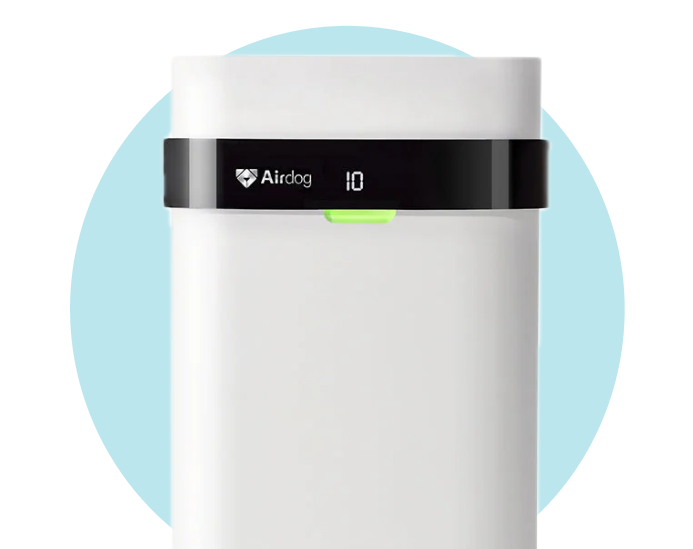
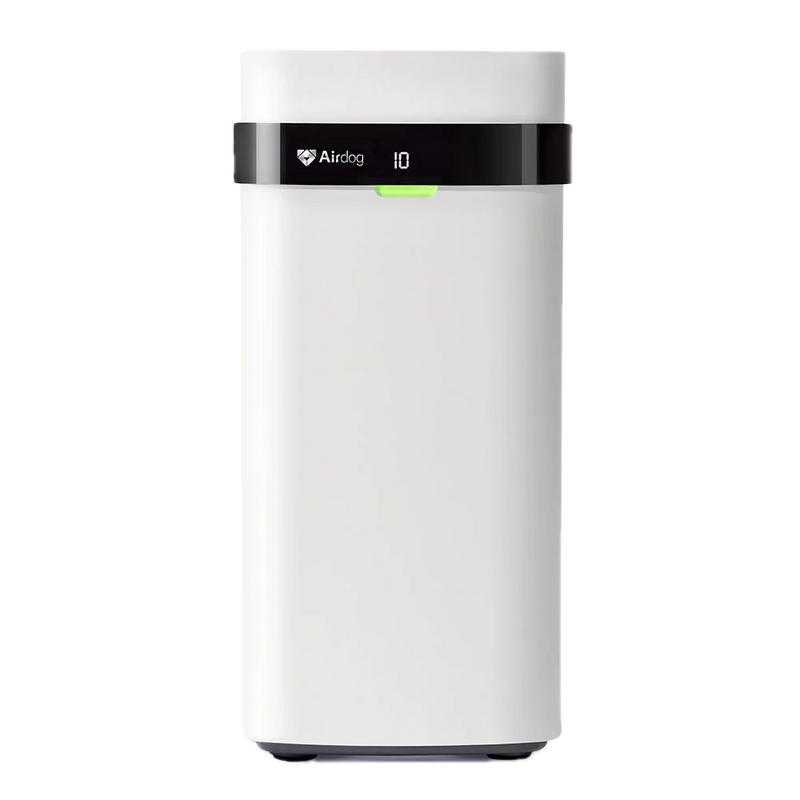
Airdog's TPA® technology was independently verified by SGS to capture particles down to 0.0146 microns—20x smaller than the standard HEPA benchmark—and to break down VOCs at the molecular level instead of storing them.
Three things matter specifically here:
- Washable plates, not disposable filters. No replacement schedule, no forgotten filters, no unit quietly underperforming in a studio for months. Wash it and it's back to full capacity—and once recurring filter costs are factored in, Airdog becomes cheaper than HEPA at around 2.5 years, with the gap widening for the life of the unit, across every studio.
- VOC breakdown, not VOC storage. The cold plasma stage neutralizes the chemical load a busy studio generates at the molecular level, instead of accumulating it until saturation.
- A visible metric for a brand built on metrics. For franchises that already market performance data as part of the experience, real-time air quality display is a natural extension of the same story—and a differentiator competitors running standard HVAC can't easily match.
Bottom Line
premium fitness sells an elevated, high-intensity experience, and the format itself is what concentrates the pollutants working against it. That's where the gap between filter-based systems and independently verified molecular filtration shows up fastest—in member retention, and in whether the studio's air matches the standard the rest of the brand is built on.
For the full technical breakdown, read The Airdog Standard: A Technical Buyer's Guide to Air Purification Performance.
Want to talk through what this looks like across your studios? [Contact us →]