

Key Takeaways
- Dental occupations carry among the highest documented occupational exposure risk in the country. The Department of Labor scored dental hygienists at 99.7% occupational COVID-19 risk, dental assistants at 92.5%, and general dentists at 92.1%—driven by aerosol-generating procedures that OSHA classifies as "very high risk." That risk profile repeats identically in every office in your network.
- Staff turnover is one of the largest hidden costs in a DSO, and it's compounding. Hygienist turnover is running 20–30%+ annually, nearly half of dental assistants say they're considering leaving within two years, and roughly 40% of practices report being understaffed on hygienists. At network scale, that churn means constant recruiting cost, temp staffing spend, and lost production capacity across every location.
- No recurring filter costs—Airdog pays for itself against HEPA within ~2.5 years. At the scale of a DSO, filter reorders across every office are a real, recurring procurement burden. Washable collection plates remove that line item entirely; once filter costs are factored in, Airdog becomes the cheaper option at around 2.5 years and stays cheaper for the life of every unit, network-wide.
- Traditional HEPA performance drops almost immediately under this kind of load. Standard HEPA filters start losing efficiency within days of aerosol-heavy operatory conditions. Airdog's patented TPA filtration technology doesn't lose efficiency because it doesn't just collect polluted particles, it actively destroys them—without depending on 200 different offices remembering their own replacement schedule.
Proven at Scale
[Case study placeholder: Airdog units are already deployed at scale in high-density, continuous-operation environments—including a gaming property running 300+ units. Insert a DSO-specific case study here once available, including practice count, unit count, and any measured outcome (staff feedback, patient reviews, standardization results) that can be shared publicly.]
An Occupational Risk That Repeats at Every Location
Dental procedures generate aerosols as a matter of routine, not exception. High-speed handpieces, ultrasonic scalers, air-polishers, and air-water syringes all aerosolize water, saliva, and blood, and those particles can remain airborne for 30 minutes to several hours. OSHA classifies aerosol-generating dental procedures as "very high risk," and the Department of Labor's own occupational risk scoring put dental hygienists at the top of the list nationally, ahead of most other healthcare occupations.
For a single practice, that's a known operating condition. For a DSO, it's the same exposure profile repeated at every one of your locations, which means it's also the same liability exposure repeated at every location. Standardizing air quality infrastructure network-wide is one of the few levers that addresses that risk consistently, instead of depending on each office to solve it independently—or not at all.
The Staffing Economics
The dental workforce shortage isn't a temporary blip. Nearly 40% of practices report an inadequate number of hygienists on staff, over 90% of dentists actively recruiting say it's "very" or "extremely" challenging, and industry data puts hygienist turnover at 20–30% or higher annually. Nearly half of dental assistants say they're considering a job change within two years, and over a quarter of hygienists are planning to retire within five.
That turnover is expensive well beyond the hiring line item: time-to-fill for a licensed hygienist commonly runs 6–12 weeks, temp staffing rates run above standard wages, and every open chair is lost production. At a network of dozens or hundreds of offices, this is a persistent, compounding cost—and clinical environment quality is one of the few retention levers a DSO can actually standardize centrally, rather than leaving it to each office's budget and initiative.
Why Standard Air Purifiers Fall Short at This Scale
Most air purifiers—including most marketed as "commercial grade"—rely on HEPA filtration, which creates two specific problems for a multi-location operator:
- Filter reorders become a procurement and compliance problem at scale. HEPA filters lose efficiency within days under aerosol-heavy operatory conditions and need frequent replacement. Multiply that across every office in a network and you have hundreds of independent reorder schedules, with no easy way to confirm any given office is actually keeping up.
- No mechanism for VOCs. Dental offices carry their own chemical load—disinfectants, acrylics, sterilization agents—on top of aerosolized biological material. HEPA filtration doesn't break any of it down; a thin carbon layer saturates fast and stops helping.
What Airdog Does Differently
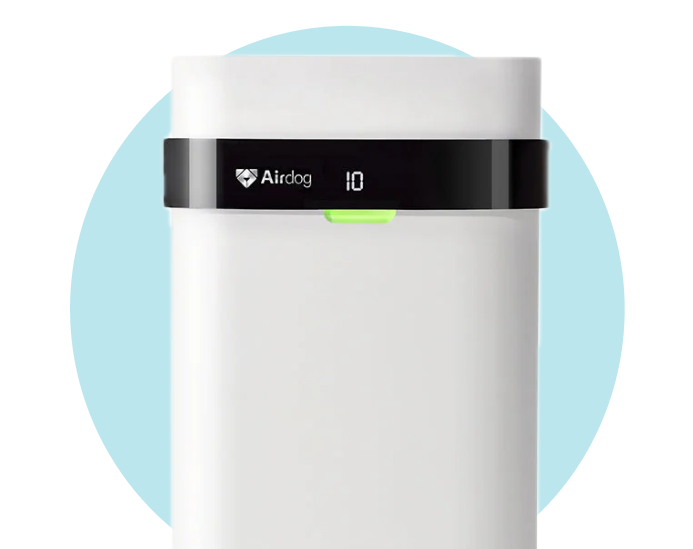
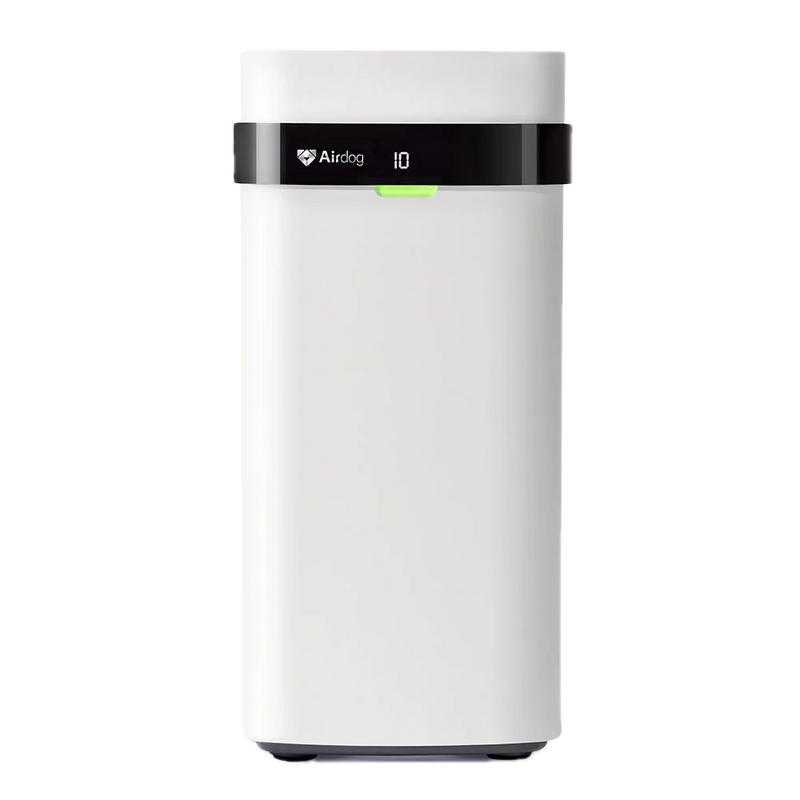
Airdog's TPA® technology was independently verified by SGS to capture particles down to 0.0146 microns—20x smaller than the standard HEPA benchmark—and to break down VOCs at the molecular level instead of storing them.
Two things matter specifically for a DSO:
- Washable plates, not disposable filters. No replacement schedule, no per-office reorder tracking, no unit quietly underperforming in an operatory for months without anyone noticing. Wash it and it's back to full capacity—and once recurring filter costs are factored in, Airdog becomes cheaper than HEPA at around 2.5 years, with the gap widening for the life of the unit, across every location.
- One standard, deployed network-wide. A single vendor relationship and a single specification replaces the patchwork of whatever each office happens to have bought on its own—simpler procurement, consistent patient and staff experience, and one less variable in a portfolio you're trying to standardize.
Bottom Line
A DSO's exposure to occupational risk and staffing costs is identical at every location, which means the fix should be too. Standardizing on a single, verified air purification solution addresses a documented liability, supports a staffing crisis that's already costing real money, and removes a recurring procurement burden—without requiring 200 individual practices to each solve the same problem on their own.
For the full technical breakdown, read The Airdog Standard: A Technical Buyer's Guide to Air Purification Performance.
Want to talk through what this looks like across your network? [Contact us →]