

What Size Air Purifier Do I Need? How to Choose the Right Air Cleaner for Any Room
Who this article is for:
-
People searching for an air purifier but don’t know what size to get for small rooms or large rooms
-
Homeowners or renters with odd sized rooms or high ceilings trying to calculate what air purifier coverage they need
-
People searching for an air purifier that effectively covers their room size as quietly as possibly
Key Takeaways:
-
Air purifier boxes rely on general room sizes without accounting for odd sized rooms or tall ceilings
-
Calculating the size of air purifier you need should be based on clean air deliver rate, room volume, and air quality challenges
-
Room layout and noise tolerance are important factors when choosing an air purifier suited for your room size
-
How to calculate the CADR you need for your room size: Required CADR = room volume × target ACH (Air Changes Per Hour) ÷ 60.
-
Smoke CADR should be at least two thirds the size of your room in square footage
-
In some cases it may be appropriate to get an air purifier that covers more than the calculated CADR
-
To decide what size air purifier would be best: measure the room, note the ceiling height, decide whether the doors stay open or closed, calculate the minimum CADR, add safety margins, confirm noise at usable speeds and review maintenance needs
You walk into a store, see an air purifier that claims to cover 800 square feet, and assume it will work perfectly in your 600-square-foot living room. Three months later, you're wondering why your allergies haven't improved and the air still feels stuffy. The problem isn't the purifier itself, it's that the box lied to you, or at least told you a very optimistic version of the truth. Most shoppers rely on room-size claims without understanding what those numbers actually mean, and the result is a purifier that technically "covers" your space but doesn't clean it nearly often enough to make a real difference. This guide will show you how to calculate what size air purifier you actually need based on Clean Air Delivery Rate, room volume, and your specific air quality challenges. You'll learn to measure your space correctly, set realistic performance targets, and avoid the most common sizing mistakes that leave families breathing recycled disappointment.
Why air purifier sizing matters more than the number on the box
An air purifier only works well when it cleans the full volume of air in your room multiple times each hour, not just once. This is where CADR (Clean Air Delivery Rate) becomes more important than vague marketing claims about square footage coverage. CADR measures the actual volume of cleaned air a purifier delivers per minute, usually expressed in cubic feet per minute (CFM). A unit with a CADR of 200 CFM pushes 200 cubic feet of filtered air into your room every single minute when running at the rated speed.
Many shoppers make their buying decision based solely on the listed room-size coverage printed on the box. Some brands calculate that coverage number assuming only 1 air change per hour (ACH) meaning the purifier theoretically processes the room's air volume just once every 60 minutes. For better results, aim for 4 to 5 air changes per hour.
Sizing an air purifier isn't just about matching square footage to a number on a spec sheet. You also need to account for ceiling height (most calculations assume 8-foot ceilings), room layout (open floor plans require more airflow than closed bedrooms), pollution level (pet dander and cooking smoke demand stronger performance), and noise tolerance (a purifier that's correctly sized on paper but too loud to run on high speed in your space is effectively undersized in real life).
Let’s walk through a realistic buying approach:
-
Measure your room correctly, including ceiling height and connected spaces
-
Calculate your actual CADR target using formulas that account for proper air exchange rates
-
Adjust upward for pets, smoke, allergies, open layouts, or ceilings above 8 feet
-
Compare purifier specs without getting misled by marketing language
Measure your space the right way before you shop
Start with the basics: grab a tape measure and calculate length × width to get your room's square footage. A bedroom measuring 12 feet by 15 feet gives you 180 square feet. This calculation follows most room-size guides and serves as the starting point for CADR estimates.
Nearly all room-size guidance assumes an 8-foot ceiling. If your ceilings are higher, square footage alone dramatically understates the actual volume of air your purifier needs to clean.
Think in cubic feet instead of just floor area. Multiply your square footage by ceiling height to get the true air volume. That 180-square-foot room with a 10-foot ceiling contains 1,800 cubic feet of air, 25% more than the same floor plan with standard 8-foot ceilings, which holds only 1,440 cubic feet. When calculated incorrectly, your purifier has to work harder to cycle through that extra volume multiple times per hour.
If your purifier sits in a bedroom but the door stays open to a hallway, loft, or sitting area most of the day, you need to count the connected space that air actually moves through. A closed-door bedroom can be sized on its own; an open living room and dining room should be treated as one large zone.
For example, you have a 200-square-foot dining room that opens directly into a 100-square-foot breakfast nook with no door between them. Don't size for 200 square feet, size for the combined 300 square feet where air circulates freely.
Size for the room where the purifier will actually run most of the day, not your entire house. Portable room air purifiers work best when matched to one main space at a time. You'll get better results from properly sizing a bedroom purifier than trying to stretch one unit across multiple rooms and hallways.
The math is straightforward, but the real-world application requires honest assessment of how you actually use your space. Measure the zones where doors stay open, account for ceiling height beyond the standard 8 feet, and resist the temptation to overestimate coverage area. One well-matched purifier in your primary living space outperforms an undersized unit struggling to cover three rooms at once.
Calculate the CADR you actually need
Once you know your room's square footage, the simplest path to the right purifier starts with the AHAM 2/3 rule. This industry standard says your purifier's smoke CADR should equal at least two-thirds of your room's square footage, assuming a standard 8 foot ceiling.
A 300-square-foot room needs about 200 CFM CADR. A 500-square-foot space requires roughly 333 CFM CADR. Multiply your square footage by 0.67, and you have your baseline target.
Many boxes list a CADR for smoke because smoke particles are among the smallest common indoor pollutants, making smoke CADR the toughest performance benchmark. If a purifier can handle smoke efficiently, it will manage dust and pollen even better.
For those who want better precision, especially those with high ceilings or specific air-quality goals, a more flexible formula delivers sharper accuracy: Required CADR ≈ room volume × target ACH (Air Changes Per Hour) ÷ 60.
Here's how it works in practice. Take that 500-square-foot room with 8-foot ceilings: you have 4,000 cubic feet of air. At 4 air changes per hour, you need about 267 CFM. Push that to 4.8 ACH, the rate AHAM uses as a benchmark, and you need roughly 320 CFM.
Higher ceilings and cleaner-air goals push you toward larger units. A room with 10-foot ceilings holds 25% more air than the same floor plan with 8-foot ceilings, so the purifier needs proportionally more cleaning power to cycle through that volume multiple times per hour. The Harvard Healthy Buildings Portable Air Cleaner Sizing tool uses this volume-based approach to help you match CADR to room size with precision.
For routine dust and general household particles, the AHAM-style minimum gives you a solid baseline. For allergies, pets, smoke exposure, or peak respiratory-virus season, size above that minimum so your purifier can deliver strong cleaning without always running at its loudest, most disruptive speed.
A purifier that barely meets the minimum will spend most of its time on high or turbo mode, loud enough to make you turn it down or off entirely. One sized with a comfortable margin can run quieter at medium speeds and still hit your air-change targets.
Examples of CADR needed for room sizes:
-
150 square feet (small bedroom or home office): target roughly 100 CFM CADR
-
300 square feet (master bedroom or nursery): target roughly 200 CFM CADR
-
500 square feet (open living room or family space): target roughly 333 CFM CADR
These numbers assume standard 8-foot ceilings and moderate air-quality needs. If you have pets that shed constantly, cook with high heat several times a week, or live in an area with seasonal wildfire smoke, add 20–30% to these targets. That extra headroom means the purifier can recover faster after pollution spikes instead of laboring for hours to catch up.
A purifier advertised for "up to 800 square feet" might only achieve that coverage at 1 air change per hour, far below the 4–5 changes most experts recommend for meaningful air quality improvement. Run the CADR calculation yourself, and you cut through the noise to find units that actually match your space and expectations.
How to compare purifier specs
Walk into any appliance store or browse online, and you will see bold claims plastered across every air purifier box: "covers up to 1,000 square feet" or "cleans large rooms fast." These phrases sound reassuring, but they rarely tell the full story.
Prioritize verified CADR over vague room-size claims. CADR is harder to spin because it states cleaned airflow directly, measured in cubic feet per minute. Room-size claims, by contrast, can vary wildly depending on whether the company assumes 1 air change per hour or something closer to the 4.8 ACH that AHAM uses as its benchmark.
A purifier advertised for 800 square feet might only achieve that coverage at 1 ACH, barely enough to make a dent in daily air quality. At 4.8 ACH, that same unit might realistically cover only 165 square feet.
Look specifically at smoke CADR when you want one simple benchmark. AHAM rates three pollutant types separately: smoke, dust, and pollen. Smoke CADR serves as the toughest baseline because smoke particles are among the smallest common indoor pollutants, typically 0.09 to 1 micron. If a purifier can handle smoke efficiently, it will manage larger particles like dust and pollen even better.
When comparing models, smoke CADR gives you a reliable proxy for demanding performance across all particle sizes.
Check the CADR at a fan speed you would actually tolerate. Many purifiers only reach their headline output on turbo mode, which can be too loud for bedrooms, nurseries, or home offices. A unit that claims 350 CFM might only deliver 180 CFM on medium speed, the setting you will actually use day to day.
Air purifiers only work when they are running, so usable noise levels matter as much as raw performance specs.
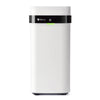
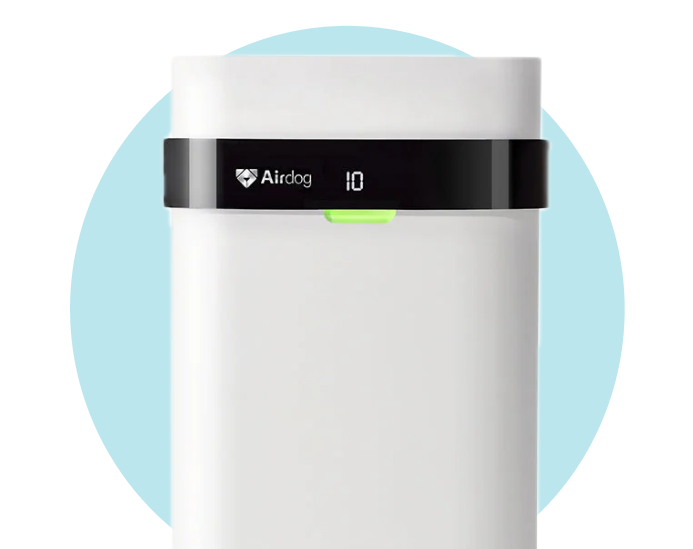
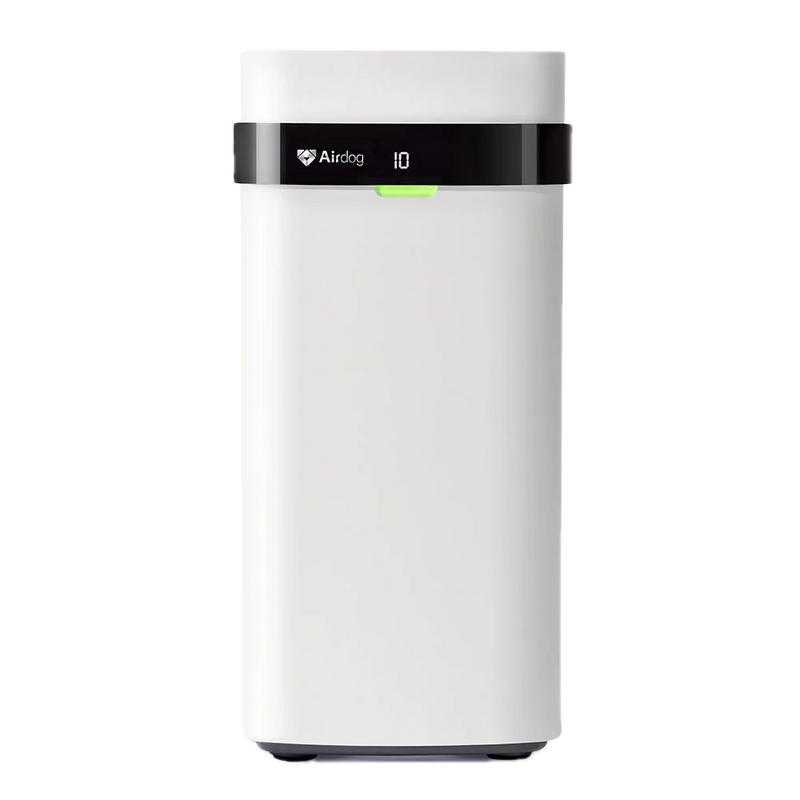
Proper sizing is not just about airflow; the ongoing ownership side matters too. If two units offer similar CADR, the better choice may be the one with lower maintenance hassle. Washable or longer-life collection components like Airdog Air Purifiers reduce the frequency and cost of replacements.
The best purifier is the one your household will consistently keep running, not the one with the most impressive specs that sits idle because it is too loud, too expensive to maintain, or too complicated to manage. When you are deciding what size air purifier you need, factor in the conditions your air purifier will operate in.
When to size up
The baseline CADR calculation gives you a starting point, but conditions often demand more cleaning power than the math suggests.
For allergies, asthma triggers, or pets, go above the baseline CADR rather than buying the exact minimum. Pet dander, tracked-in pollen, and constant human movement keep particles airborne throughout the day. Extra airflow gives the purifier more chances to recapture what is continuously being introduced.
It’s recommended to size up when dealing with pets, allergies, or high-traffic areas. A purifier sized to the minimum may technically clear the air, but it will struggle to keep up when your dog shakes off after a walk or when spring pollen coats every surface. If you run the unit on high constantly, your air purifier will be louder than it’s meant to run.
Smoke, wildfire periods, cooking particles, and urban pollution create heavier or more frequent particulate loads. A stronger purifier is usually worth it in these situations. These conditions push the machine harder for longer periods, and sizing up helps the room recover faster after a pollution spike instead of taking hours to clear.
During wildfire season or after you sear a steak on the stovetop, you want rapid recovery. A purifier with 20 to 30 percent more CADR than the minimum can cut clearing time in half.
High ceilings, lofts, and open-concept rooms demand special attention because volume matters as much as floor area. A room with cathedral ceilings can need far more clean-air delivery than its square footage suggests. Most CADRs assume the ceiling is 8 feet tall so be sure to use the volume-based formula rather than the basic 2/3 shortcut.
A 400-square-foot living room with 8-foot ceilings contains 3,200 cubic feet of air. The same floor area with 12-foot ceilings contains 4,800 cubic feet, 50% more air to clean. If you rely on square footage alone, you will end up with a purifier that cannot keep pace.
Whether you need one big purifier versus two smaller ones is a common question, and the answer depends on your layout. In long or irregular rooms, two units can improve circulation and reduce dead zones, especially when pollution sources are spread out. In a simple enclosed room, one well-sized purifier is often sufficient.
Open layouts or multi-zone family spaces may benefit from two smaller units that clean more evenly than one oversized machine placed in a corner. Air does not move in perfectly predictable patterns, and a single purifier in a 900-square-foot open-plan space may leave far corners under-served. Two 450-square-foot units positioned strategically can provide better overall coverage and faster particle capture across the entire area.
choose an air purifier to fit your room with confidence
Before buying, look for the desired cleaning rate instead of the advertised maximum room size. If a purifier claims 800 square feet coverage but only achieves that at 1 ACH, it may feel disappointing in daily use. Many manufacturers inflate room-size recommendations by calculating coverage based on just one air change per hour rather than the recommended four to five changes.
Calculate the needed CADR first, then see which models meet it to prevent the frustration of bringing home a purifier that technically "covers" your space but never quite makes the air feel clean.
Bigger isn’t always better. An oversized unit can mean higher upfront cost, more energy use, and unnecessary noise if the room is small. IQAir notes that excess electrical utilization and higher utility bills can occur when smaller energy-efficient systems can provide sufficient filtration power.
Mild oversizing is often beneficial when it lets the purifier run quieter at lower speeds. HouseFresh points out that an air purifier can be too big for a room in both size and power, but the sweet spot is a unit that can deliver your target CADR without always running at maximum speed.
In summary here are the steps to follow when shopping for the right sized air purifier for your room:
-
Measure the room: length × width for square footage
-
Note ceiling height: especially if it exceeds 8 feet
-
Decide whether doors stay open or closed: count connected spaces if air flows freely between rooms
-
Calculate minimum CADR: use the 2/3 rule (room square footage × 0.67) or the volume formula (room volume × target ACH ÷ 60)
-
Add a safety margin for pets, smoke, or allergies: size up 20 to 30 percent beyond the baseline
-
Confirm noise at usable speeds: check decibel ratings at medium and high settings, not just turbo mode
-
Review maintenance needs: consider filter lifespan, replacement cost, and cleaning requirements
-
Then buy: choose the model with verified CADR that matches your calculated need
If you are between sizes, choose the unit with the higher verified CADR for the room you use most. Especially if you want quieter operation or have above-average air quality concerns. A purifier with extra capacity can run at lower speeds while still delivering strong cleaning performance, which means less noise during sleep or work hours.
Frequently Asked Questions:
How many air purifiers do I need for a 3 bedroom house?
This depends on the layout of your home. Enclosed bedrooms should have their own air purifiers. If you have an open concept home you may need 1-2 air purifiers for the open space depending on the size of the space and your CADR calculation.
What are signs you need an air purifier?
Signs that you may need an air purifier are lingering odors, allergies, worsening asthma, pet dander or fur floating around, mold or mildew smells, if you live in a place with frequent construction or a polluted area.
What is the ⅔ rule for air purifiers?
The 2/3 rule states that an air purifier should have a smoke CADR in cubic feet per minute (CFM) equal to the room’s area in square feet (room square footage × 0.67). Note that this formula is a good starting point but it does not account for rooms with vaulted ceilings. Homes with pets, smoke, or allergies may need to size up 20-30% to account for extra pollutants.