

When Your Baby's Room Feels Like the Sahara: Understanding Nursery Humidity
Who this article is for:
-
Parents wondering if an airflow humidifier could help their baby
-
People in need of a solution for dry air the nursery
-
Parents looking for ways to help their babies breathe easier at night
Key takeaways:
-
Humidifiers can ease discomfort in babies during cold and flu season
-
Mist-free humidifiers are considered safe for babies and use a natural evaporative system that traps mineral pollution.
-
Humidifiers too large for a nursery can cause excess moisture that is harmful to a baby
-
Placing your humidifier on a flat elevated surface away from the crib is important for preventing excess moisture
-
Placing a humidifier outside a baby’s or small child’s reach is an important safety practice
-
Cleaning a humidifier regularly helps prevent mold and keeps the nursery air safe.
-
Humidifiers can help with cold symptoms but they are not a cure for illness
You wake at 3 a.m. to your baby's fussing, flip on the nightlight, and notice your own lips feel cracked and tight. The heater has been running all night, and the air in the nursery feels dry enough to make your throat itch. Sound familiar? Could a humidifier be the answer to your baby’s dry room?
A humidifier isn't a must-have for every healthy infant every single day, but it can transform comfort when indoor air turns desert-dry. This article cuts through the confusion by showing you exactly when a humidifier helps, which type makes sense for a nursery, how to set it up safely, and why maintenance matters more than you think. You'll learn the practical humidity targets that matter, the features worth paying for, and the mistakes that can backfire. Ready to figure out if your baby's room needs more moisture and how to add it the right way?
When a Humidifier for Baby Actually Helps, and When It Is Just Optional
A humidifier for baby is not usually something every healthy infant must have running 365 days a year. Consumer Reports notes humidifiers are not usually needed for babies' health, but they can make babies more comfortable. That comfort factor becomes especially valuable when indoor air is dry typically during winter heating season or in air-conditioned rooms where moisture gets stripped away.
Dry air can disrupt a baby’s sleep and feeding during cold and flu season.
Humidifiers won't cure a cold, but it can ease the discomfort that comes with dry, irritated airways.
Understanding the target range: Relative humidity is the percentage of moisture the air is holding compared with the maximum it could hold at that temperature. Between 30%-50% is considered a comfortable RH level.
Signs your nursery may be too dry:
-
Your baby is waking with a dry nose or mild congestion that seems worse at night
-
Dry, flaky skin despite regularly using moisturizer
-
Irritated, chapped lips on your infant
-
The air feels tight or scratchy in your own throat after the heater runs
Adding moisture can create comfort, but too much humidity or poor maintenance can backfire. An oversized unit can leave wet surfaces and encourage condensation, mold, and bacteria growth. A poorly maintained unit can become the problem instead of the solution.
Choose the Safest Type of Humidifier for Baby
Many pediatricians recommend humidifiers that use cool mist or no mist.
cool mist is the considered a safe choice in contrast to warm mist units that involve boiling water, which creates burn and tip-over scald risks you don't need in a nursery.
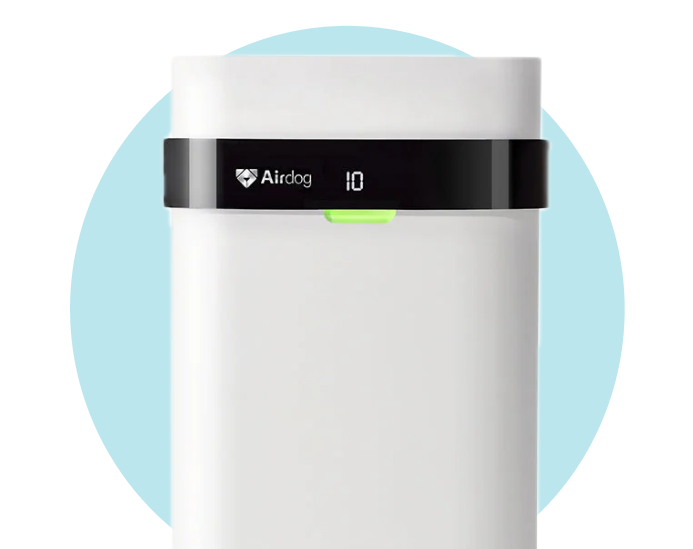
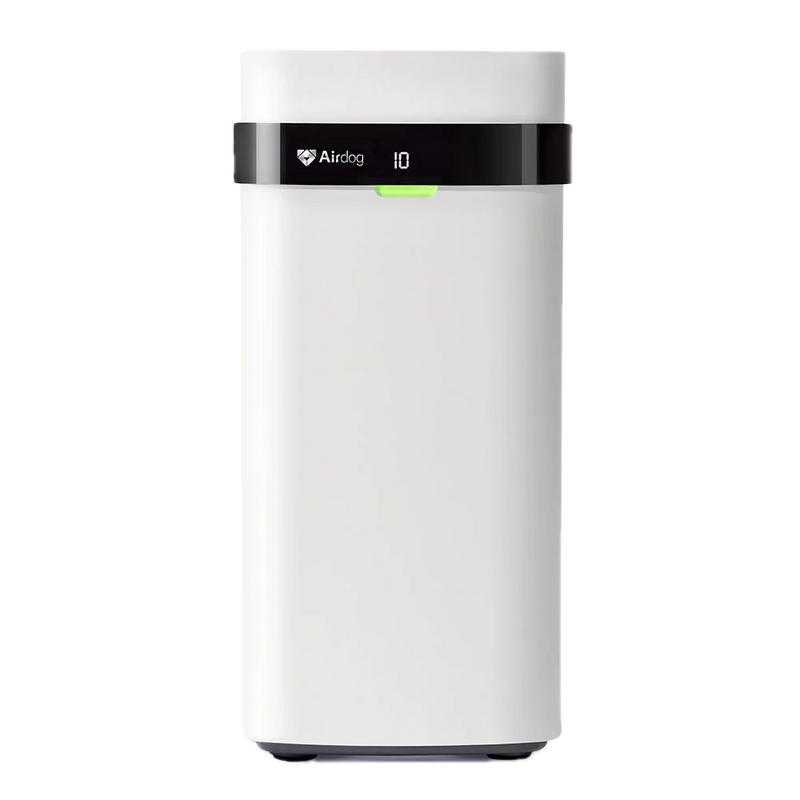
While cool mist is considered safe for babies, mist free humidifiers are considered safer for an infant’s respiratory system because mist free humidifiers use a natural evaporative system that traps mineral pollution instead of releasing it back into the air like mist humidifiers do. Mist free humidifiers like Airdog’s humidifiers also eliminate over-humidifying a room reducing dust and mold in an infant's room that can trigger allergy or asthma symptoms in the infant.
When shopping for a humidifier for your baby:
-
Match coverage to your nursery's square footage. A unit too large for the room can cause condensation on walls, furniture, and windowsills creating the exact damp surfaces where mold thrives. Small units work for rooms under 100 square feet, medium units handle roughly 101 to 200 square feet.
-
Choose auto shut-off so the unit turns off when the tank is empty. This matters for overnight use when you're asleep and can't monitor water levels. Airdog’s humidifiers have auto-shut off features and will shut off when the targeted humidity level is reached.
-
Look for adjustable output instead of a one-speed model. You want control over how much moisture enters the room, not a fixed amount that may overshoot your target humidity range.
Common Types of Humidifiers:
Evaporative means air passes through a wet wick or filter, and the design self-limits output somewhat based on the room's existing humidity. This is a mist-free humidification that uses a natural process and eliminates visible water droplets in the air.
Ultrasonic uses high-frequency vibration to create visible mist. It's quiet and effective, but can cause air pollution especially when not properly maintained.
If you choose a filter-free or ultrasonic-style model, use distilled water when using the humidifier and clean carefully and consistently. Distilled water is the safer maintenance choice in hard-water areas for filter-free units. This precaution prevents mineral dust and potential contaminants from entering the air your baby breathes all night.
Where to Place Your Humidifier For Your Baby
Place the humidifier on an elevated, flat, water-safe surface about 3 to 4 feet from the crib.
Your baby benefits from the room's overall humidity not from mist blowing directly onto the crib, mattress, sleep sack, or walls.
Do a quick morning check for moisture on windowsills, furniture, or wall paint. If you find droplets, the unit is either too close, running too high, or oversized for the room. Visible condensation can lead to mold and microbial growth on the surfaces surrounding your baby.
The practical rule for room size selection: small nursery, small-output unit. The point is not to buy the most powerful machine on the shelf but the most appropriate one for your space.
Measure your nursery before you shop. An oversized humidifier for your baby in a compact room will saturate surfaces faster than you can adjust the settings.
Safety-focused setup details that prevent accidents:
Keep cords secured and out of reach. Tape them along baseboards or use cord covers so there's no trip hazard when you're walking around a fussy baby at 2 a.m. Position the tank where it becomes inaccessible once your baby starts standing or climbing. Curious hands will grab anything within reach.
Never place the unit where it can be bumped into the sleep space. That means no nightstands directly adjacent to the crib, no wobbly surfaces, and no placement on the floor where you might kick it during a nighttime diaper change. Placing your humidifier in a steady, elevated position will keep the humidifier for your baby functional without creating spill risk, electrical hazards, or accidental overexposure to direct mist on your child's face.
How to Run a Humidifier for Baby Without Overdoing It
How do I know if my nursery actually needs more moisture? A hygrometer is a small device that measures indoor humidity, and it transforms how you use a humidifier for your baby.
Airdog’s humidifiers track humidity levels taking the guess work out of how much a humidifier adds moisture to your room. When humidity levels reach their target RH, Airdog’s Humidifiers will shut off automatically.
Turn the humidifier on when the room drops below the comfortable range or when your baby shows cold-related stuffiness, dry skin, or a dry cough that seems worse in heated air.
If you have a filter-free model or live in an area with hard water, use distilled water. Distilled water is the safer maintenance choice in hard-water areas for filter-free units. Tap water in these conditions leaves mineral dust on furniture, creates white residue inside the tank, and disperses particulates into the air your baby breathes.
Humidifier Bedtime Routine:
-
Fill the tank with fresh water in the evening with distilled water or tap if you have a filtered evaporative unit
-
Run the humidifier at the lowest setting that keeps humidity in the target range.
-
Use the auto shut-off feature so the unit turns off when the tank empties instead of running dry and potentially overheating. Airdog’s auto shut-off feature will kick in when the room reaches the targeted humidity level.
-
Empty any leftover water in the morning rather than letting it sit in the tank all day
That routine directly supports comfort while reducing stagnant water time. Standing water is where mold and bacteria problems start, mold spores can blow straight into your baby's room if mold growth takes place inside your humidifier unit.
A Dirty Humidifier Can Become the Problem
A humidifier only helps babies if parents are willing to maintain it.
Mold inside the unit can send spores straight into your baby's room, creating the exact health nightmare you were trying to prevent.
A device meant to ease congestion becomes the source of respiratory irritation when maintenance slips. This is what happens when water sits too long or components don't get cleaned on schedule.
Empty the tank daily. Not just when it looks cloudy, but every single morning after overnight use.
Rinse the tank and any removable parts with clean water, then air-dry components that are designed to dry between uses. This simple habit prevents the standing water environment where bacteria and mold thrive.
Deep-clean on the schedule in your manual rather than waiting until there is visible slime, a musty smell, or white mineral crust around the tank opening. Without proper maintenance, you're breathing in mold, bacteria, and pollutants in your nursery before you can even see them.
Most manufacturers recommend a full disinfecting clean at least once a week during active use. That typically means wiping down all interior surfaces, running a vinegar or manufacturer-approved solution through the system, and scrubbing any areas where residue builds up.
Filtered models reduce some mineral issues, but the filter becomes a maintenance item. Filters typically need replacing every 30 to 60 days depending on water quality and usage frequency.
That means parents should factor ongoing upkeep into the purchase decision instead of looking only at upfront price. A $40 humidifier for baby with $8 filters every month costs more over a year than a $70 filter-free model that requires only daily rinsing and weekly deep cleaning.
Airdog’s washable filters save you money on filter replacements.
When a Humidifier Helps and When to Call the Pediatrician
A humidifier for babies can make your child more comfortable but it will not cure illness.
When your baby has a cold and can't breathe easily through the nose, raising humidity may ease some of that discomfort. When winter heating leaves the nursery air dry, a humidifier for your baby can restore balance. When you notice cracked lips or a dry nose first thing in the morning, moisture helps.
But if the baby is breathing fast, wheezing, eating poorly, running a fever, showing signs of dehydration, or congestion severe enough to disrupt sleep for more than a short stretch, consult a pediatrician rather than adjusting the dial on your humidifier.
Humidity is only one part of healthy air. A comfortable nursery also benefits from reducing dust, smoke, strong fragrances, and stale air that can irritate developing lungs.
Pairing proper humidity with routine washing of bedding, limiting scented products near the baby’s sleep space, and keeping the room clean and well-ventilated when weather allows. Open a window for fresh air circulation on mild days. Vacuum regularly to reduce dust buildup. Avoid burning candles or using aerosol sprays in the nursery.
When a parent is choosing a humidifier for a baby they should focus on what matters most: safety, maintenance compliance, appropriate sizing, and symptom-driven use.
Frequently Asked Questions:
Are humidifiers good for babies?
Yes, humidifiers are considered good for babies in dry conditions because humidifiers bring back water vapor into the air. Humidifiers can help with dry skin and respiratory symptoms caused by dry air.
Should babies sleep with a humidifier every night?
Babies do not need to sleep with humidifiers every night when the air produces enough moisture. Airdog’s humidifiers will shut off automatically when they reach their targeted humidity level making it safe to run without supervision.
Do pediatricians recommend humidifiers?
Yes, pediatricians recommend using humidifiers to ease a baby’s respiratory symptoms and hydrate dry skin. Pediatricians often recommend a cool-mist humidifier or a no-mist humidifier as hot-mist humidifiers could be hazardous to a baby if they tip over. Airdog uses a mist free natural evaporative humidifier system that traps mineral pollution in the unit instead of recirculating back into the air.
Is it safe to have a humidifier in a room with a baby?
Yes, having a humidifier is safe in a baby’s room if proper precautions are made. Keeping the unit out of the baby’s reach, taping down cords, and avoiding hot-mist humidifiers are precautions that can be made to keep the humidifier a helpful tool and not a tempting toy for your baby.