

Litter box odor spreads through your home because it's actually two problems in one: airborne particles and gases. The particles—litter dust, dander, and microscopic debris—float through the air and settle on surfaces. The gases, especially ammonia from cat urine, are what create that eye-watering smell.
An air purifier can help capture what's already in the air and manage the small alongside regular scooping.
What to look for in an air purifier for litter smells
Carbon
Carbon is your best friend for ammonia; it works by trapping carbon and other odor-causing gases at and absorbing them at a molecular level. It should be the top of your check-list for a litter-box-tackling air purifier.
HEPA vs TPA:
HEPA filtration captures litter dust and dander—the microscopic particles that aggravate asthma and allergies in kids and older adults. But HEPA can’t tackle the smells, which is why you need ammonia, and it leaves behind the tiniest–and most threatening–of particles.
The pollutants in our air come in many different sizes—we measure them in “microns” or one millionth of a meter. HEPA filters can capture particles as small as 0.3 microns.
TPA (Two-Pole Active) technology generates a high-voltage, electrostatic field that traps and kills particles 20x smaller than that—down to 0.0146 microns.
Don't fall for marketing that positions HEPA as still the gold standard. TPA is the best choice for managing microscopic particles that enter your air from cat litter.
Learn more about TPA and the science of clean air here.
Washable Filters:
Washable pre-filters are worth their weight in gold if you have cats. They catch hair and larger debris before it clogs the main filters, and you can rinse them in the sink every week or two. This simple step extends the life of your expensive carbon filters.
Bonus: We all know that if it fits, the cat sits. You had might as well choose a purifier that lets your cat perch in comfort, without obstructing the purifier from doing its job.
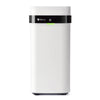
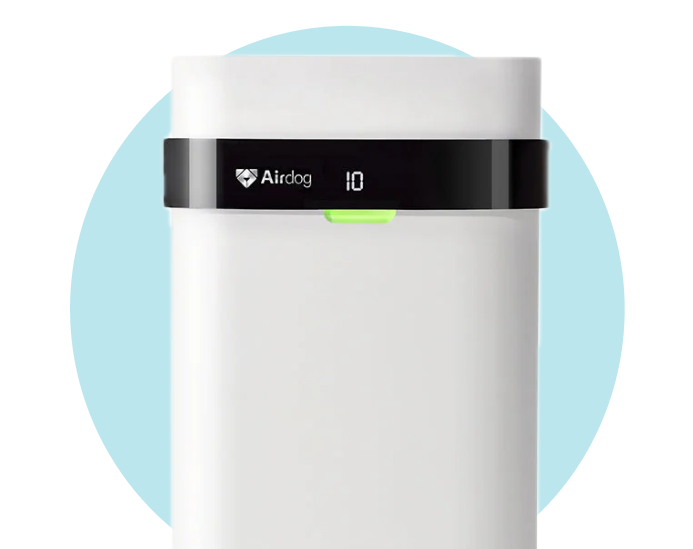
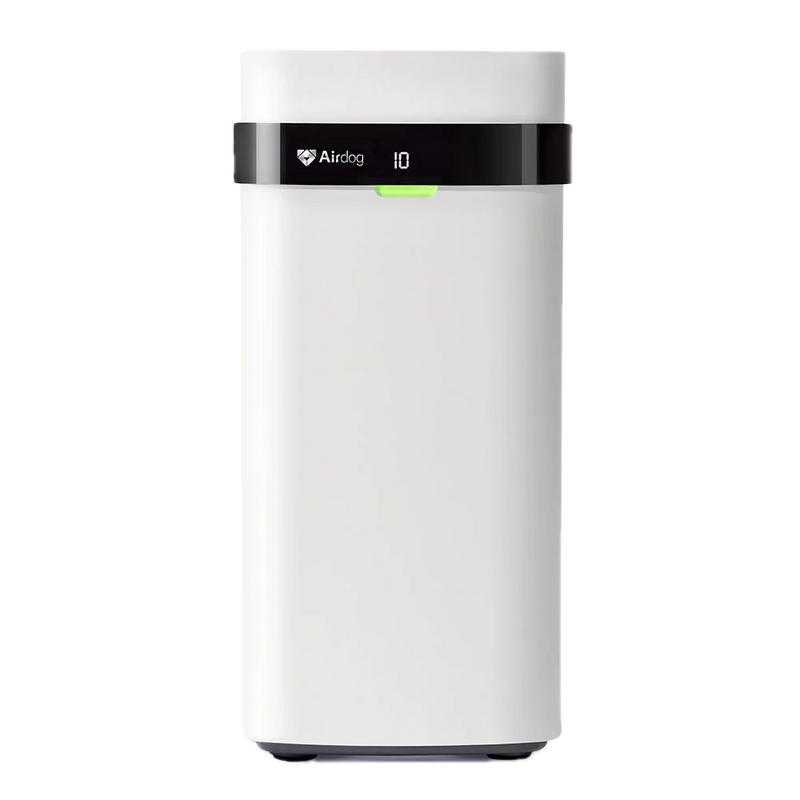
The Airdog P50 does just that with a top tray built specifically for your cat to relax on while keeping your air clean.
Sizing that actually prevents stink from traveling
CADR stands for Clean Air Delivery Rate, measured in cubic feet per minute (CFM). It tells you how much clean air the unit supplies per minute. Higher CADR means faster dilution and removal of airborne particles and odors.
When you're comparing air purifiers for a litter box area, CADR is the spec that determines whether you'll notice a difference or just hear a motor running.
Aim for a CADR of at least two-thirds of your room's square footage to get meaningful results in real homes.
-
300 sq ft laundry room → aim for ~200 CFM CADR
-
150 sq ft bathroom → aim for ~100 CFM CADR
-
450 sq ft basement area → aim for ~300 CFM CADR
Enclosed spaces like laundry rooms and bathrooms need this level of air turnover because ammonia concentrates quickly without ventilation.
Don't trust the "max coverage" numbers on the box. Those figures assume minimal air changes per hour—fine for general dust control, not effective for litter box smell.
Remember that odors concentrate at the source. If you have multiple litter boxes spread across the house, consider a smaller unit near each box instead of a large unit in a central location.
Placement that stops odor before it spreads
Your air purifier for a litter box needs clear access to air. Sounds obvious, but this is where most setups fail.
Blocking the intake reduces effectiveness and makes the unit work harder with less odor reduction. Pushing a purifier against the wall, tucking it behind the litter box, or jamming it into a corner starves the intake of air.
Leave at least 6–12 inches of clearance around the intake and exhaust vents. Check your model's manual for specific spacing requirements.
Use the rising ammonia insight for smarter setup
Ammonia is lighter than air. It rises and diffuses throughout a room rather than settling near the floor.
Wall-mounting a purifier above the litter area intercepts odor as it moves upward.
For floor-standing units, place them at least a few feet away from the litter box—not directly next to it. Dust and litter particles kicked up during use will clog the intake faster if the purifier sits too close.
Covered boxes concentrate odor—placement matters even more
Covered litter boxes trap ammonia inside the enclosure. Your cat experiences the concentrated smell every time they enter, and odor releases in bursts when the lid opens.
Placement becomes critical when you're using a covered box. Position your air purifier for the litter box to intercept those odor releases immediately.
Pair the purifier with frequent scooping and adequate ventilation rather than relying on the enclosure alone. A covered box plus a sealed room with no airflow creates the worst possible scenario for odor control.
If you prefer covered boxes for aesthetic reasons or to contain litter scatter, make sure your purifier is running continuously and positioned to catch rising ammonia as soon as it escapes.
Airdog P50 Pet Air Purifier
If you're serious about tackling cat litter odors once and for all, the Airdog P50 is the clear choice. Most air purifiers simply mask smells or catch particles bigger than 0.3 microns, but the P50's patented TPA® technology filters down to 0.0146 microns while eliminating over 99% of odors at the molecular level.
The P50 neutralizes 98% of pet dander, reduces floating hair and dust by 85%, and even destroys 99.9% of viral threats like feline calicivirus. Best of all, its washable, reusable filters mean you save up to $200 a year compared to traditional purifiers.
With whisper-quiet 22dB operation, a 323 sq. ft. recommended coverage area perfect for litter box rooms, and a 30-day home trial to back it up, the P50 will keep you and your cat happy. See for yourself here.