

When heating systems blast dry air through your house for months on end, a humidifier can help you and your dog breathe comfortably again.
But are humidifiers safe for dogs? Yes—when you use them properly. Safety depends entirely on the device type, placement, humidity target, and cleaning habits.
Choosing a Pet-Safe Humidifier Type
If you’re looking for a pet-safe humidifier, avoid warm-mist and steam humidifiers entirely. These units boil water to create steam, which means the reservoir and output are hot. If a dog knocks one over, the spilled water can cause serious burns.
Cool-mist humidifiers come in two types: ultrasonic and evaporative.
Ultrasonic models are quiet and cool, but you need to watch for frequency sensitivity. Ultrasonic humidifiers use high-frequency vibrations to create a cool mist without a fan, making them nearly silent. However, some pets may hear the high-frequency vibrations that humans can't detect. Run the unit while you're home for the first few days and watch for signs of discomfort: head shaking, ear scratching, avoiding the room, or general agitation.
Another drawback of ultrasonic humidifiers is the mineral particles released into the air if you use tap water. The deposits create a fine white dust on furniture and floors. This mineral dust can irritate airways, especially for dogs with respiratory sensitivities. Using distilled water prevents mineral dispersion and keeps the unit cleaner.
Evaporative cool-mist models use a fan to blow air through a wet wick or filter, naturally humidifying without heat or ultrasonic vibrations. They're generally safe for pets, though the fan can be noisier than ultrasonic units. Evaporative humidifiers won’t disperse mineral dust, but they do require filter changes–unless you’re using an Airdog humidifier.
Dog-Safe Humidifier Setup
If you have pets, never add essential oils, scents, or products like Vicks Vaposteam to the humidifier. Oils can irritate eyes, nose, and skin, and some are toxic over time or if a dog licks the residue off their fur. Even "safe" scents can overwhelm a dog's sensitive nose, causing discomfort or avoidance behavior. Use only water in your humidifier.
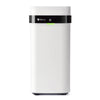
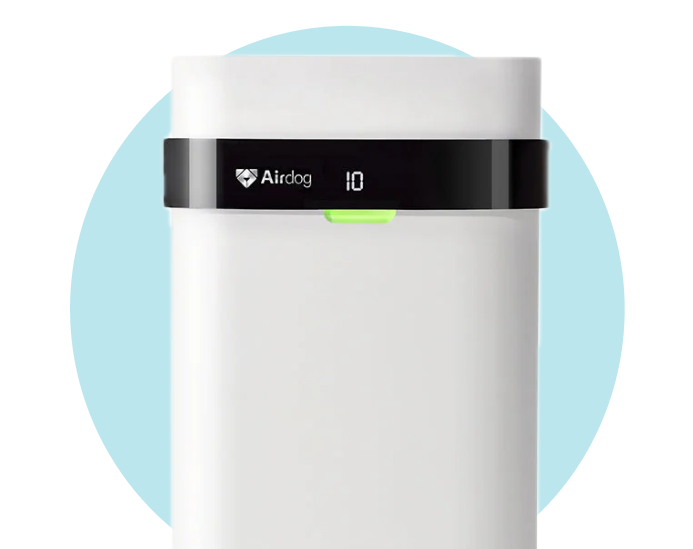
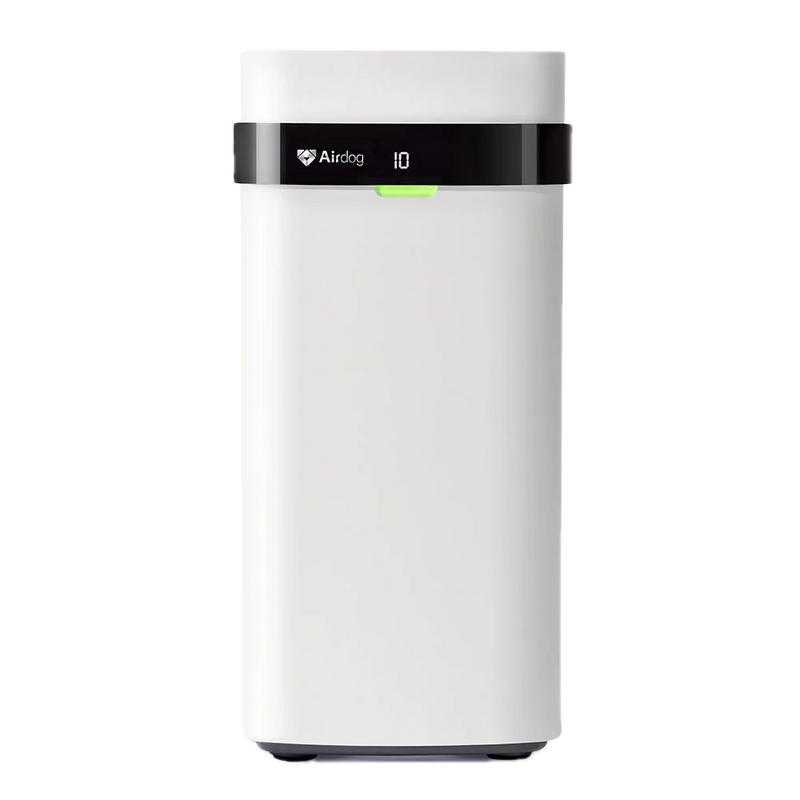
Place the humidifier where it can properly humidify the room without posing a risk to your dog. Choose a unit with a stable base that’s harder to knock over, such as the Airdog MOI Mold-Free Evaporative Humidifier. If possible, place the humidifier on an elevated surface where it’s less likely that your dog will bump into it.
Keep clearance of at least a few feet around the unit from walls, furniture, and fabrics. Don't aim the mist nozzle directly at anything; let it disperse naturally into the room. If you touch a surface and it feels damp, reduce output or run shorter cycles. Keep humidity in the 30–60% range to reduce the chance of mold from over-humidification.
Secure the cord along the wall using adhesive cable clips or cord covers to prevent tripping. Keep the device as far from outlets and power strips as the cord allows. If the unit tips, you want water nowhere near electricity.
When to Call the Vet
If your dog coughs more when the humidifier runs, treat this as a signal to investigate. Check for a dirty tank, too-high relative humidity, or minerals/irritants being dispersed. Stop use immediately, clean the unit thoroughly with vinegar and water, switch to distilled water, and restart at a lower output while measuring RH. A dirty humidifier can release bacteria and mold into the air, triggering respiratory irritation.
If snoring or congestion doesn't improve after a few nights, note that humidity may not be the cause. Consider other contributors like allergies, weight, or airway anatomy—some dogs snore regardless of humidity levels. Brachycephalic breeds are especially prone to breathing challenges that a humidifier can't fix. If symptoms persist, it's time to talk to your vet about other potential causes.
If you smell mustiness or see buildup (black spots or pink slime), clean the unit immediately. Odor or visible growth signals microbial contamination that gets aerosolized with the mist. Empty the tank, scrub with vinegar, rinse thoroughly, and dry completely before refilling. If buildup keeps returning quickly, you may need to clean more frequently or replace the unit.
Airdog’s MOI Mold-Free Evaporative Humidifier
If you need a powerful humidifier that’s safe for your dog, Airdog offers a perfect solution.
The Airdog MOI uses evaporative humidification technology paired with circulating fans that humidify the room without any water droplets or mist. When the MOI has finished a cycle of humification, internal fans run automatically to remove any remaining moisture, preventing mold.
That means your dog won’t be bothered by ultrasonic vibrations and that you won’t need to worry about mold making your dog sick as long as you maintain proper humidity levels.
The MOI is also designed with a washable and reusable filter, saving you hundreds on filter replacements. Choose the humidifier that is best for you and your dog. Learn more about the MOI here.