

Yes, humidifiers are generally safe around cats when you choose the right type and follow basic precautions.
A humidifier can actually help your cat’s breathing just as it helps yours. This matters most during winter when heating systems strip moisture from indoor air. A cat with a "cat cold" or upper respiratory infection can benefit from a humidifier helping to loosen mucus and clear congestion. Between 1% and 5% of cats develop feline asthma, a chronic condition that causes airway inflammation and coughing. Dry air can trigger attacks or worsen existing symptoms.
Plain, unscented humidity is safe for cats and can help cats with respiratory allergies or illness to breathe more comfortably.
Choosing a cat-safe humidifier
The most important thing you can do to ensure your cat is safe around a humidifier is to skip warm mist and steam humidifiers entirely.
Warm mist units work by boiling water to create steam. That means the reservoir holds water hot enough to cause serious burns. Curious cats investigate new appliances, and a tipped unit can spill scalding water across paws, faces, or bodies.
Cool mist humidifiers eliminate that hazard completely. The water never heats, so even a full spill creates a mess but not an emergency vet visit.
Cool mist humidifiers come in two main designs, and the difference matters for maintenance and cat comfort.
Ultrasonic vs. evaporative humidifiers
Ultrasonic humidifiers use high-frequency vibration to break water into tiny droplets. A small disc vibrates millions of times per second, creating the visible mist you see rising from the unit.
Ultrasonic units tend to have simpler designs—fewer moving parts, easier-to-clean tanks, no filters to replace. But they can release "white dust" (mineral deposits from tap water) if you don't use distilled water.
Cats can sense the high-frequency vibrations of an ultrasonic humidifier that humans can't detect. Most cats are unbothered by ultrasonic humidifiers, but some cannot tolerate the vibrations.
Watch for these signs during the first few days if you have an ultrasonic humidifier:
-
Your cat avoids the room where the humidifier runs
-
Flattened ears or head shaking when near the unit
-
Agitation or pacing that starts when you turn it on
-
Pawing at ears or excessive grooming around the head
If you see these behaviors, the vibration may be causing discomfort. Test by turning the unit off for a day. If the behavior stops, the humidifier is the problem.
Evaporative humidifiers blow air through a wet wick or filter. The fan pulls dry air in, pushes it through the damp filter, and releases humidified air back into the room.
Evaporative models require regular filter changes, unless you use an Airdog model, and more thorough cleaning to prevent mold buildup in the wick. The fan also creates low-level noise that some cats find irritating.
Cat-safe humidifier setup
Buying the right humidifier solves half the safety equation. Placement and cord management make it safe for your cat in the long-term.
Place the humidifier where it is effective for the room but inaccessible to cats, such as on an elevated, stable surface or in a blocked-off corner.
Secure cords with adhesive clips along baseboards or behind furniture legs to prevent your cat from chewing on them. Route them through cord covers if the humidifier sits in an exposed area.
Keep slack to a minimum as loose cords invite play-tugging. A dangling cord looks like a toy to a cat, but a taut cord attached to the wall doesn't.
If your cat has a history of cord chewing, consider bitter apple spray on the humidifier cord. Reapply weekly since the deterrent wears off.
Your cat's first encounter with a humidifier determines their long-term relationship with it.
Watch your cat around a new humidifier until they lose interest. This matters especially for kittens or high-energy cats likely to investigate vibrations and moving mist.
Run the humidifier while you're home and awake for the first few days. Watch how your cat reacts when they first notice it.
Once your cat consistently ignores the humidifier for a full day, you can leave it running unsupervised. Until then, turn it off when you leave the house.
What not to put in the tank
Many humidifiers come with slots for scent pads or instructions for adding "enhancements." Ignore all of them if you have cats.
Cats have a sense of smell 14 times greater than humans. What seems mild to you can be overwhelming and stress-inducing to your cat. This matters especially in homes already managing asthma or allergies.
Essential oils are highly toxic to cats because cats lack key liver enzymes needed to process many compounds found in essential oils. This metabolic gap raises the risk of severe illness, even from exposure levels humans wouldn't notice.
Even fragrances labeled pet-safe can still irritate sensitive airways.
Keep the humidifier water-only and address odors via cleaning routines and ventilation. If your home smells stale, the solution is better air circulation and more frequent cleaning.
Skip decongestant additives completely. Products like Vicks Vaposteam seem helpful when you or your cat has congestion, but they are designed for human use only.
If your cat has congestion severe enough to consider additives, they need veterinary care, not home remedies. Upper respiratory infections, chronic rhinitis, and sinusitis require proper diagnosis and treatment.
When to discontinue use
Stop using a humidifier if your cat won't leave it alone. Neater Pets suggests discontinuing if the pet is excessively curious. A cat obsessed with the unit risks burns (if you ignored the cool-mist advice), electrical shock from tipping, or water ingestion from the reservoir.
Stop if you can't maintain safe humidity levels. Condensation on windows, damp spots on walls, or mildew smell mean you've exceeded safe moisture levels. Your home's ability to handle humidity varies by climate, insulation, and ventilation. If maintaining the target range requires constant adjustment and you're seeing moisture problems, the humidifier isn't the right solution for your space.
Switch to other vet-approved supportive options or medications prescribed by your veterinarian. Your cat's health matters more than making a humidifier work in an unsuitable environment.
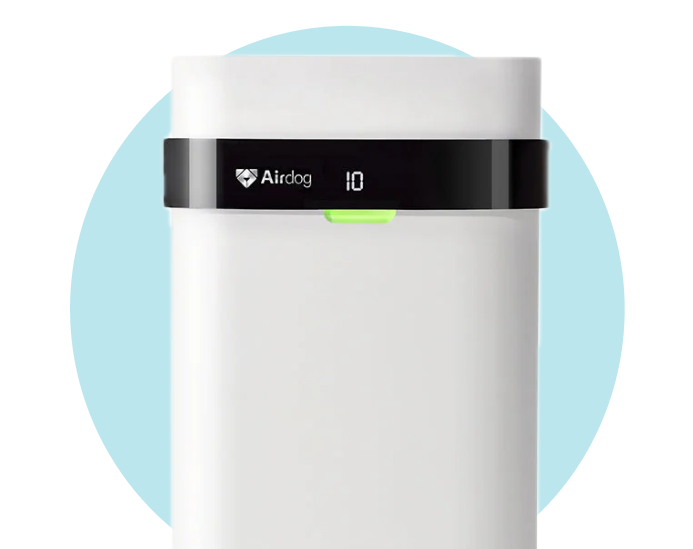
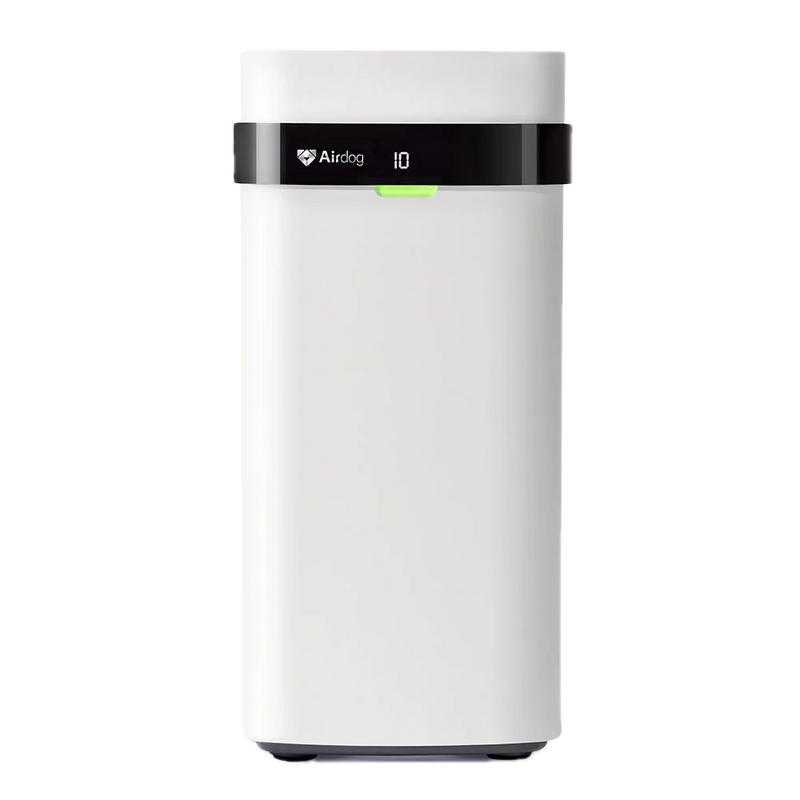
Airdog’s MOI Mold-Free Evaporative Humidifier
If you need a powerful humidifier that’s safe for your cat, Airdog offers a perfect solution.
The Airdog MOI uses evaporative humidification technology paired with circulating fans that humidify the room without any droplet or mist. When the MOI has finished a cycle of humification, internal fans turn on automatically to remove any remaining moisture, preventing mold.
That means your cat won’t be bothered by ultrasonic vibrations and that you won’t need to worry about mold making your cat sick.
The MOI is also designed with a washable and reusable filter, saving you hundreds on filter replacements. Choose the humidifier that is best for you and your cat. Learn more about the MOI here.