Skip to content

Air Purification for Senior Living Communities: Resident Health, Regulatory Risk, and Occupancy

by Danny Allen
Air Purification for Senior Living Communities: Resident Health, Regulatory Risk, and Occupancy

Key Takeaways

  • Indoor air quality is directly linked to infection rates and hospitalizations in residents over 75. Published research on nursing home populations found measurable respiratory harm from indoor air pollutants even at moderate concentrations—this is a documented duty-of-care exposure, not a comfort issue.
  • Air quality problems show up as regulatory citations and lost occupancy. State inspection reports cite mold and offensive odors as deficiencies, and satisfaction/referral scores—already a documented driver of move-in decisions—suffer directly when families notice poor air quality on a tour.
  • No recurring filter costs—Airdog pays for itself against HEPA within ~2.5 years. Washable collection plates replace disposable HEPA filters entirely; once ongoing filter replacement costs are factored in, Airdog becomes the cheaper option at around the 2.5-year mark and stays cheaper for the life of the unit—a real advantage in an industry already stretched thin on staffing, where a filter-replacement schedule across every resident room is one more task nobody has time for.
  • HEPA performance drops fast, and this population can't absorb the gap. Standard filters lose efficiency within days under normal use. Airdog's washable-plate system doesn't degrade the same way—wash it, and it's back to full performance.

An Aging Population Is a More Exposed Population

Lung function and immune defenses decline with age, and that decline accelerates past 80—the fastest-growing segment of the senior living population. A European study of 600 residents across 50 nursing homes found that fine and ultrafine particulate exposure was significantly associated with reduced lung function, with the effect most pronounced in poorly ventilated facilities and residents 80 and older. A separate study of nursing home residents found that each 100 µg/m³ increase in indoor VOC concentration was associated with higher odds of a respiratory infection in the prior three months.


Published research on senior living populations has also documented that indoor air quality affects infection rates, hospitalization frequency, and overall health outcomes—with the strongest effects in residents over 75. That translates directly into operational cost: outbreaks drive hospitalizations, disrupt routines, and force facilities into expensive last-minute staffing adjustments, since agency nurses cost substantially more than regular staff.

Regulatory and Occupancy Risk

Poor air quality doesn't stay a clinical issue—it becomes a documented finding. Inspection reports across the country cite mold, offensive odors, and poor ventilation as deficiencies, alongside other health and safety violations that can trigger fines or loss of certification. In an industry already facing elevated litigation and rising insurance costs, air quality-related citations are one more exposure that's fully preventable.


It also shows up before a resident ever moves in. Word-of-mouth and satisfaction scores are a primary driver of referrals in senior living, and air quality is one of the first things a touring family notices. A community with a documented, verifiable approach to air quality has a real story to tell; one that smells like the problem it's trying to hide doesn't.

Why Standard Air Purifiers Fall Short Here

Most air purifiers—including most marketed as "commercial grade"—rely on HEPA filtration, which has two specific weaknesses at this scale:

  • A filter-replacement schedule across every room is an operational burden staff don't have time for. HEPA filters lose efficiency within days under normal use and require frequent replacement to stay effective. In an industry already dealing with documented staffing shortages, a maintenance task that depends on someone remembering it, in every room, on schedule, is a liability by design.
  • No mechanism for VOCs. Senior care environments generate their own VOC load, from cleaning agents to incontinence care products, on top of anything airborne from illness. HEPA filtration doesn't break down VOCs; a thin carbon layer saturates fast and stops helping.

What Airdog Does Differently

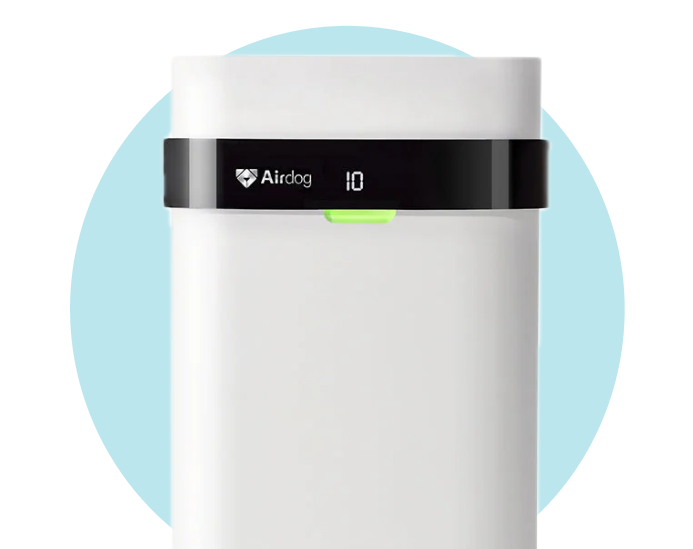
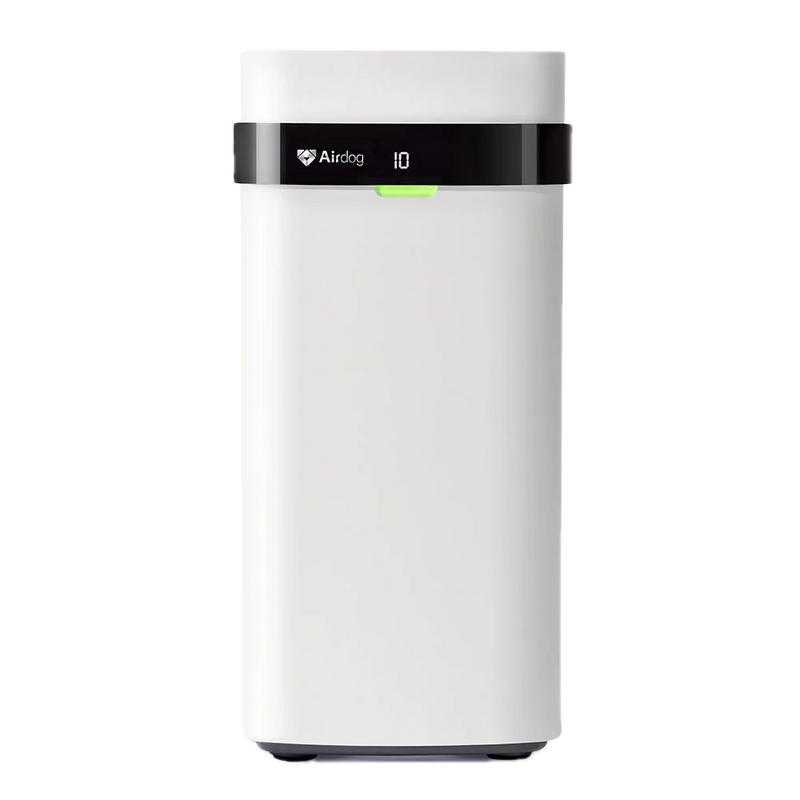
Airdog's TPA® technology was independently verified by SGS to capture particles down to 0.0146 microns—20x smaller than the standard HEPA benchmark—and to break down VOCs at the molecular level instead of storing them.

Two things matter specifically here:

  1. Washable plates, not disposable filters. No replacement schedule, no forgotten filters, no unit quietly underperforming for months in a resident's room. Wash it and it's back to full capacity—and once recurring filter costs are factored in, Airdog becomes cheaper than HEPA at around 2.5 years, with the gap widening for the life of the unit.
  2. VOC breakdown, not VOC storage. The cold plasma stage neutralizes odor-causing and airborne chemical compounds at the molecular level, rather than accumulating them until saturation—addressing both the infection-control case and everyday odor management without masking either.

Bottom Line

Senior living communities serve the population with the least capacity to absorb poor air quality and the most exposure when it shows up—clinically, on an inspection report, and in a family's first impression during a tour. That's where the gap between filter-based systems and independently verified molecular filtration matters most.


For the full technical breakdown, read The Airdog Standard: A Technical Buyer's Guide to Air Purification Performance.


Want to talk through what this looks like for your community? [Contact us →]


Sources: GERIE Study, European Respiratory Journal (Bentayeb et al.); Portuguese Geriatric Study of the Health Effects of Indoor Air Quality in Senior Nursing Homes; research on indoor air quality and infection/hospitalization outcomes in senior living communities, Journal of the American Geriatrics Society; state nursing home inspection reporting (Bridge Michigan, CMS Care Compare); Argentum/A Place for Mom senior living satisfaction data.


Related Products

Ready to Breathe Different?