

Key Takeaways
- Polluted air on the gaming floor is a documented health risk to guests and staff. Independent research puts particulate pollution on smoking floors at 4–6x outdoor levels, and NIOSH has directly confirmed secondhand smoke exposure among dealers at major Las Vegas properties.
- Unaddressed smoke odor costs hotels an estimated $5.4 billion a year. Guests treat their room as the one place to escape the floor—it usually isn't fully smoke-free, and a single affected room can cost $600–$1,500+ to remediate and sit off-market for days.
- No recurring filter costs. Airdog uses washable collection plates instead of disposable HEPA filters—a materially better 5-year total cost of ownership at the scale of a gaming floor or hotel tower.
- HEPA performance drops almost immediately under this kind of load. Standard HEPA filters start losing efficiency within days of heavy smoke exposure. Airdog's patented TPA filtration technology doesn't lose efficiency because it doesn't just collect polluted particles, it actively destroys them.
Proven at Scale
[Case study placeholder: insert property name, unit count, and any measured before/after or guest/staff feedback from the existing 300-unit gaming account, pending confirmation on what can be shared publicly.]
The Gaming Floor
A peer-reviewed study across Nevada, Pennsylvania, and other states found particulate pollution and airborne carcinogens running 4–6x higher indoors than outdoors on smoking floors—even with commercial ventilation running. Nonsmoking patrons who spent about four hours on the floor showed measurably higher nicotine byproducts afterward.
Staff carry the larger burden. NIOSH investigated secondhand smoke exposure among dealers at Bally's, Paris, and Caesars Palace in Las Vegas and confirmed measurable exposure over a shift. A separate study of New Jersey casino workers found nicotine biomarkers 2–3x higher than the general working population. Nationally, an estimated 427,000 casino workers are exposed to secondhand smoke on the job, despite roughly 80% of patrons being nonsmokers.
The Rooms
Most casino properties are hotels first, in the guest's mind. After a night on a smoking floor, the room is where a guest expects clean air—and it's often not delivering that.
Smoke doesn't respect floor boundaries. It migrates through HVAC systems, elevator shafts, and door gaps regardless of designated smoking zones. Research on hotel guest complaints found that 80% of smoke-related complaints came from thirdhand smoke residue left by previous occupants, not live secondhand smoke—meaning even a "nonsmoking" room can carry the problem forward from guest to guest.
The financial impact is well-documented:
- Industry-wide, unauthorized/lingering smoking costs hotels an estimated $5.4 billion annually.
- A single smoke-affected room typically costs $600–$1,500+ to remediate (deep cleaning, soft goods replacement, ozone treatment) and can be off-market for 24–48 hours.
- Smell/odor is the third most cited complaint at check-in and a top driver of guest satisfaction scores—and one negative review about smoke smell reaches every future guest reading it.
Odor treatments like ozone and vapor-phase deodorizers mask the problem after the fact. They don't address air quality while the room is occupied, and they don't run continuously.
Why Standard Air Purifiers Fall Short Here
Most air purifiers—including most marketed as "commercial grade"—rely on HEPA filtration, which has two specific weaknesses at this scale:
- Fast clogging, fast decline. Under heavy smoke load, HEPA filters lose efficiency within days, not months, and require frequent replacement to stay effective—a real, recurring cost across dozens or hundreds of units on a property.
- No mechanism for VOCs. Tobacco smoke is a chemical mix, not just particles. HEPA filtration doesn't break down VOCs; a thin carbon layer saturates fast under this kind of load and stops helping.
What Airdog Does Differently
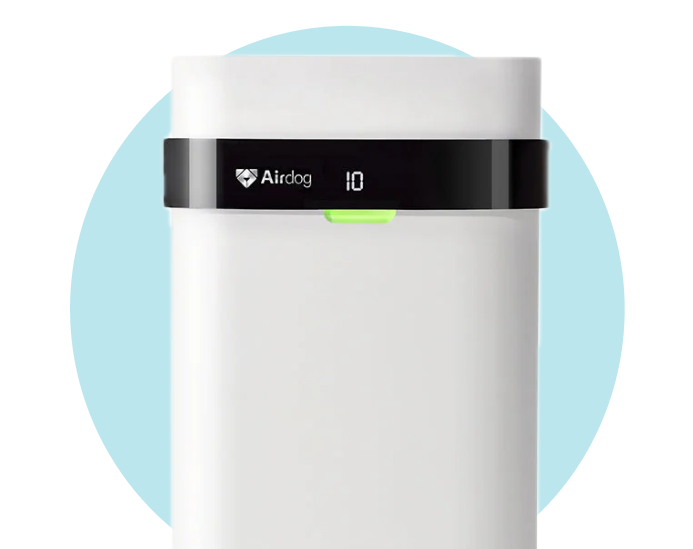
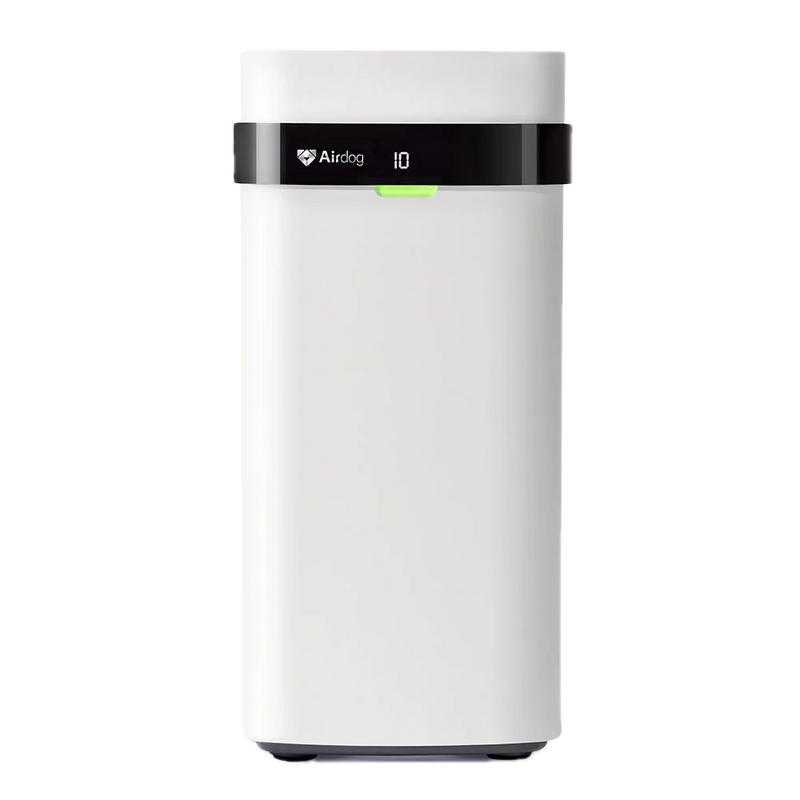
Airdog's TPA® technology was independently verified by SGS to capture particles down to 0.0146 microns—20x smaller than the standard HEPA benchmark—and to break down VOCs at the molecular level instead of storing them.
Two things matter specifically here:
- Washable plates, not disposable filters. No replacement schedule, no forgotten filters, no unit quietly underperforming for months. Wash it and it's back to full capacity—which also means a materially lower 5-year cost of ownership than filter-based systems at scale.
- VOC breakdown, not VOC storage. The cold plasma stage neutralizes the chemical component of tobacco smoke at the molecular level, rather than accumulating it until saturation.
Bottom Line
Gaming floors and their attached hotel rooms are two of the hardest indoor environments for air purification to hold up in—heavy particulate load, 24/7 operation, and a guest and employee base that notices when it isn't working. That's where the gap between filter-based systems and independently verified molecular filtration shows up fastest, on the P&L and in the reviews.
For the full technical breakdown, read The Airdog Standard: A Technical Buyer's Guide to Air Purification Performance.
Want to talk through what this looks like for your property? [Contact us →]
Sources: NIOSH Health Hazard Evaluation, Bally's/Paris/Caesars Palace Las Vegas (CDC); "Secondhand Smoke in Pennsylvania Casinos" (American Journal of Public Health); "Fine Particle Air Pollution and Secondhand Smoke Exposures and Risks Inside 66 US Casinos" (Environment International); Achutan et al., "Environmental Tobacco Smoke Exposure Among Casino Dealers" (JOEM); FreshAir Sensor hotel industry smoking cost study; American Hotel & Lodging Association; "When Hotel Guests Complain About Tobacco, Electronic Cigarettes, and Cannabis" (PMC).